
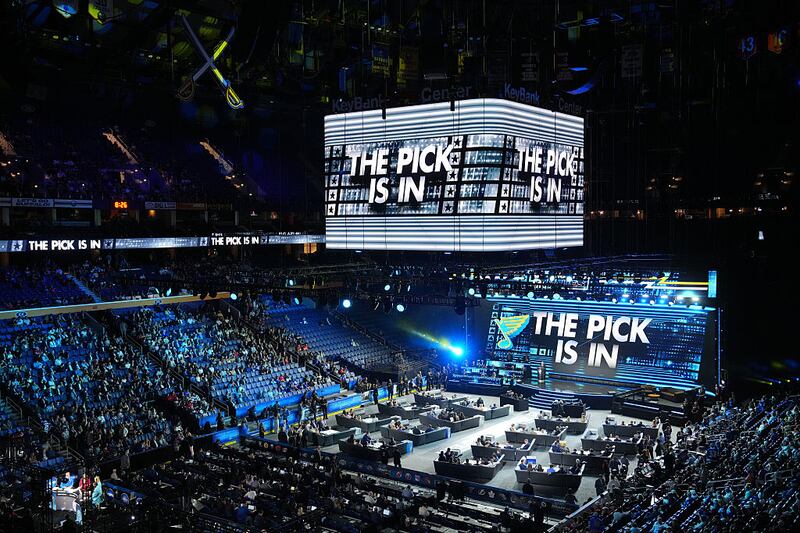
BUFFALO, N.Y. -- The NHL’s decentralized draft format appears likely to remain in place unless numerous clubs voice concern with the way this year’s event unfolded or develop a strong need to return in person.
“My sense is that decentralized is here for at least a while to stay,” NHL President of Content & Events Steve Mayer said Saturday during the waning rounds of the event, which saw front offices work remotely for the second year in a row.
That echoed a comment from Commissioner Gary Bettman at the Stanley Cup Final: “Unless we hear from a lot of clubs that they want to make a change, which is how the change came about in the first place, I don’t see the need to poll every year,” he said. “If a bunch of clubs call Bill [Daly, the Deputy Commissioner] or me and say, ‘You know what, we’d like to go back,’ then we do that. But I don’t anticipate that. I think the clubs like the format.”
The league resolved most of the tech issues that plagued the decentralized draft in its first go-around, but the remote format is not universally beloved. Many still long for the in-person event.
“The decentralized draft is a self-inflicted disaster for the NHL,” prominent agent Allan Walsh of Octagon posted on social media. “The Draft used to be a unique event with a mystical atmosphere bringing together the entire hockey world to one place for a special weekend. Almost everyone I speak to hopes it goes back to an in person draft.”
The Canadiens would prefer it that way.
“I always liked it better being in person,” GM Kent Hughes told The Athletic. “I made my vote. I find it’s easier for us to do our business. The agents are all there, and you get a chance to talk to them. Sometimes it’s not easy to get back when the draft is close to July 1, so I understand the reasons why certain teams want to stay local, but I’ve always preferred being in person. But no one listens to me.”
ESPN’s John Buccigross finds it’s a better experience both in-arena and on television when GMs and scouts are on the floor. He contrasted that with the “pep rally” vibe of the NFL’s decentralized draft.
“I think it really does come down to the players and the GMs and the game and picking players, and the drama and the pressure around it,” Buccigross said.
“We can take a close up of these GMs making trades. We can see facial reactions … You can just paint that picture a little better for the television viewer.”
If teams prefer to work from their own war rooms, it may fall to the league to find new ways to replicate the drama and mystique many miss.
“The clubs are more comfortable … doing it that way, and we’re OK with that,” Bettman said earlier this month. “I mean, if that’s what’s most efficient for our clubs, and we can still put on an event, we’ll be fine.”