

Happy Sunday. A few things to think about as you start your week …
- Teams still grappling with fan identity
- Steve Cannon encourages owners to think like Disney
- Good reads this week on Tom Dundon, John Skipper and Tom Condon
- Sports doc of the week: Netflix’s four-part series on “Rafa”
- This Week’s Forum: Going through the headlines, five months into 2026
Teams still aren’t where they need to be in understanding who is in their venue, and that’s why there is such an emphasis on capturing data every step along the fan journey. It’s still so elusive for teams, despite the progress we’ve made with new technology. I was struck by the comment from Li-Shen Lee, principal and general manager of Converge by Deloitte for Sports, at SBJ’s Tech Week, when she said Deloitte’s property clients “say the same thing … they know about, on best, 20%, probably on average 10 to 15% of who their fan base is. That’s really made up of who’s coming to the arena.” With teams bound by territory limitations, most don’t have first-party data on the vast majority of their fans, so it’s critical to think how to reach the large number of fans who never step inside the venue but are engaging with a team outside of the three hours of game competition. The data capture is critical to engage and monetize those fans all through the day. Question for the teams: What percentage of fans do you know in your building?
Pacers Sports & Entertainment CCO Joey Graziano said at Tech Week the organization has changed their definition of a fan. “At our core, we run two basketball teams,” he said. “We also run a 159-day-a-year concert business, we are focused on running a big Latino concert business, because it’s the fastest-growing segment of our population and we get about 40 to 50% net new [people] into our building every time. … As we think about the word fan, we’ve really, really decided to broaden out that definition, and that’s allowed us to help our marketing partners reach those segments of fans every way they’re spending their time with us.” He stressed to the audience to think much bigger when monetizing your building. Consider all the ways audiences will experience the venue, and realize that many of them are not customers of the core product.
Meanwhile, the Pacers’ Fieldhouse Media Network, an AI-powered media and ad platform, is about two months old, and Graziano said “we’ve had more than 40 teams in the big four leagues and six or seven leagues and entertainment properties reach out asking for a tutorial together and walk them through this so they could think about launching their own.”
Steve Cannon, the longtime executive for AMB Sports and Entertainment, now with Harbinger Sports Partners, talked about sports ownership moving from version 1.0 to 2.0. “In sports 1.0, owners saw themselves as local operators that let the league do all the value creation with media deals,” he said at Tech Week. “But now, local operators are waking up to the power of their IP and they’re doing a couple things.” He said owners need to consider two critical elements: Build the right stadium with the right premium options and economics. Two, build “a flexible sports platform that might enjoy 20 different use cases” that are not under a league’s revenue sharing guidelines. In terms of the owners that they are attracted to invest with, Cannon said, “Owners that have woken up to the idea that, ‘I’m more like Disney than I am a football team. I have a park operation that I run 365 days a year. I’ve got a content business that I monetize every day of the year.’ That is where a lot of value creation is going to take place.”
→ We often talk about fan overlap when it comes to teams under the same ownership, and we rarely see crossover in large numbers. Here’s another example: the Golden State Valkyries clearly benefited from being under the Warriors umbrella and led the WNBA in attendance during their inaugural season, but only 8% of the Valkyries’ 12,000 season-ticket holders were season-ticket holders of the Warriors. So, yes, there are distinct audiences, but you also see a growth opportunity.
→ Quite the week for Dana White, who is the cover story of Time, and the subject of extensive features in Rolling Stone and New Yorker — all landing a few days apart. Time’s Sean Gregory writes of White: “You can’t deny he’s at the peak of his powers.” Rolling Stone’s Jack Crosbie calls White “perhaps the single most important figure in American sports.” So why is he everywhere, all at once? My take is White is now very comfortable embracing all forms of media. For a long time, White and the UFC embraced only combat sports media, but now mainstream media is intrigued by his leadership and relationship with Donald Trump, especially a few weeks out from one of the biggest events of the year at the White House. White is willing to speak and he’s smartly kept his conversations non-partisan and instead focused on his life story, perseverance and relentless drive, which is a compelling story. A lot of this has been the work of Lenee Breckenridge, SVP of UFC Communications, who is White’s right-hand person for all his media. Expect to see more of this over the next month.
→ Ohio Gov. Mike DeWine will soon depart after eight years in office, and said his biggest mistake was signing a legalized gambling bill in 2021. He bemoans that more people in his state are gambling, more people are losing money and today’s athlete is a target for fan abuse. He also criticized the marketing efforts of the companies, saying, “What I did not anticipate — and I should have — is the massive, massive amount of money that these gambling companies would come in … and they flood the airways.”
→ If you haven’t watched it, NASCAR’s tribute before last weekend’s Coca-Cola 600 to the late Kyle Busch is just heartbreaking. There’s a lot here — from how the NASCAR community supports their own like few others, and the composed leadership from CEO Steve O’Donnell during an incredibly difficult moment.
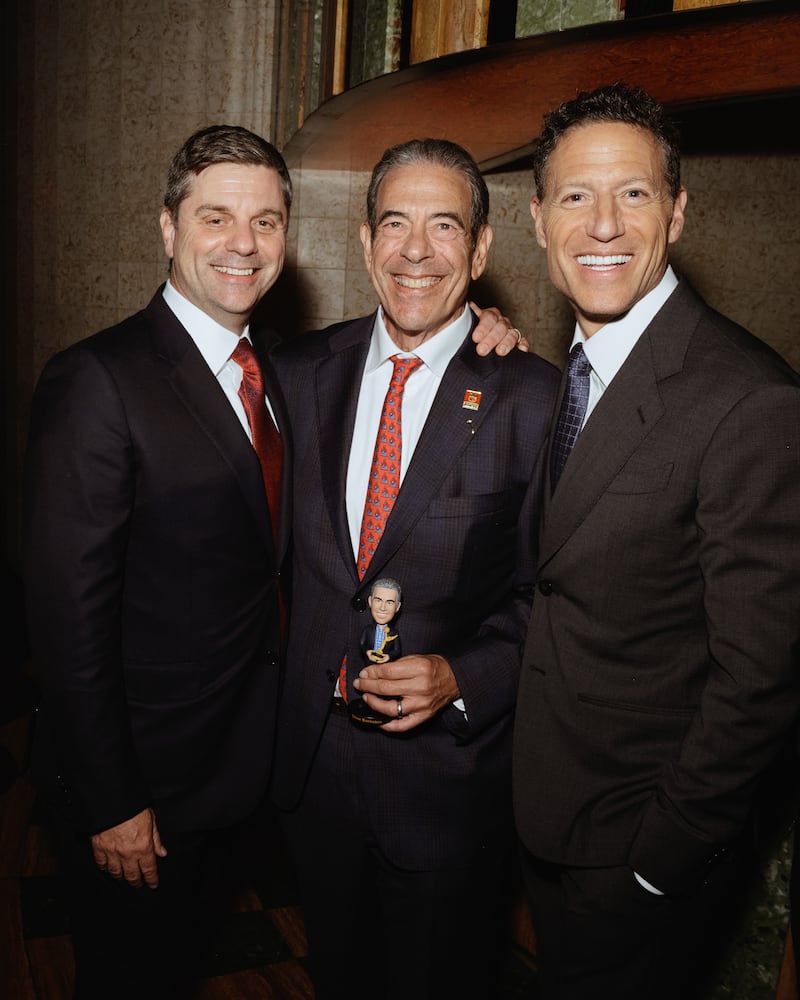
→ Congratulations to longtime media executive Steve Bornstein, who received the 2026 Lifetime Achievement Award at the Sports Emmys on Wednesday evening in New York City. Afterward, industry executives gathered at Bad Roman at Columbus Circle for a reception that was co-hosted by two of Bornstein’s former colleagues, Brian Rolapp (from the NFL) and Mark Shapiro (from ESPN).
A few reads worth your time this week:
→ Check out Steve Rushin’s feature in SI, “How John Skipper Brought Soccer — and the World Cup — to American Audiences." A lot of fun details, from how Skipper fell in love with the Premier League, to pitching his boss, George Bodenheimer, about going after the World Cup, to his negotiations for the 2010 and 2014 tournaments, including dealing with the colorful and late FIFA member, Chuck Blazer. … and that led me to re-read my former colleague Tripp Mickle’s profile of Blazer, when he was at the top of his game in 2010.
→ The Athletic’s Dan Pompei’s profile of the legendary agent Tom Condon reminds us all how the 73-year-old was such a force and pioneer in the business. Pompei details Condon’s struggles battling normal pressure hydrocephalus, and Condon admits, “It’s very tough.” His son, Tommy, now an agent at CAA Sports, said, “Sometimes we lock eyes, and I know he’s still in there. But then I just get this feeling that he knows what’s going on, and he recognizes where his life is now compared to what it was.”
→ Team owner Tom Dundon doesn’t speak frequently, and so there was a lot to take away from his interview with Bill Oram of the Portland Oregonian. Highlights:
On layoffs at the Blazers: “People are happier when they’re busy and productive. That is the way I think things should be done. And more people just creates more problems, usually. I think Portland just had too many people.”
On investing in Portland: “My investment is that I obsess over trying to improve this product. I think having someone that thinks about it all day, every day — it’s all I think about — that’s about as much as you could possibly invest.”
On the perception of being callous, uncaring: “You don’t get through life without having empathy and caring about people. Whether it’s a player you trade or someone you don’t keep as part of the organization, that doesn’t mean you don’t care about those people. It just means you care about the organization, and you’ve got to do what’s best for the team and the organization.”
On his mentality: “No matter how good we’re doing, I’m thinking about what can we do better? And that makes people uncomfortable sometimes. I wish I could turn it off sometimes, but I can’t.”
→ On my viewing list is Netflix’s four-part series “Rafa.” The early reviews:
The Athletic states it “achieves more introspection than the average sports documentary, and will feel revelatory to anyone who hasn’t followed the 22-time Grand Slam champion’s career in detail.”
The Wall Street Journal notes, “If not for its transcendent bittersweetness, “Rafa” might be an exemplar of the sports-documentary paradox: Ambitious, wide-ranging and exhaustive, it is rich in the sort of detail that might be of interest only to the type of hardcore fan who would know everything already. Like the Nadal career, “Rafa” goes on too long.”
USA Today details the series “can be bogged down by slow pacing at times, but it does an adequate job of presenting Nadal not purely as a sympathetic figure, but as a man dealing with the emotional and physical toll on his three-decade road to glory.”
Let me know if you watch it and what you think.
Quote of the Week:
“If I’m the story of the World Cup, then the World Cup has not gone well.” – Andrew Guiiani, executive director of the White House Task Force on the World Cup, in a N.Y. Times profile that notes the 40-year-old is “navigating the daily triage as Mr. Trump’s de facto ambassador to the world’s game and its grandest showcase.”
→ Check out the latest episode of SBJ Inside the Industry. I am joined by my colleague Joe Lemire and we discuss how sports technology enhances the live sports experience. Segments include a look at OneCourt, which just won Sports Tech of the Year at SBA: Tech (18:52) and sports execs featured include Amy Brooks, president of global business development, NBA; Raul Fernandez, CEO, DXC Technology; Jez Lubenetski, EVP of global strategy and consulting, The Team; Dan Reed, former COO, Meta Reality Labs; Tina Thornton, EVP of creative studio and marketing, ESPN; Luke Tingle, senior project manager, Daktronics; and Dave Wolf, principal, KPMG.
→ If you missed Morning Buzzcast, check out this week’s episodes here.
→ Remember to subscribe to our YouTube channel.
Photos of the week are below, as well as this week’s Forum, which looks at some of the standout storylines five months into the year. But first, check out our early access stories from tomorrow’s weekly edition.
EARLY ACCESS FROM THIS WEEK’S MAGAZINE
Why the CFP is stuck in a stalemate
New playoff inventory could draw bidders beyond ESPN, but is the added money enough to offset the disruption?
World Cup brings sponsorship blitz
It’s quite a contrast to the previous two World Cups, with this year’s event largely in the world’s largest economy and in the place where sports marketing was perfected, if not invented.
Forum: What’s standing out, five months in
Going through some stories and themes so far in 2026 … :
TEAM DEAL OWNERS/PLAYERS NOTICED: We’ve heard it for some time: Baseball teams are undervalued! That’s why management and players were pleased to see the San Diego Padres sold at a $3.9 billion valuation, an MLB record. It showed MLB teams getting more respect as an investment at a growing revenue multiple. The union touted the deal as proof that other owners should do what Padres ownership has done: Spend on players and player development.
OWNERSHIP GROUP I’M ASKED ABOUT: Haslam Sports Group. There is a lot of intrigue around it, and here is why: Jimmy Haslam has an incredible curiosity and focus on sports business; he’s playing a key role in the search for the next MLS commissioner, and he and his wife, Dee, see sports as a family business with their children involved. They continue to build out their sports assets, as evidenced by paying a $205 million franchise fee for the NWSL team in Columbus, and are making smart hires, like bringing on Tim Bezbatchenko to run their soccer operations.
A SYSTEM FANS REALLY LIKE: Automated Ball-Strike System. It’s easy to understand, quick, visually compelling and largely seems to work. Umpires chafe at it, but fans, viewers, players and teams all seem to support it. It took a few years, but chalk up another win for MLB being willing to improve its product.
THE STORY WITH THE MOST WHAT-IFS: Sources can’t stop talking about the NBA’s plans for a European league, and despite questions around the near term — the relationship with the Euro League, the real value of the franchises and the European media market — most are bullish about the long-term vision. It’s not just Europe; bankers and lawyers see the NBA’s exploration of expansion to Seattle and Las Vegas, with a $7 billion to $10 billion franchise fee, as a significant test for any credible investor and the overall marketplace.
THE RETURN EVERYONE IS TALKING ABOUT: Tim Leiweke. The first step was investing more than $117 million with his daughter, Francesca, in the promoted Serie A club Venezia. There will be more to come, as he has capital, a deep network and is said to be eagerly looking to capitalize on the building needs across Europe.
THE BIGGEST RELIEF: New CBA for the WNBA. There were many angles to these negotiations. As with other CBA deals, this one had public acrimony, criticism of leadership and the belief that both sides were overplaying their hand. But management and players deserve credit; I’ve rarely seen a group of players so aligned and willing to put in the hours to get a positive result. Good work by all involved.
THE NEWEST LEADER WITH THE BIGGEST INFLUENCE: Tony Clark’s unceremonious exit from the MLBPA ushered in the Bruce Meyer era, and this longtime labor lawyer gets his chance at leading the membership into what will likely be the most important negotiation in three decades. Meyer is smart, experienced and steadfast in his advocacy for players. He will be a formidable negotiator.
THE MOST THANKLESS JOB: College Sports Commission CEO Bryan Seeley must wonder every day what he signed up for. Conferences and schools agreed to the House settlement, yet almost daily you’re seeing the schools not wanting to play by the rules they agreed to, challenging the CSC’s authority and questioning the enforcement from the organization they established. Give Seeley credit for his optimism, as he said, “We want to enforce the rules that people want enforced. … People should not give up hope.”
THE QUOTE TO REMEMBER: Iowa State AD Jamie Pollard, on the Big Ten and SEC possibly breaking away: “The four commissioners spent a lot of money creating the CSC. Then to have two of the conferences not want to adhere to it is perplexing to me, because then why did we spend the money? If you didn’t want rules, then why did you create this entity? Let them go, but they have to go in all their sports and see how fun it is to play baseball and softball and track when it’s just the 20 of you.”
THE EVENT THAT SURPRISED EVERYONE: This year’s World Baseball Classic had a legitimate breakthrough, with records in viewership, attendance, sponsorships and more. It’s not perfect, but the WBC is an increasingly intriguing global asset for MLB and the players, and will likely get a regular slot on the league’s schedule.
THE LEAGUE WITH A QUIETLY STRONG FIRST HALF: IndyCar has had a sneaky good start to its season. It held a successful joint-racing weekend with NASCAR; partnered with the Dallas Cowboys and Texas Rangers for a smart street race in Arlington, Texas; the Indy 500 drew a record crowd; Fox’s investment is paying off; and viewership is up more than 30% compared to last season. The series needs more stars, but it’s been a strong start to the year.
Abraham Madkour can be reached at amadkour@sportsbusinessjournal.com.
FACES & PLACES
Snapshots of events, conferences, parties and announcements from across the sports business industry. Click the image below to navigate through the gallery.
 Opens in new window