
(Editor’s note: The following excerpt is from a story that was originally published in the Sept. 17, 2018, issue of Sports Business Journal.)
They were big as golf balls but molded from dense foam, not hard enough to wound but certainly to annoy. Done up to look like miniature baseballs, they’d been distributed to fans by a local dairy. Larry Lucchino, then president and CEO of the Boston Red Sox, was getting pelted with them on the field before a game one afternoon. The surprising culprit? Wally, the Red Sox’s mascot.
Interrupting his conversation with John Henry, the principal shareholder of Fenway Sports Group, Lucchino went to confront the costumed creature. When he arrived, Wally cuffed him on the head. Unamused, Lucchino ordered him to stop. The mascot whacked him harder. Lucchino exploded. “You are so f------ fired,” he shouted.
At that moment, Wally revealed himself to be Tom Werner, the Red Sox chairman and second-largest shareholder. An eager Henry, who’d masterminded the prank and drawn Lucchino on the field with a pretext, came running up. “He was so excited,” Lucchino recalls. “‘Did it work? Did it work?’ That’s the kind of thing John does.”
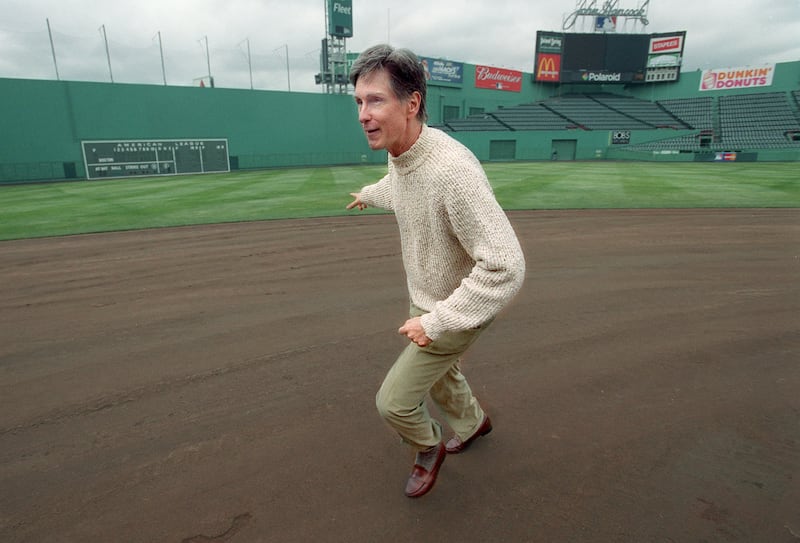
John Henry, prankster? It doesn’t fit his image. Isn’t Henry the antisocial math genius who parlayed an algorithm predicting the movement of soybean futures into a fortune? He’s a man as bloodless as his wan complexion who prefers communicating by email so he can collect his thoughts.
Think of him late at night, a ghostly presence behind a computer screen, deriving metrics and sending out electronic communiques to sleeping colleagues. “That’s one of his dimensions,” Lucchino acknowledges.
But only one. “Most people don’t see the real John Henry,” insists Jeff Vinik, owner of the NHL’s Tampa Bay Lightning and a former Fenway Sports Group shareholder. “He’s definitely fun. Part of the secret sauce of the Red Sox was the genuine enjoyment Tom, John and Larry got from spending time together, being on the journey together.”
Henry dressed as a 1960s hippie during a vacation with Werner on the Spanish island of Ibiza. When he played bass for his band, Elysian Fields, he shaved his eyebrows to heighten the effect of a rock opera about aliens from Cassiopeia. Among other topics, Henry has taken a deep dive into the complexities of Northern Italian wine. He co-founded an institute that uses relaxation therapy to counteract illness.
He isn’t in the news as often as, say, Stan Kroenke, but Henry has built an empire as significant as any in sports. FSG’s holdings include the Red Sox, Fenway Park and parcels of real estate around it, the NESN television network, Liverpool Football Club and its Anfield stadium, half ownership of the Roush Fenway Racing NASCAR team and Fenway Sports Management, which has LeBron James as a marketing client and owns a minor league baseball team. Included, too, is the Boston Globe, owned by the Henrys outside the FSG umbrella.
But with his 70th birthday approaching next year, Henry still has the same motivation he had in 1989, when he was a successful commodities trader who decided to buy the Pacific Coast League’s Tucson Toros.
He just wants to watch a baseball game.
Bruce Schoenfeld is a writer based in Colorado.