
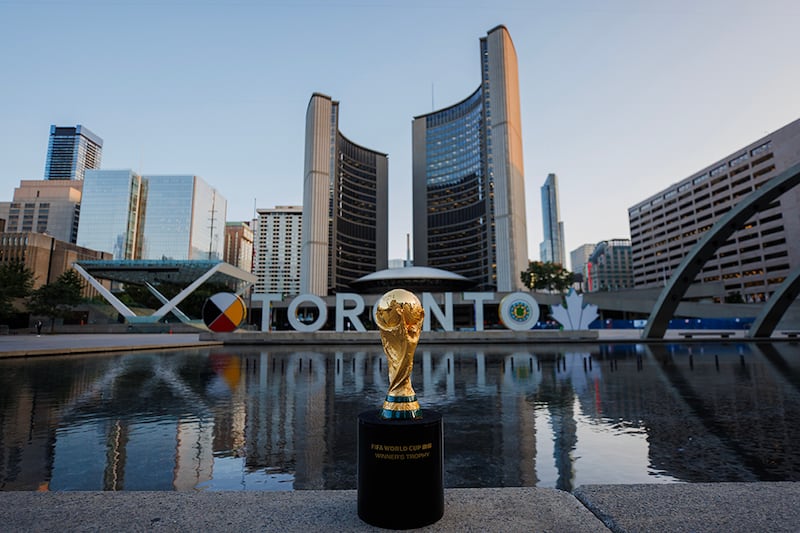
The city of Toronto said that “only a fraction of the 2026 FIFA World Cup tickets it bought as an investment remain unsold, with the soccer gamble looking set to pay off a week before the games begin.” Fifty-two of the tickets were “put aside to run a sweepstakes,” while the city also “shelled out millions more to buy hospitality tickets to be resold as ‘a revenue generation strategy.’” A spokesperson said Saturday, “There are currently less than 70 unsold tickets of the 3,546 tickets purchased, and these are expected to sell out through the Host City Donor agreements before the tournament.” The city added that the “initial multi-million-dollar spend had been covered and Toronto would indeed generate revenue from the venture.” Officials would “not say how much money they were expecting to take in.” The total cost for six matches at BMO Field is estimated at $380M, with contributions from federal, provincial and municipal governments (GLOBALNEWS.ca, 6/5). Meanwhile, The Globe and Mail noted the differences between funding sources for the Canadian host cities and U.S. host cities.
With the World Cup set to start this week, there has been substantial coverage of how the World Cup impacts each of the participating markets. Here’s a sampling:
- Boston Globe: Homeowners are renting out their lawns for World Cup parking
- Kansas City Star: KC2026 answers more questions regarding FIFA Fan Fest in KC
- L.A. Times: How the U.S., Mexico and Canada won right to host 2026 World Cup
- Miami CBS: World Cup predicted to bring big business for South Florida hotels, Airbnbs, but prices are slashed due to lack of demand
- N.Y. Daily News: World Cup NYC 2026 transportation survival guide: What you need to know
- Philadelphia Inquirer: How to experience the World Cup in Philadelphia without a ticket — and beyond bars
- Seattle Times: FIFA’s World Cup ticket process leaves Seattle fans frustrated and confused
- S.F. Chronicle: Why 2026 World Cup feels like a disappointment for the Bay Area