Levi’s won the social media conversation around the World Cup this week with a cheeky response to its naming rights signage atop Levi’s Stadium being covered by a white bag. Getty Images
Levi’s can’t win the World Cup, but it won the social media conversation around the tournament this week with a cheeky response to its naming rights signage atop Levi’s Stadium being covered by a white bag.
Without offering an obvious explanation, the denim makers changed their Instagram profile picture to that very same bag, catching the attention of the account’s 10.3 million followers and many more in the soccer ecosystem beyond.
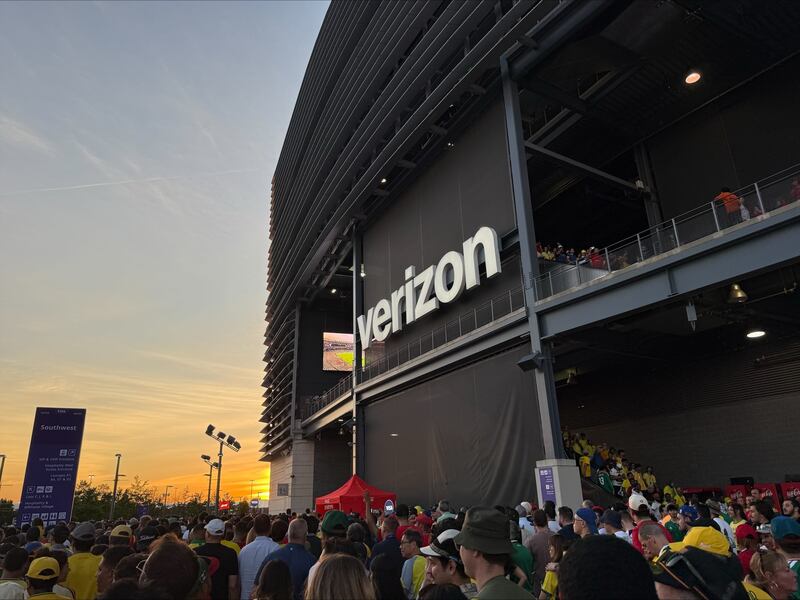
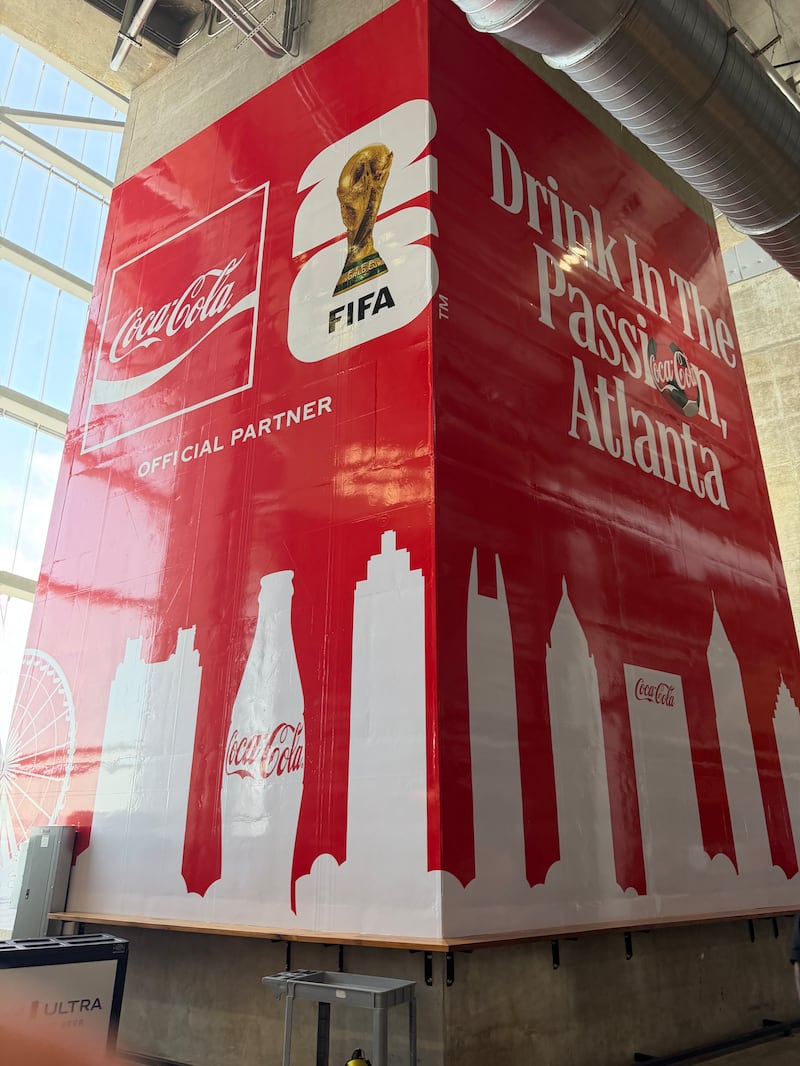
FIFA required host stadiums to cover signage of sponsors that aren’t affiliated with global soccer’s governing body. Brands that are FIFA sponsors, like Coca-Cola, Verizon and a host of AB InBev brands, like Budweiser or Michelob Light, were able to remain uncovered. During the tournament, the stadiums are referred to by their geographic location, Dallas Stadium instead of AT&T Stadium, for example.
Look Company and The Team Live (formerly Wasserman) won FIFA’s RFP for the “Venue Dressing Programme,” but some of the signage covering work was outsourced to local companies.
Screenshot
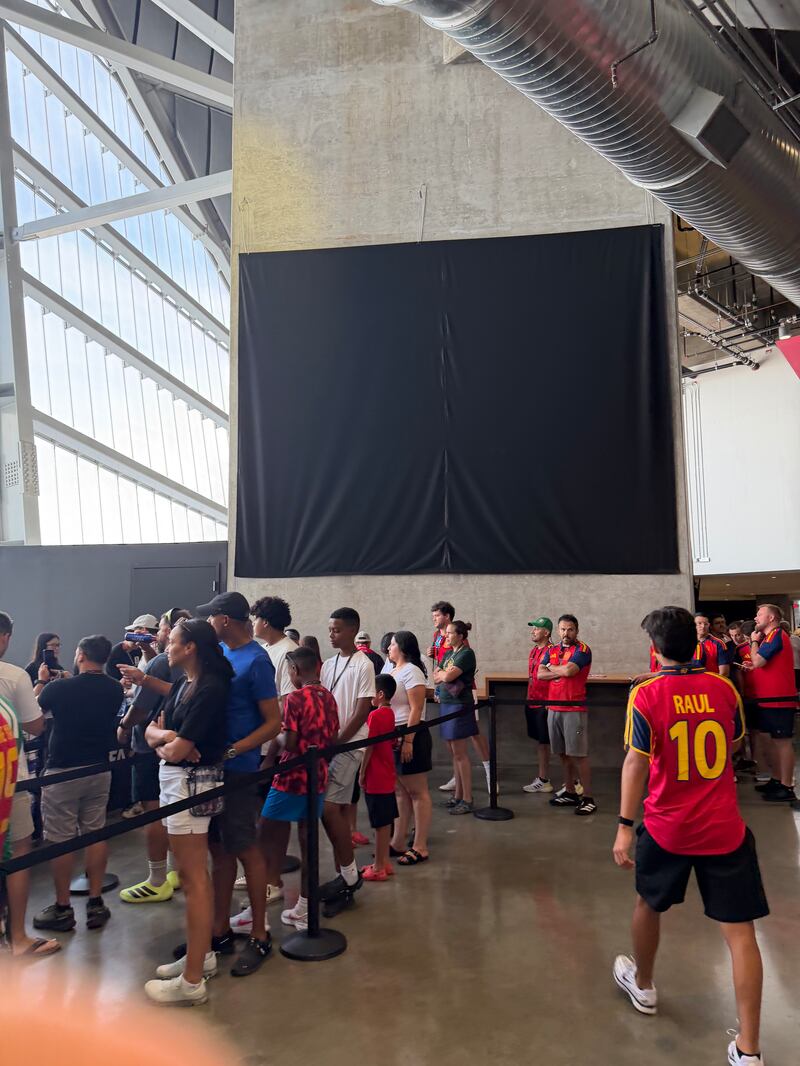
The cover-ups have become more noticeable in some cases than if the logos had just been left where they were.
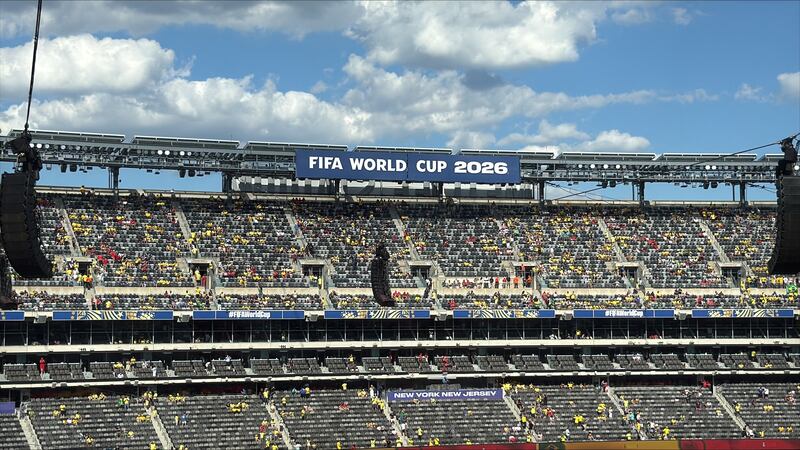
MetLife Stadium’s cover-ups were clean and consistent, as were Mercedes-Benz Stadium’s. Those stadiums are hosting the final and a semifinal, so likely drew more attention from FIFA, which was responsible for commercially clean stadium cover-ups.
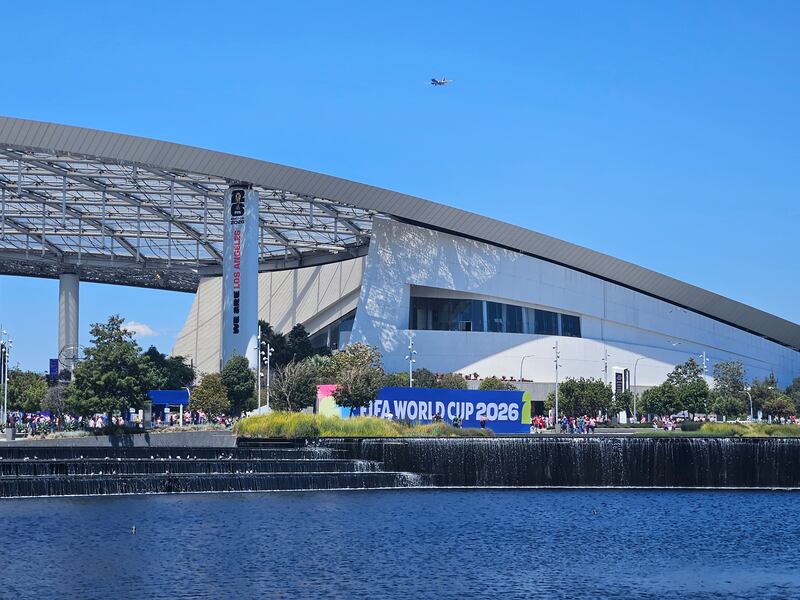
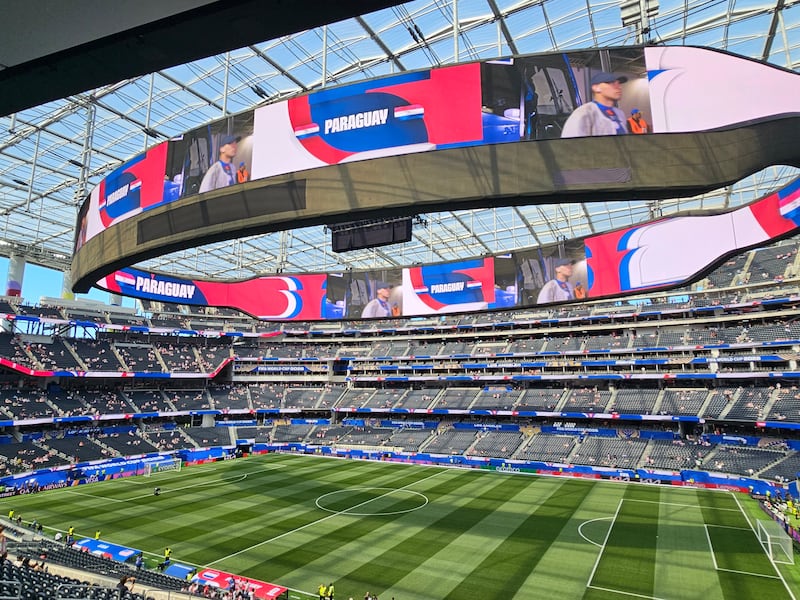
Other cover-ups were less artful, including the Levi’s bag job and a handful of signs at SoFi Stadium that were nearly translucent. The large SoFi sign outside the stadium and next to its retention pond was covered in FIFA 2026 World Cup branding.
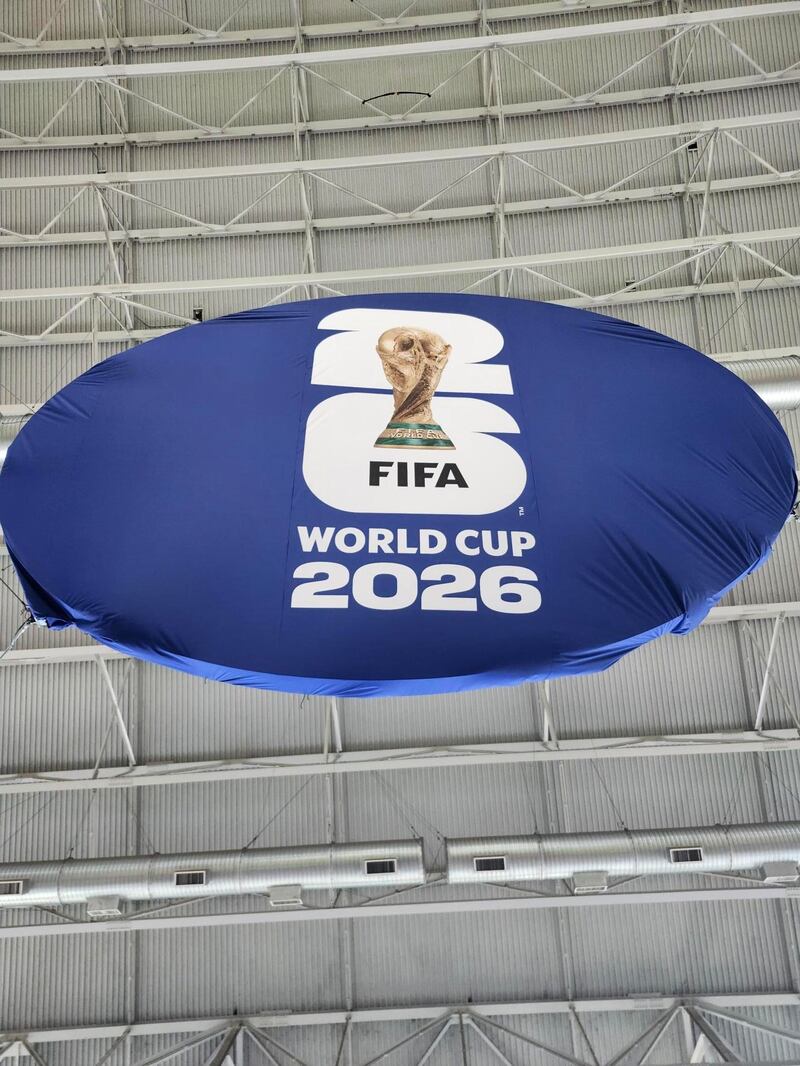
Large sponsor branding on the roofs of Lumen Field and AT&T Stadium were covered, though Mercedes-Benz Stadium’s unusual Mercedes-Benz emblem roof remained uncovered from above (and closed).
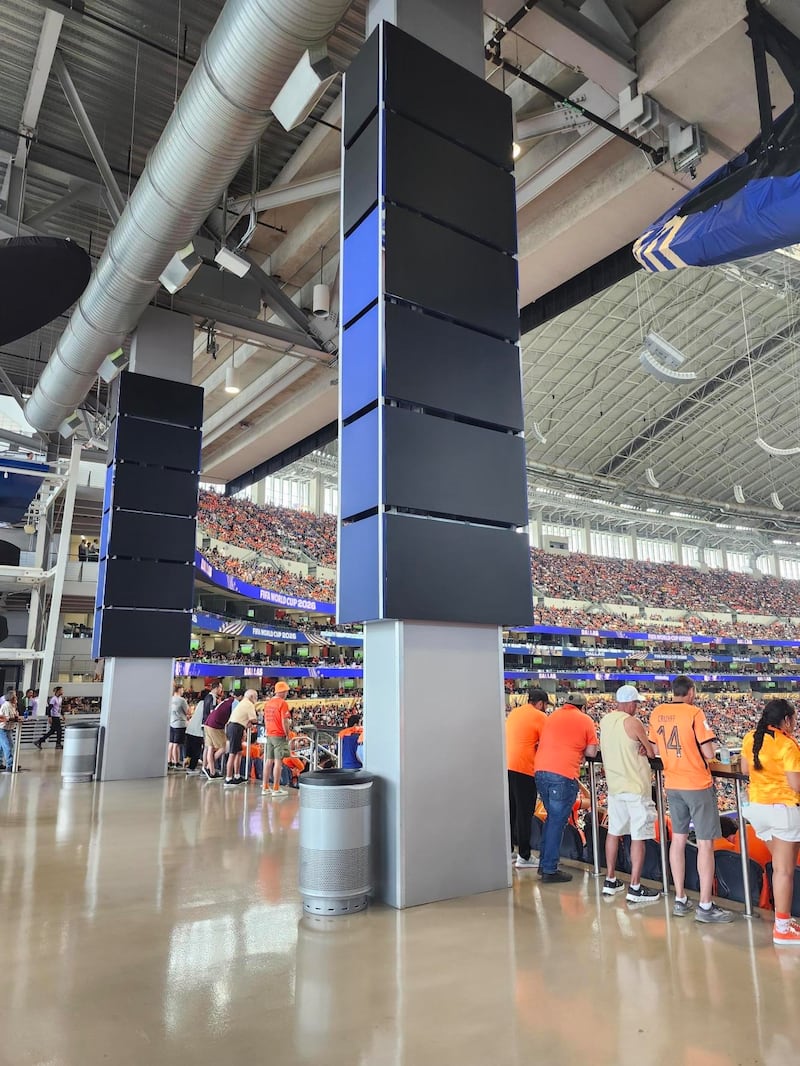
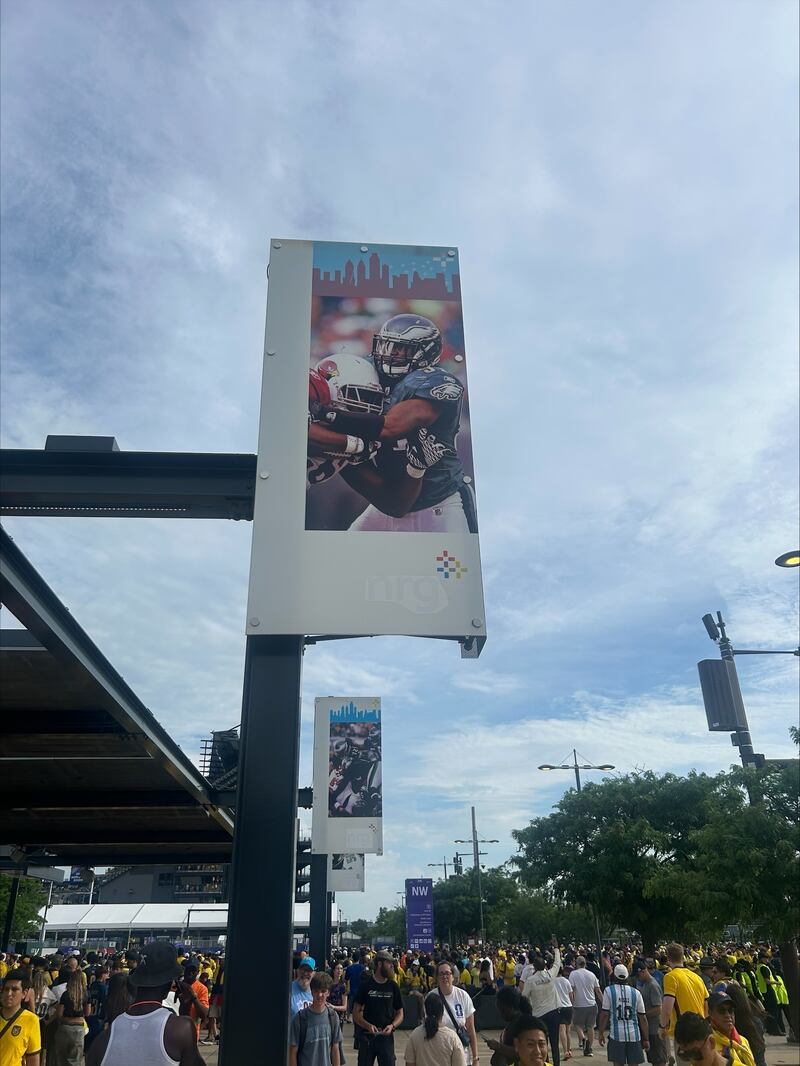
In Houston, the timing worked out perfectly; NRG Stadium took down its signage, which will be replaced by Reliant signage (same company as NRG) as part of the venue’s name change headed into the 2026 NFL season.
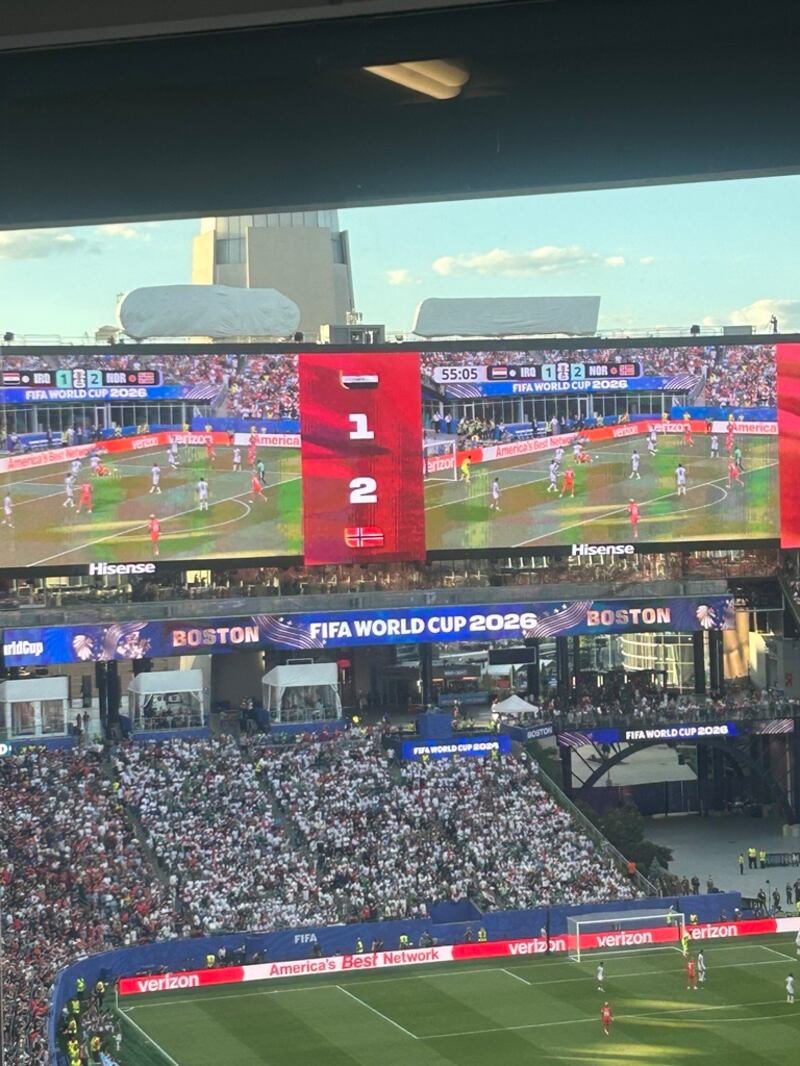
One social media post noted the piece of blue paint tape covering the Gillette logo on their seat for the Norway-Iraq match. At least 60,000 pieces of tape would have been ripped and placed on the seats at the stadium normally home to the Patriots and Revolution.
The capacity at “Boston Stadium” for the World Cup is 64,146.
That means someone had to put 64,146 very small pieces of blue tape over every single Gillette logo on every. single. seat.
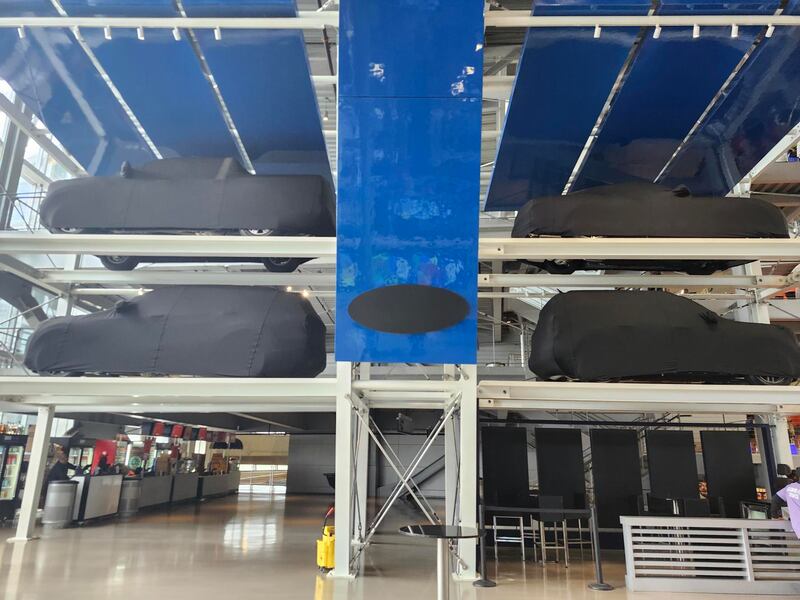
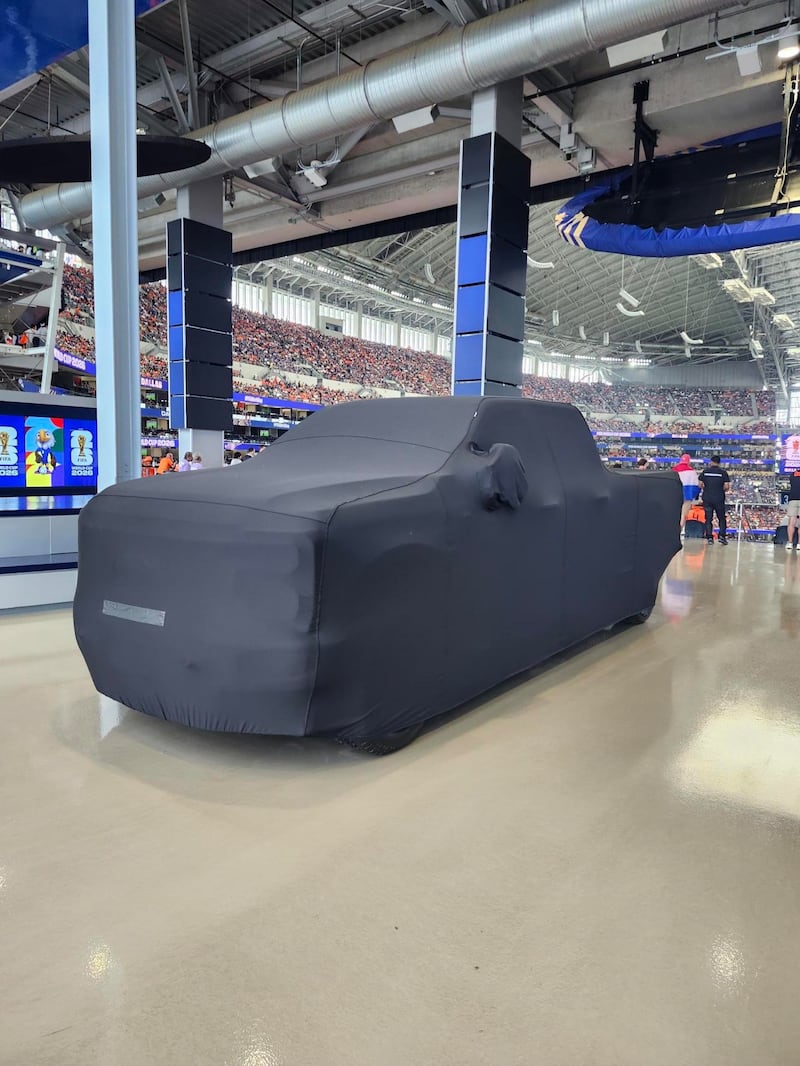
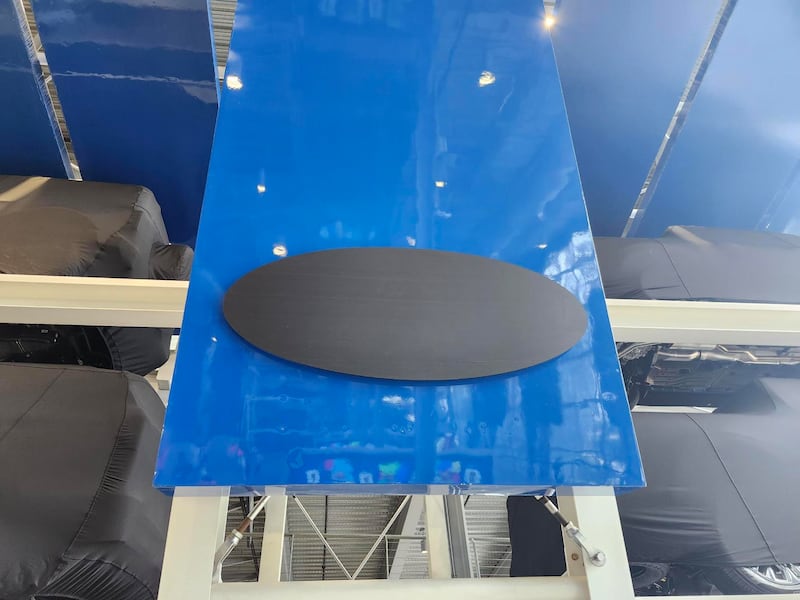
At AT&T Stadium, a prominent Ford sponsorship activation featuring stacks of Ford vehicles was easier to cover than remove from the upper reaches of the Dallas stadium.
And even the condiments in Levi’s Stadium’s press box had their labels taped over, according to an X post from reporter Kevin Nguyen.
Base camps weren’t immune from the requirements either. Atlanta United’s Children’s Healthcare of Atlanta Training Ground is home to Uzbekistan as it traverses its first World Cup, but the Uzbeks wouldn’t know that. Atlanta United removed an Emory Healthcare logo from the sign adorning the recently renovated training facility’s primary entrance.
0 of 31
Levi's Stadium, Santa Clara, Calif. A view of Levi's Stadium as the name and branding was temporarily covered with white tarps ahead of the 2026 FIFA World Cup First Stage Group J match between Austria and Jordan. (Anadolu/Anadolu via Getty Images)
Levi's Stadium, Santa Clara, Calif. The Levi's Stadium main sign was covered before the FIFA World Cup 2026 Group J match between Austria and Jordan on June 16. (Richard Heathcote/Getty Images)
Levi's Stadium, Santa Clara, Calif. (Richard Heathcote/Getty Images)
2026 FIFA Men's World Cup commercially clean stadium signage solutions A prominent Ford truck activation at AT&T Stadium will be covered during the World Cup. (Irving Mejia-Hilario)
2026 FIFA Men's World Cup commercially clean stadium signage solutions (Irving Mejia-Hilario)
2026 FIFA Men's World Cup commercially clean stadium signage solutions (Irving Mejia-Hilario)
2026 FIFA Men's World Cup commercially clean stadium signage solutions AT&T Stadium, Dallas (Irving Mejia-Hilario)
2026 FIFA Men's World Cup commercially clean stadium signage solutions AT&T Stadium, Dallas (Irving Mejia-Hilario)
2026 FIFA Men's World Cup commercially clean stadium signage solutions Gillette signage covered above Gillette Stadium's large end zone scoreboard. (Alex Silverman)
2026 FIFA Men's World Cup commercially clean stadium signage solutions Lincoln Financial Field, Philadelphia (Alex Silverman)
2026 FIFA Men's World Cup commercially clean stadium signage solutions Lincoln Financial Field, Philadelphia (Alex Silverman)
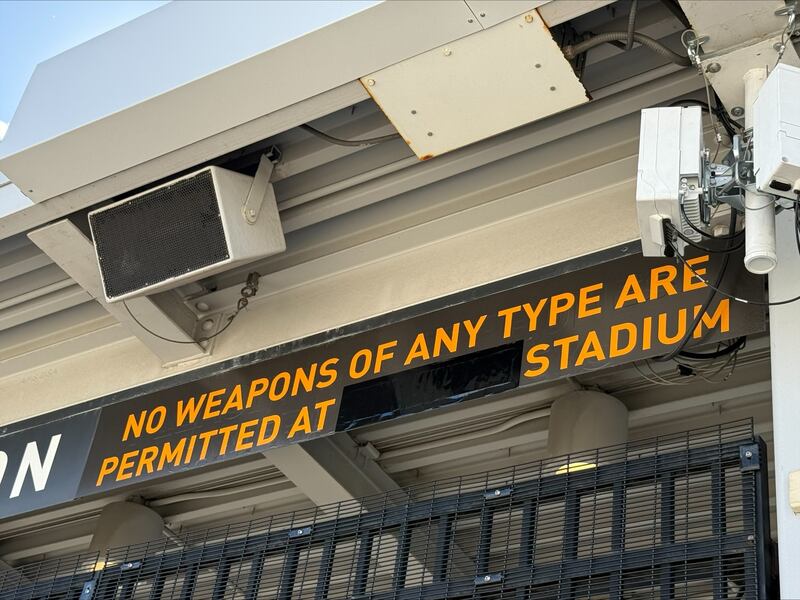
2026 FIFA Men's World Cup commercially clean stadium signage solutions MetLife Stadium, New Jersey (Joe Lemire)
2026 FIFA Men's World Cup commercially clean stadium signage solutions Verizon, which has naming rights to an entrance gate at MetLife Stadium, is a FIFA sponsor, so retained its signage at the stadium that will host the 2026 World Cup final. (Joe Lemire)
2026 FIFA Men's World Cup commercially clean stadium signage solutions MetLife Stadium, New Jersey (Joe Lemire)
2026 FIFA Men's World Cup commercially clean stadium signage solutions MetLife Stadium, New Jersey (Joe Lemire)
2026 FIFA Men's World Cup commercially clean stadium signage solutions Mercedes-Benz Stadium in Atlanta is a Coca-Cola building, so some added signage fit right in with the building's existing sponsor signage. Coca-Cola, a FIFA sponsor for more than five decades, is based in Atlanta. (Bret McCormick)
2026 FIFA Men's World Cup commercially clean stadium signage solutions Mercedes-Benz Stadium, Atlanta (Bret McCormick)
2026 FIFA Men's World Cup commercially clean stadium signage solutions Mercedes-Benz Stadium, Atlanta (Bret McCormick)
2026 FIFA Men's World Cup commercially clean stadium signage solutions SoFi Stadium, Inglewood, Calif. (Chris Smith)
2026 FIFA Men's World Cup commercially clean stadium signage solutions SoFi Stadium, Inglewood, Calif. (Chris Smith)
2026 FIFA Men's World Cup commercially clean stadium signage solutions SoFi Stadium, Inglewood, Calif. (Chris Smith)
2026 FIFA Men's World Cup commercially clean stadium signage solutions SoFi Stadium's large sign next to the retention pond will be cloaked with FIFA branding during the 2026 Men's World Cup. (Chris Smith)
2026 FIFA Men's World Cup commercially clean stadium signage solutions American Airlines branding covered at SoFi Stadium, during the 2026 FIFA Men's World Cup. (Chris Smith)
2026 FIFA Men's World Cup commercially clean stadium signage solutions SoFi Stadium, Inglewood, Calif. (Chris Smith)
2026 FIFA Men's World Cup commercially clean stadium signage solutions SoFi Stadium, Inglewood, Calif. (Chris Smith)
2026 FIFA Men's World Cup commercially clean stadium signage solutions SoFi Stadium, Inglewood, Calif.
2026 FIFA Men's World Cup commercially clean stadium signage solutions SoFi Stadium, Inglewood, Calif. (Chris Smith)
2026 FIFA Men's World Cup commercially clean stadium signage solutions SoFi Stadium, Inglewood, Calif. (Chris Smith)
2026 FIFA Men's World Cup commercially clean stadium signage solutions SoFi Stadium, Inglewood, Calif. (Chris Smith)
2026 FIFA Men's World Cup commercially clean stadium signage solutions SoFi Stadium, Inglewood, Calif. (Chris Smith)
2026 FIFA Men's World Cup commercially clean stadium signage solutions SoFi Stadium, Inglewood, Calif. (Chris Smith)
Start your day with SBJ Morning Buzzcast, bringing you the hottest stories in sports business every morning in under 15 minutes. Sign up for SBJ’s free newsletters, and dive deeper inside the industry with all the latest sports business news here.