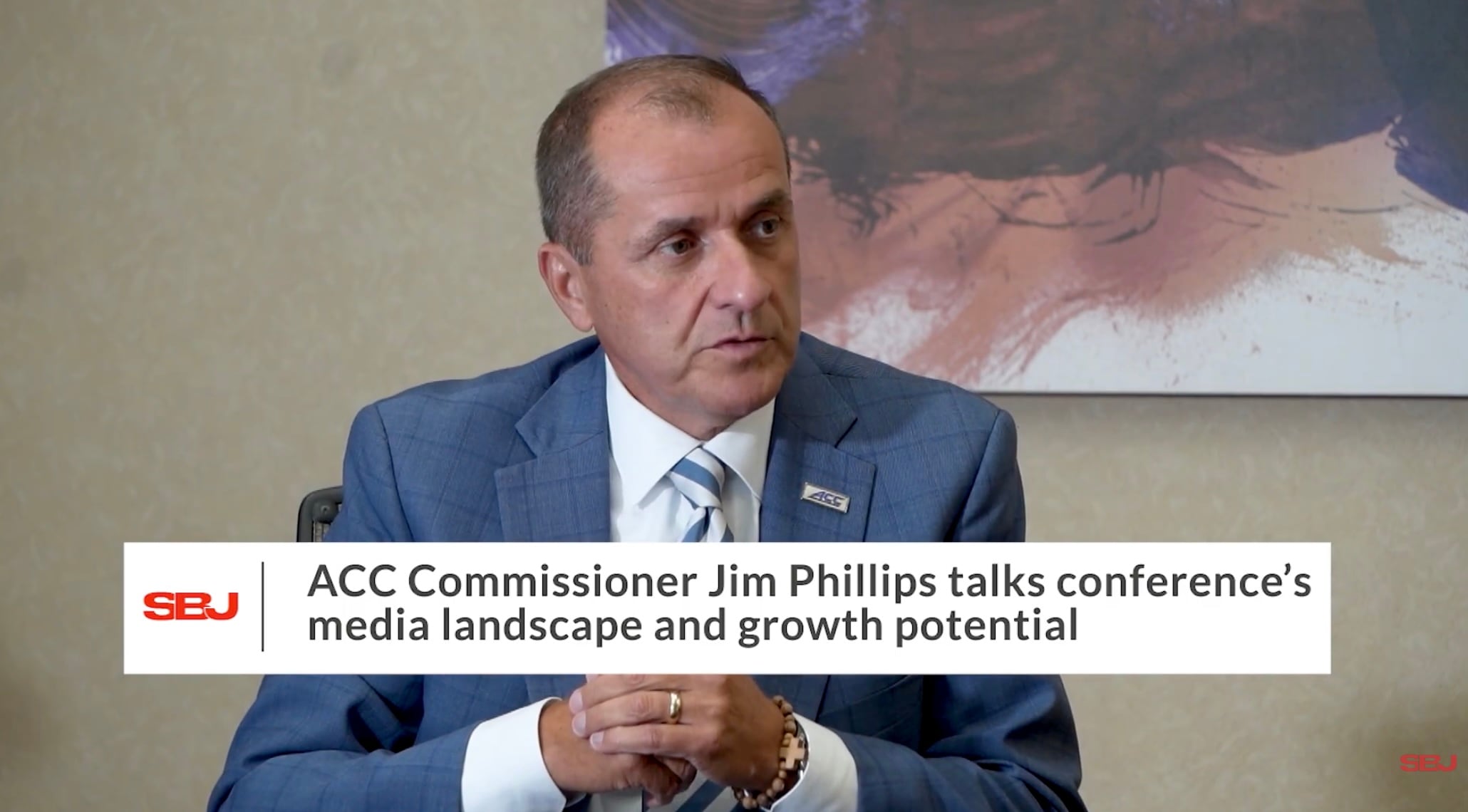


Bank of America CEO Brian Moynihan said World Cup host cities are seeing “growth rate and spending faster than other cities” throughout the 2026 tournament. Moynihan, appearing on CBS’ “Face the Nation,” said Bank of America research saw that hosting has had a “round economic impact,” with spending going to “bricks and mortar” like restaurants and bars, not just the stadiums. Moynihan: “All the tickets, there’s 500 million ticket requests. So a lot of the dialogue that I guess I’m told happens before every World Cup that all the seats aren’t going to sold. They’re all sold.” He said the World Cup is an “unbelievable phenomenon I think the United States hadn’t seen for a while.” He mentioned how people are estimating “two billion people will watch the finals on Sunday, which is just an amazing amount” (“Face the Nation,” CBS, 7/16).
MET THE MOMENT: GOAL’s Tom Hindle wrote Atlanta has been “waiting for this moment” in the World Cup and it “has most certainly stuck the landing.” The semifinal was a “truly magnificent sporting occasion.” Atlanta Stadium “feels like another world when you’re inside it” (GOAL, 7/16). In Atlanta, Kelly Yamanouchi wrote the question is whether FIFA will “come back -- and, as Atlanta officials hope, bring more tourism and business to the city in the years to come.” Atlanta Convention and Visitors Bureau CEO William Pate hopes travelers’ experience in downtown Atlanta “compels them to return.” Pate’s organization used the tournament “as a way to entertain customers in hopes of attracting future conventions to the city.” The ACVB and the Georgia World Congress Center Authority together spent about $1.2M on World Cup tickets and a suite to host 95 clients at matches. Pate said that the aim is to “drive convention business for the next five years.” Tourism and state leaders also used the World Cup “as an opportunity to drive future visits to destinations around Georgia” (ATLANTA JOURNAL-CONSTITUTION, 7/17).
CAME TO LIFE: In Boston, Serres & Silverman wrote the obstacles stacked against Boston Soccer 2026 host committee “were massive.” But come the first day on June 11, the tournament and the city “roared to life.” Thanks to the “luck of the draw -- quite literally, the tournament draw that placed Scotland for two games in Boston -- the magic of the World Cup and its endless capacity to surprise took over.” The World Cup “outward success already has city and state leaders looking ahead” -- openly eyeing a bid to host the 2031 Women’s World Cup. It also led to the creation of a new Greater Boston Sports Commission to “help land future mega-events.” Massachusetts Gov. Maura Healey said, “The lesson is that we can do big things, and we can do them really well.” Yet, looking through a deeper lens, the “early scares leading into the World Cup also delivered a sobering reality check about Boston’s capacity to pull off future mega-events.” The real test now is can Boston “throw a giant party like this on its own, or does it need thousands of Scots to show the way?” (BOSTON GLOBE, 7/17). In Boston, Dan Shaughnessy writes skeptics “were wrong about how Greater Boston would perform as one of 11 American cities hosting the 2026 Cup.” Now “hardly anyone complained. Not even ever-cynical locals.” Shaughnessy: “Almost none of the train/traffic/security nightmares surfaced. For a full month and a half, New England stopped to smell the roses and enjoy the moment” (BOSTON GLOBE, 7/17).
THE PLACE TO BE: FAST COMPANY’s Diana Budds wrote Times Square has been “one big, unofficial fan zone” since the tournament started. That Times Square has become this “beacon for the World Cup is sort of obvious” -- it is a tourist destination, after all -- but the way it has “welcomed everyone for sustained celebration and camaraderie, and become the beating heart of the tournament as a result, is much more unexpected.” Budds: “It’s the result of a pretty radical idea: that people should be prioritized in one of the busiest intersections in the city” (FAST COMPANY, 7/16).