

Tonight in Unpacks: Start times for MLB games have gone from scheduling convention to another business decision teams are actively evaluating with many teams choosing earlier first pitches, SBJ’s Mike Mazzeo reports in an Early Access look at next week’s magazine.
Also tonight:
- How U.S. Soccer’s makeover puts its business in prime position
- SBJ Preview: Welcome to the World Cup
- Can Belmont Stakes top 4 million viewers?
Listen to SBJ’s most popular podcast, Morning Buzzcast, where Austin Karp looks at the hot start to the Stanley Cup Final, Gianni Infantino takes away fans’ empty water bottles, F1 is staying in Vegas for another decade; and Casey Wasserman says he isn’t going anywhere.
‘Never had more positive feedback’: Inside MLB’s race to beat 7 p.m.

When the Philadelphia Phillies moved most of their spring and fall weeknight home games from 7:05 p.m. to 6:45 p.m. in 2022, the change seemed modest. But inside Citizens Bank Park, it quickly became something more: a fan-experience decision that helped parents keep kids in the seats through the final out and still get home at a reasonable hour.
Philadelphia was not alone. Across Major League Baseball, the weeknight clock has been moving earlier.
Games starting before 7 p.m. local time grew from 41.7% of weekday starts in 2021 to 65.8% in 2024, as clubs increasingly treat first pitch as an attendance and fan-experience lever. Those earlier starts dipped to 63.4% last year, driven largely by the Tampa Bay Rays’ temporary move to Steinbrenner Field, where most weekday games started later to account for Florida summer heat and rain.
Through May 28 this season, 76% of weekday games had started before 7 p.m., though that figure is expected to settle lower as clubs move into later summer start times.
The reasons behind the shift vary by market. For some clubs, earlier first pitches have become a family-friendly strategy designed to keep parents and children in the ballpark longer on school nights. For others, start times are influenced by factors such as weather, traffic patterns, television considerations, premium hospitality and operational logistics.
What was once largely a scheduling convention has become another business decision teams are actively evaluating.
Fan feedback factors
In Philadelphia, the calculation was straightforward: Make it easier for fans to attend a weeknight game and still get home at a reasonable hour.
The Phillies in 2022 moved all Monday-Thursday home games in April, May and September from 7:05 p.m. to 6:45 p.m. The following season, they shifted to a 6:40 p.m. first pitch for the majority of weekday matchups. And while there have been some minor tweaks since, that is largely the schedule structure they utilize today.
“When we moved our start time to 6:40 p.m., I’ve never had more positive feedback on anything from our season-ticket holders,” John Weber, the Phillies’ senior vice president of ticket operations and a 25-year club executive, told Sports Business Journal. “I couldn’t imagine playing a game at 7:05 right now.”
The combination of pace-of-play rule changes, which were instituted before 2023, and earlier start times has proved successful at the box office. In 2024, with nine-inning games averaging 2 hours, 36 minutes, the league saw a 13% increase in weekday attendance from two years prior.

Seattle Mariners Chairman and CEO John Stanton, who formerly led MLB’s Competition Committee, recalled the significance of essentially gaining an hour each day. It was enough to mitigate any risk that came with the pitch clock, as shorter games provide less time to sell concessions.
“The data we had at the time said 15 teams’ concessions had been up and 15 teams’ concessions had been down, so on a net basis it was less than a percentage point change,” Stanton said. “And I would’ve changed it even if it had cost us money in the short term, because it’s good in the long term. We must make the game responsive to the interest of our fans over a long period of time, and we need to expand our fan base and get younger and more diverse.”
The league is seeking its fourth straight year of drawing more than 70 million fans. Meanwhile, Philadelphia is seeking its fourth straight year of drawing more than 3 million fans.
“We’re like everybody else,” Weber said. “You see trends that appear to be successful, and you talk to your counterparts. When you ask them about their feedback and they say it’s been positive, well, then you start looking at it. And then you’ve got to talk to baseball operations, other business units, television, radio, all that, to make sure everybody’s on board.
“For some people, it’s a little more difficult getting here [to the South Philadelphia Sports Complex] at that time. But most people, just knowing they’d be home earlier, it really has just made it more fan-friendly for everybody. If you have a 45-minute drive or whatnot, you’re home by 10 p.m.”

How early is too early?
Not including the Chicago Cubs, the typical yearly leaders in games beginning before 6:30 p.m. local time include the Cleveland Guardians, Colorado Rockies, Detroit Tigers, St. Louis Cardinals, Chicago White Sox and Milwaukee Brewers.
One of the earliest lessons for clubs was that there is no universal start time. The optimal first pitch varies by market, climate and fan base.
The Guardians began testing 6:10 p.m. weekday starts in 2015 to guard against potential weather conflicts in April and May, and have continued to slot them at Progressive Field ever since. Curtis Danburg, Cleveland’s vice president of communications and community impact, said the time has remained a favorite in fan surveys because of convenience, especially early in the season and September. The Guardians shifted to 6:40 p.m. for summer weekdays.
“It’s still obviously difficult to draw during the week, but it gives us the best chance for success, especially when we have good weather and a good opponent,” Danburg said.
But teams also learned that moving earlier doesn’t necessarily mean moving as early as possible. Fan feedback suggested the issue was finding the right balance between getting fans home sooner and allowing them enough time to get to the ballpark after work.
The White Sox solicited feedback before arriving at an optimal pre-7 p.m. first pitch. Unlike the Guardians, the 6:10 p.m. weekday start time did not grade out well when the White Sox polled season-ticket holders and select individual fans, said Brooks Boyer, executive vice president and chief revenue and marketing officer. The clear winner was 6:40 p.m., significantly ahead of 7:10 p.m.
“Part of that is the traffic that we have in Chicago, people just didn’t want to fight that,” Boyer said.

The balancing act
Earlier starts are not without tradeoffs. Clubs must balance fan convenience against television audiences, premium hospitality demand, commuter traffic and baseball operations concerns.
“If you’re a team in the north, your night games are better for TV ratings, suite rentals and other corporate-type events, but sometimes it makes more sense to play during the day because you want to have a greater window for teams to play,” Boyer said.
It was two decades ago that the White Sox were able to secure a three-year, $500,000-a-year sponsorship deal with 7-Eleven that included Chicago starting all weekday home games at 7:11 p.m.
“We proposed it to them and they loved the idea,” Boyer said. “Obviously, there was a ton of attention around it. And it worked. I remember one of their execs saying, ‘We got more publicity right off the bat than we’re paying you the entire time.’ Maybe we undersold it. It was the perfect brand.”
To Boyer’s knowledge, no one has been able to pull it off since.
Across town, since 2021 the Cubs have typically been starting weekdays at 6:40 p.m. in April, May and September, and 7:05 p.m. during the summer. Wrigley Field famously didn’t have lights until 1988, and a city ordinance limits the number of night games the Cubs can play.
Cubs Executive Vice President and Chief Operations Officer David Cromwell said the club has offered a school-night special since moving some games earlier, bundling a ticket with a hot dog and non-alcoholic beverage.
“It’s more family-friendly, more kid-friendly the earlier start time during that school-year period, and our fans have been really positively responsive to that,” Cromwell said.
Meanwhile, getaway games can be a delicate balancing act, with teams considering ticket sales as well as being mindful of their players’ travel plans and their opponent’s. There are also collective-bargaining agreement considerations at play.
The Phillies, for instance, will play a rare September day game against the Houston Astros on Sept. 10 at 1:05 p.m.
“I normally wouldn’t make that a day game with school back in session, but because we’re traveling and Houston is traveling, it was important to make that a day game, and we’ll figure out ways to sell it,” Weber said. “You’re always trying to be a good partner to other teams. You try your best. Sometimes, you’ve got to tell somebody, ‘Hey, I’ve already got two other day games this month and I can’t have a third.’”
Researcher Josh Broughton contributed to this story.
U.S. Soccer’s business overhaul paying off in World Cup year

U.S. Soccer could receive upward of $100 million from FIFA for co-hosting and participating in this summer’s FIFA World Cup. A decade ago, that would have been a game-changing haul for the nonprofit federation.
Today, however, it represents only part of a much larger business opportunity.
When U.S. Soccer and its counterparts in Canada and Mexico won the bid in 2018 to host the 2026 tournament, the federation’s annual revenue was just more than $100 million and its annual deficit was close to $20 million. Heading into this World Cup on home soil, it approved a 2027 fiscal year budget that projects record revenue of $397 million and a surplus of nearly $10 million.
Excitement about hosting the World Cup has undoubtedly been a major driver of business momentum for U.S. Soccer, which boasts a portfolio of 25 blue-chip sponsors, a pair of national media rights deals with improved economics and a newly opened Arthur M. Blank U.S. Soccer National Training Center. But the federation wouldn’t have been positioned to seize the moment without a complete overhaul of its commercial and fundraising functions over the past several years.
U.S. Soccer’s transformation began in earnest in 2021, when the organization opted to bring its commercial rights in-house after outsourcing them to Soccer United Marketing for nearly two decades. The federation’s payment from SUM for the right to sell third-party sponsorship, television and licensing rights topped out at $30.25 million during the 2020 fiscal year (excluding a separate Nike deal that paid $22.65 million).
“In 2021, we went through a thorough process and thought really critically around what’s best for the sport holistically and what makes sense for U.S. Soccer, and made the decision and had a little bit of time to build out an infrastructure,” said David Wright, who joined as chief commercial officer in 2020. “Now we’re three-plus years in. I was very bullish on the opportunity, but I think even I underestimated the real opportunity ahead of us.”
U.S. Soccer sponsors
- AT&T
- Allstate
- American Airlines*
- Anheuser-Busch (Michelob Ultra)
- Bank of America*
- Chobani*
- Coca-Cola*
- Deloitte
- EA
- Ferrara*
- Google*
- Haleon*
- Henkel*
- Jim Beam*
- Kellanova*
- Marriott Bonvoy*
- New York Life*
- Nike
- Oura*
- Purina*
- The Home Depot*
- Ticketmaster*
- Truly*
- Visa
- Volkswagen
*New since U.S. Soccer brought commercial rights in-house in 2023
In the 2027 fiscal year, which includes this summer’s World Cup, the federation projects to generate $268.7 million in commercial revenue. That includes $226.8 million from sponsorship, licensing and fan engagement, as well as $33.1 million from its own events. The U.S. men’s national team’s pre-World Cup friendly against Portugal in March at Mercedes-Benz Stadium in Atlanta yielded the federation’s largest gate revenue haul ever.
JT Batson, who joined U.S. Soccer as CEO in 2022, said that while World Cup momentum has certainly helped the organization’s commercial fortunes, broader trends around the sport’s popularity in the U.S. over the past several decades and a series of major upcoming events — including the 2027 Women’s World Cup in Brazil, 2028 Olympic Games in Los Angeles and, potentially, a Women’s World Cup on home soil in 2031 — will ensure success beyond 2026.
“The decision-makers now at major brands are soccer people — that’s new,” Batson said. “They used to be baseball people, football people, basketball people, golf people, tennis people. They’re now soccer people. And if you look at the C-suite at all of our partners, there’s going to be a good number, if not a preponderance, of true soccer people.”
In addition to commercial growth, the federation has beefed up its fundraising abilities since the addition of Leah Burton from the Solomon R. Guggenheim Museum and Foundation as chief advancement officer in 2023. Since launching its “Behind The Dream” fundraising campaign last year, the organization has already raised $170 million, or 68% of its $250 million five-year goal.
“The decision-makers now at major brands are soccer people — that’s new.”
— JT Batson, U.S. Soccer CEO
“Being able to align a donor with something that they truly care about and having U.S. Soccer be a place where they see that impact in action and that deliverable — whether it’s building a national training center, whether it’s attracting and retaining the best possible coaching staff within our environment, whether it’s making sure that soccer is accessible in local communities — this is what’s really exciting for us at this moment,” Burton said.
Like all participating federations, U.S. Soccer will receive a minimum of $12.5 million for participating in the World Cup — $10 million in prize money and $2.5 million in preparation funds. That figure will increase each time the U.S. men’s national team advances to a later stage of the tournament, reaching $52.5 million if it wins the championship.
What is still unknown — eight years after the World Cup was awarded to the U.S., Mexico and Canada — is how much legacy funding U.S. Soccer and its North American counterparts will receive for hosting the competition. In its 2027 budget, U.S. Soccer didn’t specify how much it expects to receive from FIFA and said it lacks clarity on the timing and potential use restrictions.
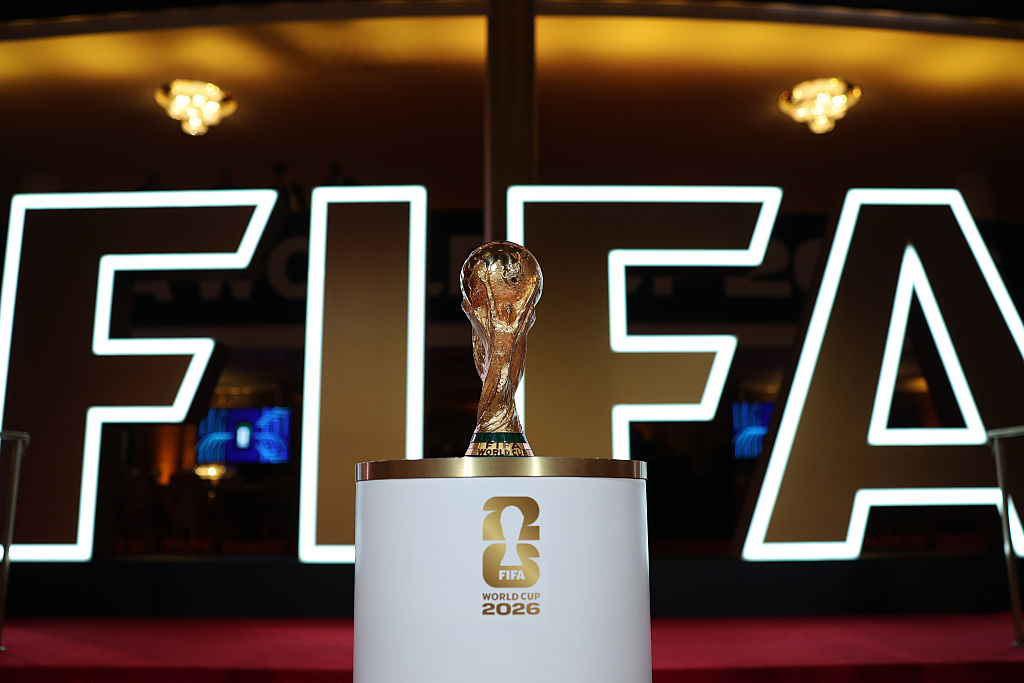
In 1994, a local organizing committee led by then-U.S. Soccer President Alan Rothenberg generated a $50 million surplus from ticket sales and domestic sponsorships that was ultimately used to launch the independent U.S. Soccer Foundation. This time, U.S. Soccer has no direct role in delivering the tournament and no direct share of FIFA’s operating revenue.
FIFA has pledged to provide legacy funding to the three host countries. Multiple sources have told Sports Business Journal the federations expect to receive a combined 1% of gross revenue from the World Cup, though the final amount and allocation have not been set. With tournament revenue projected at roughly $11 billion, that would amount to about $110 million.
U.S. Soccer would receive the largest share, given the country is hosting 78 of the 104 matches. Concacaf Secretary General Philippe Moggio said some of the funding could also be shared with the confederation’s other 38 member associations.
Regardless of how much U.S. Soccer ultimately receives from FIFA, it will just be the cherry on top of an already record-setting year.
Welcome to the World Cup
Amid all the controversies surrounding the World Cup’s arrival in North America, games will be played in less than a week as the tournament gets underway with a pair of Group A games in Mexico. Host Mexico kicks off the event Thursday against South Africa at Estadio Azteca in Mexico City, and South Korea faces Czechia at Estadio Akron in Guadalajara.
Here is some of SBJ’s extensive preview of the event:
- Eric Shanks has led Fox through some of the biggest moments in sports
- A Tale of 16 Cities: How FIFA’s effort to centralize the World Cup decentralized the fan experience
- Unprecedented World Cup sponsorship blitz comes to North America
- Every World Cup fan festival at a glance
- Fox invents BRISK tech for World Cup remote sets
- World Cup is golden opportunity for MLS
Fox will look to top 4 million viewers for Belmont Stakes

The last leg of horse racing’s Triple Crown is set for Saturday afternoon, and Fox will aim to have the Belmont Stakes cross the 4 million-viewer threshold for the first time since it began airing the race in 2023. Nielsen’s Big Data should help the network achieve that mark this year.
Last year, Fox drew its best figure for the race, 3.8 million viewers, as Kentucky Derby-winner Sovereignty won. That was up 5% from 2025. This year’s Derby winner, Golden Tempo, is running at Saratoga on Saturday (that track is hosting the Belmont Stakes one last time before a renovated Belmont Park opens in 2027).
The high mark for the Belmont Stakes over the last decade is 12.7 million viewers on NBC in 2018, when Justify became horse racing’s last Triple Crown winner. That shows the promise of what the audience can be for the race, but that hasn’t come to pass many times since 2018, as Kentucky Derby winners have been skipping the Preakness at a much higher clip. Should the Preakness move back a week, as is expected, that would also raise questions as to whether Belmont, track/event operator NYRA and Fox Sports would do the same with the last leg of the Triple Crown.
Belmont on Saturday will lead into MLB regionalized action on Fox, and that window includes a popular Yankees-Red Sox game. Fox also will have an hour of coverage of the Belmont Stakes Racing Festival on Friday night from 5-6pm ET.
Speed reads
- The build-out of the temporary venue for next week’s Freedom 250 card at the White House is on schedule, with UFC president & CEO Dana White promising “an incredible unique experience for our fans‚" reports SBJ’s Adam Stern.
- Disney has sold out of advertising inventory for the NBA Finals ahead of Game 2 between the Knicks and Spurs on Friday night. Overall, the company said it has 88 advertisers for this year’s Finals (pre, postgame and in-game), reports SBJ’s Josh Carpenter.
- Coca-Cola returns for a 23rd year as a sponsor of the Belmont Stakes, which boasts a roster of 22 sponsors, the most for the New York Racing Association-owned event, SBJ’s David Broughton reports.
- IBM has long invested in technology startups through its $500 million venture fund, IBM Ventures. That vehicle is now turning its eye to opportunities in sports technology, SBJ’s Rob Schaeffer reports.
- In this week’s Talent Pool agency roundup, SBJ’s Irving Mejia-Hilario reports that Bulls G Tre Jones signed with CAA Sports, amid a flurry of basketball signings overall as the NBA Draft and free agency nears.