

Tonight in Unpacks: MLB wants to own Independence Day, writes SBJ’s Terry Lefton, so it’s embarking on a promotion that pairs a beloved baseball movie with games at drive-in theaters.
Also tonight:
- NBA lays off ‘dozens’ as it shifts focus to Europe, local media
- Fox, Telemundo see record group stage viewership
- WTA moving 2026 finals from Saudi Arabia to Indian Wells
- Op-ed: WWE and the inevitability of further disruption
Listen to SBJ’s most popular podcast, Morning Buzzcast, where Abe Madkour discusses record World Cup attendance and viewership, who’s making billion-dollar bids for NBA Europe teams, deciding America’s sports and more.
PUBLISHING NOTICE: SBJ Unpacks will not run Thursday, July 2, and Friday, July 3, for the Fourth of July holiday. SBJ Unpacks will return Monday, July 6. This week’s SBJ Marketing and SBJ Football are also off for the holiday.
MLB pulls into drive-ins for promotion to fire up Fourth of July celebrations
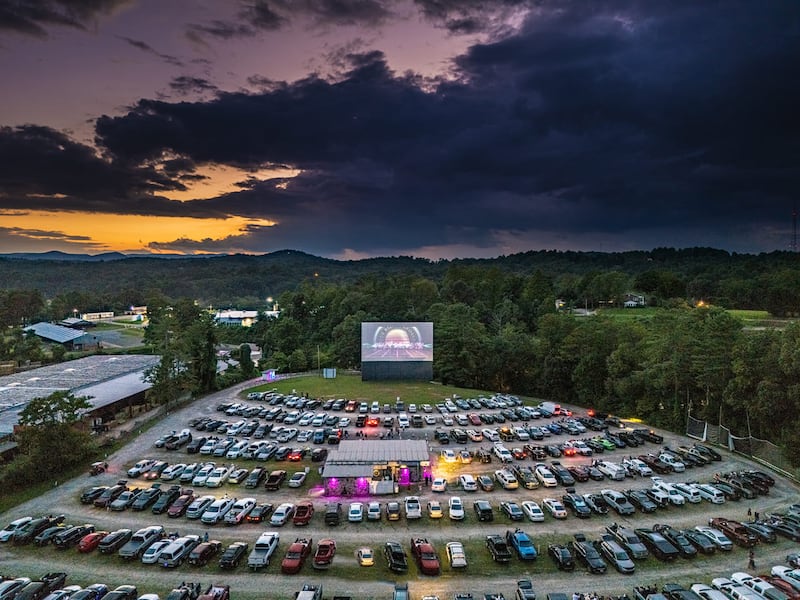
MLB’s quest to claim Independence Day as its own holiday and its pursuit of a commercial hook to attract sponsors were the accelerants that put the league into the drive-in movie business this July 4 with the “MLB Summer Drive-In.”
Drive-in theaters close to four MLB cities and one minor-league market will host fans in five six-hour events on the evening of July 4. They will include showings of “The Sandlot” followed by the local team’s games on the big screen, and fireworks or drone shows depending on the locale. There will be “Play Ball” activities and plenty of ballpark food, some from stadium concessionaires or from MLB’s “Ballpark Bites” food program.
The drive-in extravaganzas, which are free to those registering online, are being staged in Vineland, N.J. (Philadelphia Phillies); McHenry, Ill. (Chicago Cubs); Paramount, Calif. (Los Angeles Dodgers); Blue Ridge, Ga. (Atlanta Braves); and Greenville, S.C., where the local minor-league team is a Boston Red Sox affiliate.
We’re long past the age of holiday doubleheaders, but MLB sought new ways to further attach itself to the Fourth of July and especially the semiquincentennial.
Uzma Rawn Dowler, the league’s chief marketing officer and senior vice president, said MLB has wanted to “plant [a] flag” and take “ownership of a holiday” like other leagues. “July Fourth feels like it should be MLB’s holiday. We play on that day,” she said.
A team of marketers across MLB started meeting late last summer to brainstorm the most red, white and blue experiential concepts. The drive-in notion quickly emerged as an early winner to promote fan engagement, with its inexorably deep connections to the American summer.
“The marriage of baseball and movies seemed obvious right away, and drive-ins are woven into the fabric of local towns in the way baseball is,” said Adrienne Rochetti, vice president of strategic planning and social impact at Underdog, the agency brought on by MLB to administer the project.

Piggybacking baseball with July 4 is more than fitting. The other hook to drive-ins was more commercial. MLB was looking for its first new auto sponsor in more than two decades, and ownership of MLB’s America 250 efforts became part of the pitch. Accordingly, new corporate sponsor Ford is presenting sponsor across MLB’s Fourth of July festivities, including the drive-ins, where it will display vehicles and tie in local dealers. Other sponsor involvement includes Mastercard and Nutrafol.
It’s only around 250 carloads per drive-in, but MLB hopes to amplify the program with social and digital extensions, along with possible cut-ins to the Fox national games that night. Dowler said it’s somewhat of a beta test.
“When we thought about how we could own that holiday, it just made sense,” Dowler said. “This experiential activation is a bit of a pilot for a scalable platform for MLB and our partners for the Fourth of July.”
ROI with any experiential program is complex, perhaps even more so here. “At the end of the day, it’s a whole new platform around which fans can connect and [MLB] partners can activate, with lots of room to do that. And it’s outside of the stadiums,” Rochetti said.
“The marriage of baseball and movies seemed obvious right away, and drive-ins are woven into the fabric of local towns, in the way baseball is.”
— Adrienne Rochetti, VP of strategic planning and social impact, Underdog
As for the KPIs? Less tangible, generally.
“It will be about the virality of the social content sharing, further cementing ownership of this holiday and not just through traditional media,” Rochetti said. “Those things will make us say it’s a more complete engagement.”
With so many baseball movies in the history of Hollywood, “The Sandlot” is an interesting choice.
It had modest commercial success with its 1993 release ($33 million on $7 million in production costs), but established itself as the definitive baseball coming-of-age film and has since become a cable TV staple, generating more than $75 million in home video revenue and catalyzing two direct-to-video sequels. Signed memorabilia from the movie are common in most sports auction houses and on eBay, and several bats from the film, along with other props, are on display at the Louisville Slugger Museum.
While not quite the attraction or fame of the “Field of Dreams“ diamond in Dyersville, Iowa, the Glendale, Utah, site where the baseball scenes of “The Sandlot” were shot still attracts visitors and occasional cast reunions, even though it is unmarked and holds no diamond — not even a backstop.
Underdog Senior Account Director Nick Twomey described the conversion of the drive-ins for the July 4 events as overnight chores that will take 12 hours and a crew of 20 to 30 at each location.
“We don’t want those attending to feel like it’s a corporate event,” he said. “They’ve got to still have a drive-in feel. And we’ll have them converted back right away, so they get back to their regular movie businesses on Sunday night.”
Terry Lefton can be reached at tlefton@sportsbusinessjournal.com.
NBA lays off ‘dozens’ amid push into NBA Europe, local TV

The NBA eliminated “dozens” of jobs Wednesday, sources told SBJ, as the league continues to reallocate resources toward perceived growth areas such as NBA Europe and its burgeoning local TV business. Nine months after NBA Commissioner Adam Silver reorganized the league office with an eye on global pursuits, Wednesday’s follow-up layoffs will impact a handful of business departments and support staff -- but also translate to new strategic hires, according to an internal memo from Silver obtained by SBJ.
“The changes today are a continuation of the strategy we announced in September which will enable us to invest further -- including in new positions and hiring -- in key growth areas such as local media, programming and technology, the WNBA and the creation of a new league in Europe,” Silver told colleagues in the memo. “These new investments will best position us to achieve our key objectives, including a better understanding of our fans, improving the game and viewership, and driving global growth across our leagues.”
The development comes at crucial juncture of the offseason, just a day after final bids were submitted for NBA Europe franchises and only nine days after Matt Volk began his newly created NBA job of GM of Local Media. Those are two of the league’s most pressing matters this summer, other than possible expansion, and will likely bring a series of personnel moves.
Regarding NBA Europe, Silver has to hire not only a CEO for the league, but presumably multiple other positions to help streamline the startup -- many of those hires likely to be based in Europe. The new league has to be marketed, venues need to be supervised and European TV deals have to be negotiated. The NBA will certainly need people on the ground there.
Speaking of media rights, 11 of the former Main Street Sports Group teams still have not formalized their local TV deals with training camp a little less than three months away. The best options for those teams appear to be streaming platforms or OTA local channels -- and, by hiring Volk, the league is creating an in-house business that can aid teams with production.
For instance, Volk’s department intends to oversee local media operations, develop production solutions and work with teams and partners to enhance local game telecasts. It will seemingly need staffing.
In addition, the league is planning to launch a centralized hub for local broadcasts likely for the 2027-28 season -- housed perhaps by Google/YouTube -- and that could lead to new personnel, as well.
In his memo, Silver also mentioned the growth potential of the WNBA, along with programming and technology. So, together with NBA Europe and local media, all of those superseded the positions that were eliminated Wednesday.
In September, the data and marketing departments had already been consolidated under the umbrella of the Global Partnership & Media department. So Silver’s memo implied these layoffs were the next progression.
The commissioner told employees in his Wednesday note that he was “grateful for the contributions of our colleagues who will be impacted by today’s announcement” and that they “are being offered severance, health benefits and outplacement services to support their transition.”
Telemundo, Fox wrap FIFA World Cup group stage with record audience numbers

Telemundo and Fox Sports delivered record viewership during the FIFA World Cup group stage, combining to average 9.7 million viewers over 72 matches. That figure is just shy of what the opening rounds of this past season’s NCAA Men’s Basketball Tournament drew across CBS, TNT, TBS and truTV (10.1 million viewers).
The split between the overall audience was around 52% for Fox Sports and 48% for Telemundo, even as U.S. Hispanics account for only 20% of the population.
In English
Fox, FS1 and Tubi averaged 5.05 million viewers over the 72 matches, a record for English-language TV in the U.S. and up 92% from the November/December group stage in 2022 (2.64 million). This year had the benefit of Nielsen’s Big Data and full out-of-home measurement, but the gains far exceed those implementations -- and exceed the expectations of many coming into the tournament.
The three USMNT matches mark the three best USMNT matches all time in English for a World Cup, led by 18.04 million watching U.S.-Paraguay to open the tourney.
Outside of the U.S. games, Brazil-Morocco was the top group stage match for Fox with 10.02 million viewers, followed by Mexico-South Korea (9.36 million) and Colombia-Portugal (9.23 million).
The Fox Sports pregame show through the group stage averaged 2.29 million viewers, up 142% from the event in 2022 (946,000).
En Español
Telemundo, Universo and Peacock averaged 4.6 million viewers for group stage matches, a record for the Spanish-language network and up 122% from Qatar four years ago.
Mexico was the easy leader for Telemundo matches, accounting for the three best group stage games, which were paced by the 14 million viewers for Mexico-South Korea (El Tri’s second game of the group stage). Mexico’s three matches averaged 12.1 million viewers. That was followed by Colombia (7.7 million), Argentina (7.2 million), the USMNT (7.1 million) and Brazil (7 million).
The USMNT also set records on Telemundo for a World Cup group stage, with the team having its best World Cup games ever on the Spanish-language network. That was led by the final match of the group stage on Thursday, with Türkiye-U.S. drawing 7.4 million on the network.
Streaming on Peacock was also big for NBCU, as 44% of Telemundo’s audience came from streaming. The average minute audience on Peacock (2 million) was up 251% from Qatar. Twelve matches drew over 3 million viewers on Peacock, up from zero four years ago.
WTA moving 2026 finals from Saudi Arabia to Indian Wells
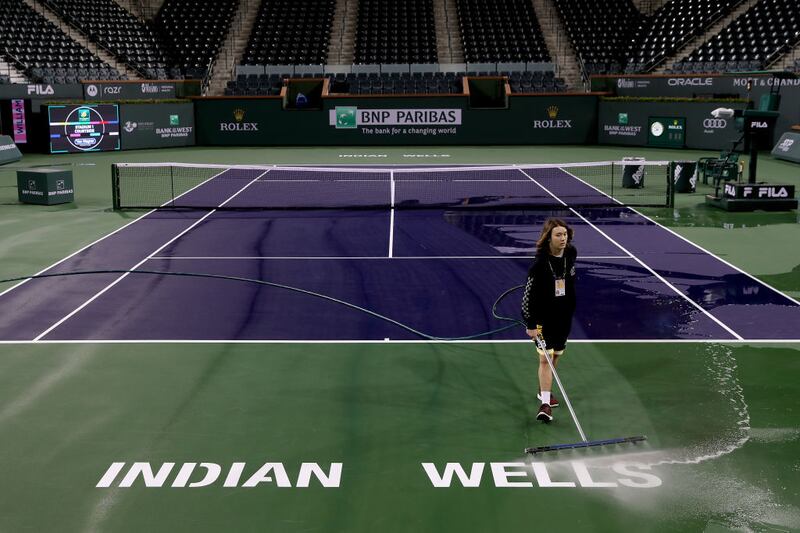
The WTA is moving the 2026 edition of its year-end finals from Riyadh, Saudi Arabia to the Indian Wells Tennis Garden in Southern California, the site of the annual BNP Paribas Open ATP Masters/WTA 1000 tournament. The move prematurely ends a three-year deal to host the event in Saudi Arabia that began in 2024. An official reason for the change was not given, but industry sources said the primary factor was a desire for operational certainty amid a tumultuous stretch for the tour’s flagship event and lingering tensions in the Middle East.
“Following two impactful years of the WTA Finals in Riyadh, the WTA requested to move the 2026 WTA Finals to a new host location,” the WTA said in a statement. “The Saudi Tennis Federation accepted WTA’s proposal, and the two organizations mutually agreed on the conclusion of the hosting arrangement and remain proud of the achievements realized through their partnership.”
The 2026 WTA Finals will now be held from Nov. 8-15, a slight change from its originally scheduled dates of Nov. 7-14. The WTA said tickets will go on sale to the general public starting Thursday, July 2.
The financial implications of the move were not immediately clear, and no information on prize money was disclosed in the WTA’s announcement. The 2025 finals paid players $15.5M in total prize money, a record for the event.
The WTA declined to comment further.
Beyond 2026, the WTA Finals’ long-term home is still to be determined. The tour has been considering bids for a new host city for the past several months, with Charlotte (also a candidate in 2024) among the known contenders.
The Indian Wells move is the latest development in a thorny half-decade for the WTA Finals. In 2019, the tour signed a 10-year agreement to host it in Shenzen, China, but played only one edition there before the COVID-19 pandemic and the WTA’s suspension of tournaments in the region in the wake of the Peng Shuai incident combined to collapse that deal. The WTA made year-by-year stops in Guadalajara, Fort Worth and Cancun between 2021-2023 before signing the deal with the Saudi Tennis Federation in 2024.
What is the dream jersey patch sponsor?

With a holiday weekend coming and inspired by a bit of news this week, I thought we’d have a little fun here in the college newsletter this evening.
Wisconsin announced that Culver’s will be the jersey patch sponsor of Badgers football, men’s basketball and men’s hockey on Tuesday. The fast-food giant is a staple in the state and across the Midwest.
That got me thinking: What are a few other schools with obvious, or fun jersey patch sponsors that could have similar synergy?
These were a few of my ideas (yes, I accept any and all consulting fees):
Coastal Carolina: Visit Myrtle Beach
Coastal Carolina has been known to lean into the fun and whimsy that comes from a weekend on the beach. Why not make it more official?
The school already has the teal “Surf Turf.” Let’s get Visit Myrtle Beach involved and add to the tourism flare with air brush football helmets and a boardwalk-styled sideline.
Georgia: Coca-Cola
This one is easy. Georgia has plenty of major companies in its backyard, but Coca-Cola feels like the most obvious answer. Can that jersey patch include a few of the polar bears we all love so much around the holidays? That’s innovation that excites.
Alternative: Augusta National Golf Club (yes, I know they wouldn’t go for this in a million years, but a guy can dream, right?)
Indiana: Indianapolis Motor Speedway
The reigning national football champions are getting widespread attention, but racing is in the fabric of the state. The Pacers have leaned into the motorsports motif with a few alternate jerseys. Let’s get the Hoosiers in on the action with a racing stripe jersey patch.
Kentucky: Buffalo Trace
I know you technically can’t have alcohol sponsors for jersey patches, but let’s not let rules get in the way of common sense. I picked Buffalo Trace, but you could go with just about any of the distillery stops along the bourbon trail for this jersey patch. Maybe you rotate it each week?
Anyways, this thought exercise is making me thirsty. Might be time to grab one of those giant rocks out of my fridge and pour myself a glass. …
Maryland: Old Bay Seasoning
Crab cakes and football — that’s what Maryland does.
I’m leaning into that. As a D.C. native, I am plenty familiar with the ways of crab season on Maryland’s Eastern Shore. I keep Old Bay stocked in my kitchen at home here in South Carolina.
Hard to imagine Mike Locksley’s football team ever losing a game with an Old Bay jersey patch affixed to the Maryland state flag-inspired Under Armour jerseys they so often sport. Perfect symmetry.
Nebraska: Runza
I have admittedly never set foot in a Runza, but if we’re following the Culver’s-Wisconsin track, this makes too much sense. Runza, a fast-food giant across the state, was founded and is headquartered in Lincoln. Seems like an easy marriage to me.
Notre Dame: Vatican City
The connections between Notre Dame and the Vatican are self explanatory. Plus, we’ve got a pope who’s into sports, while Notre Dame is headed to the holy city for basketball games against Villanova later this fall.
Surely Notre Dame AD Pete Bevacqua can get Pope Leo on the phone to discuss adding the coat of arms of the Holy See — a central insignia on the Vatican’s flag — to a Fighting Irish football jersey, right?
Editor’s note: I also considered Pope Leo’s beloved Chicago White Sox as a patch sponsor here à la MLB’s sponsorship of golfer Cameron Young, but this felt more natural.
Stanford: Google
Given the lengthy list of prodigious ex-Stanford students, this could go a million different ways. Peter Thiel’s PayPal? How about Netflix? Co-founder Reed Hastings is a Stanford grad. SpaceX? Elon Musk briefly attended the school before dropping out.
I landed on the easy answer here: Google.
Co-founders Larry Page and Sergey Brin are Stanford alums. That’s plenty of Silicon Valley ethos to give them the nod here.
Texas Tech: Literally any oil company based in West Texas
Pick your poison on this one. The obvious answer is Double Eagle Energy Holdings — co-founded by Red Raiders booster Cody Campbell — though oil and gas companies are a dime a dozen in this part of the country.
One other alternative is Masked Rider Capital, the Lubbock-based firm run by billionaire Texas Tech grad Dustin Womble (Yes, the same Womble’s whose name appears all over campus).
Utah: Deer Valley Resort
Let’s continue leaning into regionality here. A couple of my college buddies live in Salt Lake City, and their consistent refrain around October is that they can’t wait for ski season. We here at the SBJ College newsletter hear you loud and clear. Skiing sponsor it is!
Vanderbilt: Grand Ole Opry
There is more to Nashville than just Broadway. I’ll side with that sentiment here — though I do love an evening in the Broadway honky tonks.
The Commodores have aspirations of being Nashville’s team, so let’s lean into the music scene.
Years ago I toured Vanderbilt’s campus as a prospective student (no, I did not get in), but my family went to the Grand Ole Opry one night for a show. Genuinely one of the coolest venues out there. This would rock. *Exits stage left*
Washington: Starbucks
Washington AD Pat Chun has mentioned to me a handful of times the major companies that call Seattle home are obvious partners for the school to lean into sponsorship-wise. That said, let’s go with a Seattle OG.
I made my first trip to Seattle a couple years ago and I was genuinely shocked to see how long the line was at the original Starbucks down by Pike Place Market. Easy to forget behemoths like that start small, too.
WWE and the inevitability of further disruption
Editor’s note: The following is an excerpt from “Sometimes Wrong but Never in Doubt” (Skyhorse Publishing, June 2026), by George Barrios, former co-president of WWE.
Growth is always related to revenue, profits, and cash flow. By 2018, WWE was reaping mammoth rewards from the changes Michelle [Wilson, my co-president at WWE] and I had implemented. The organization was no longer just a traveling road show obsessed with event logistics. We had entered a totally different game, the one I referenced when I quoted Reed Hastings, founder and CEO of Netflix. He said that his number one competitor was sleep.
What he meant was every minute every person spent watching Netflix was valuable. Because if people spent a lot of their time enjoying his service, then they would be willing to keep paying for it. Ideally, each eyeball would be turned to Netflix 24/7, and anything that got in the way had to be considered a competitor.
Despite how far we’d come, Michelle and I knew we weren’t out of the woods. Word to the wise: When you’re truly in business you are never out of the woods. We understood that further disruption was coming. Further balkanization of the media space was in the cards. That’s how counter-positioning works. Once you disrupt a particular system, set your watch. It will happen again, and sooner than you think.
Metcalfe’s Law states that the value of any network increases exponentially with every node added. The more users a network has, the more valuable it becomes. Because of this, the cost of adding new viewers is generally outpaced by the value they bring. This applies to stock exchanges worldwide, to social media networks, and yes, to passionate fan communities like WWE.
Michelle and I were chiefly concerned that when the next change arrived, WWE’s organizational size might work against us. We envisioned scenarios where consumer aggregators — Netflix, Apple, Amazon Prime, Comcast, and the like — would start to consolidate as the battle between intruders and incumbents worked itself to a standstill. Regardless of how that shaped up, we knew WWE would retain value in the coming era. But big players wouldn’t necessarily yield the same force as they had in the previous cycle.
The key point is that the value of eyeballs isn’t linear. Consider a case where your organization has 500 eyeballs and my organization has 500 eyeballs. If we were to merge, our new combined viewership of 1,000 eyeballs might not represent a 2x leap. Rather, it might represent a 4 or 5x leap for the simple reason that no other organization might be operating at that scale. At the same time, organizations that stayed at the level of 200 or 300 eyeballs could see the value of those eyeballs decline. Why? Relatively speaking, they’re too small to matter. That’s how working at scale often operates, and it’s perilous.
“We’ve got to stay nimble and open,” I told Vince. “The media sector is still in the early stages of its latest transformation. We can’t know for sure which way the world will evolve. At this point, what we can do is create options.” Then I reiterated what I’d been telling him all along. “Down the line, we may have to start thinking about acquiring another company or being acquired. There are scenarios where that could be the best way to keep growing.”
Speed reads
- The USOPC’s total assets topped $1.14 billion in 2025 as the organization brought in more than $281 million in revenue in the non-Games year, reports SBJ’s Rachel Axon.
- Axon also reports that Gene Sykes will remain chairman of the USOPC following a board vote earlier this week.
- Levy will oversee the food and beverage operation for Northwestern’s Ryan Field when the most expensive college football stadium ever built opens this fall, writes SBJ’s Bret McCormick.
- The MLBPA, as part of a series of transaction proposals Wednesday in CBA talks, wants to grant players access to team-collected, non-proprietary performance data and video, reports SBJ’s Mike Mazzeo.
- The NBA will stage the NBA Cup’s 2026 championship game at Butler’s Hinkle Fieldhouse in what one team executive has already called the league’s “Field of Dreams” game, notes SBJ’s Tom Friend.
- ESPN will carry 12 hours of the PGA Tour’s FedExCup Playoffs across the three events, reports SBJ’s Josh Carpenter: The FedEx St. Jude Championship, the BMW Championship and the Tour Championship.
- Pro Padel League signed a deal with USA Sports that will see five matches air on CNBC during its 2026 season, writes SBJ’s Rob Schaefer.