

Bam Adebayo of the Miami Heat scored 83 points in a game against the Wizards. Unfortunately, it was the night the Wizards started five Make-A-Wish kids.
— 'Saturday Night Live'
The jokes rattle off the walls of the Washington Wizards’ upgraded practice facility, sarcastic darts that ricochet past the chefs and the masseuses and the psychologists before falling on deaf ears. A rebuild — not to be confused with the crude four-letter-word “tank” — is a living, breathing, evolving monster, measured in micro victories, lottery odds and accusations that an owner and his executives are losing on purpose. The secret to maintaining sanity is the plan. Or, in this case, the plan before the plan.
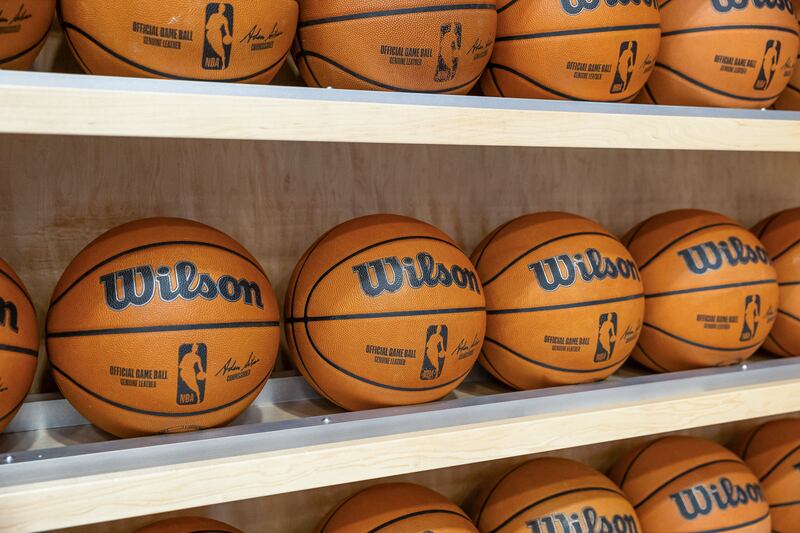
Through it all — a 16-game losing streak, the Adebayo embarrassment, the minuscule local TV ratings, the bottom-rung attendance and the social media potshots — young, effervescent Wizards equipment man Jamil Ludd, or other team attendants just like him, carve out time every day to synchronize the ball racks. It is no arbitrary thing. They meticulously line up the “Wilson” labels on every basketball side by side, facing forward, an attention to detail that sends a subliminal message of: We take this shit seriously.
The same goes for the Wizard-branded towels in the locker room that are compulsively folded, hung and pulled to a certain length. Or the new brass silverware in the cafeteria. Or the gourmet chefs lightly braising the salmon. Or the tinted filters that were stripped off the windows to lighten the front office. Or the brighter wall paint that is a metaphor for sunnier days ahead amid the chronic losing and Beltway ambivalence.
Weaker or less competent executives might not have attempted such a blatant remake, a tear-down followed by a build-up that they warned Wizards owner Ted Leonsis might take five years. But now Year 3 has come to a close, and the reconstruction phase is likely in the rear-view mirror, no matter what their final league-worst 17-65 record says. But it’s not about the players, even though recently acquired all-stars Trae Young and Anthony Davis are waiting in the wings next season to uplift a partly teenage core. It’s about the RC Buford and Sam Presti trees from San Antonio and Oklahoma City, respectively. It’s about the idea that infrastructure comes first, talent acquisition second, 50 wins third.
But, mostly, it’s about a front office led by President Michael Winger and General Manager Will Dawkins, who’ve been entrusted with a reboot full of conspiracy theories, Tank Standings, Adam Silver lectures, an 83-point fiasco and now ”Saturday Night Live.”

“We can be up 30 points or down 30 points, we could be executing on a plan and getting a great player on the cheap or we made a terrible trade. It doesn’t matter — this is Michael,” says a grinning Leonsis, imitating Winger with his head in his hands. “I said to him, ‘The Chief Worrying Officer.’ And that’s kind of what you want. He’s introverted and he’s secretive and he’s methodical. And that flows down to Will. And they value secrecy. They value the power of their data. And they’ve been building that trust amongst themselves.
“That’s how culture gets built. It gets built from who the leaders are. So these guys are highly professional. They’re very thorough. They’re playing chess when sometimes it seems I might have been playing checkers. Or our organization might have been playing checkers before.”
They may be playing chess, but, fact is, they’re also playing the lotto. And with a public journey like this, when you’re all over social media for the wrong reasons, when a loss is considered a win and a win is considered a loss, somebody has to be the CWO.
Then again, maybe Winger isn’t worried at all. Maybe he and his executive team were groomed for this …
Relegate the Wizards
— @YaronWeitzman on X
Winger used to worry about taking notes in San Antonio. There are worse internships.
A native of the Cleveland area, Winger was a law student at Maryland and an intern for Baltimore-based agent Ron Shapiro when Shapiro was hired as a Spurs consultant. They flew together to San Antonio in 2003, this prominent agent and his lackey, and the person who picked them up in a white Lexus sedan was none other than Danny Ferry, the team’s new director of basketball operations.
Winger gulped. He was expecting a taxi. Or a ride from some faceless team attendant. But this was Ferry — not only an executive, but a former Cavalier player whom Winger had once rooted for. Winger began to wonder: What kind of organization is this? The future of the NBA, that’s what.
The Spurs’ front office consisted of GM Buford; Lance Blanks, director of scouting; Presti, director of player personnel; and Ferry — and all they did was caucus and win. The conversations Winger was privy to, while fetching coffee, were priceless, a ringside seat to culture-building. He sat in while the four executives and Shapiro discussed ways to negotiate an extension for Tony Parker. He learned it’s an art.
Winger remembers them brainstorming for hours on Parker — how often Tony flew back to France in the offseason, what schools his kids attended, whether he’d prefer a deal front-loaded or back-loaded, what peers he needed to out-earn. They were preparing peace talks.
“If culture’s a non-negotiable, which it was for them, then it’s non-negotiable,” Winger says. “Watching the camaraderie among them … that was really my first look behind the curtain of a pro sports team … Everything I’ve done in my career in the NBA stems from getting to know those guys because that was — how do I say it? — … that was a genesis, but also the prototype.”
It was more educational than any law school course. When Ferry was hired as Cavaliers GM in the spring of ’05, Winger wished he could have picked him up at the Cleveland airport. At the time, Winger was preparing for the bar exam, curious who Ferry would surround young Cavs star LeBron James with. But when Ferry called to offer him a job as his front office intern, he saw it all up close.
It was more hands-on training. Winger saw how Ferry was a “protector” of the staff, of the plan, of LeBron, of “internal second guessing.” He saw him have “hard conversations” with owner Dan Gilbert. He filed it all away, until someone else from the Spurs tree called: Presti.
For any Wizards fan freaking out, just remember the Thunder lost by 73 to the Grizzlies during their rebuild, and now they are world champions
— @BrysonAkinsNBA on X
Presti had left the Spurs in 2007 to run the Seattle SuperSonics, and a year later, he fielded a call from team owner Clay Bennett telling him to brace himself — and clear the office. So Presti sent everyone home except for a couple of interns, one being Will Dawkins.
He told the eager Dawkins — who, like Presti, had played basketball at Emerson College — “Stay here and take notes.” And these weren’t just notes, these were marching orders.
Bennett called back a half hour later to say the team was moving to Oklahoma City — like, tomorrow. “What? Let’s go find Oklahoma City on a map, let alone build a practice facility,” Dawkins jokes now. But what happened next changed his career.
Dawkins was on the ground floor of a rebuild, of a mystery, of a culture change or a culture shock — one or the other. The Thunder set up shop in an OKC roller-skating rink that they gutted and turned into a basketball haven. Dawkins was basically in charge of magnets on a whiteboard. Or washing clothes. Or teaching forward Serge Ibaka how to drive. Or being a faceless employee picking people up at airports. Or taking notes. “Low person in the front office,” he says. Sound familiar?
By 2010, he was still overseeing the whiteboard when in walked Michael Winger. Presti had not only hired Winger away from Ferry, he’d anointed him assistant GM and team counsel. “How do you like your magnets?” Dawkins remembers asking Winger the first day. But it wasn’t long before Dawkins had more of a front office voice, learning strategy and salary cap from Winger — and both of them learning patience, secrecy and infrastructure from Presti.
At one point, for instance, before Winger arrived, the Thunder (with Kevin Durant and Russell Westbrook) started 3-29. Dawkins remembers players swinging at each other in practice one day and another player, Chris Wilcox, saying, “Why are we fighting each other? We’re all 3 and 29.” That was the point: Presti had taught them they were in it together and never deviated from his plan.
Presti compiled draft picks, hired psychologists, hired masseuses. He brought in chefs whose meals were low-salt, high protein. He made sure the facility kitchen never closed. He sent players home with dinner so they’d avoid fast food. He protected Durant the way Ferry protected LeBron, the way Buford protected Parker. It was Spurs 2.0.
“The education in Oklahoma City is, it’s an Ivy League education with extremely high standards,” Winger says. “[Presti] created like an institution to raise young players, and that’s what Oklahoma City became. They are the barometer by which all player development systems ought to be measured.”
Disorganization wasn’t tolerated. The Thunder’s best player now, Shai Gilgeous-Alexander, did an interview a few years back describing how anal the franchise is, how every water bottle has to be turned correctly, every towel tugged a certain way — the most neurotic, yet purposeful team on earth. The result, finally last season, was a championship.
“Sam’s level of intentionality, the level of attention to detail, nothing’s too small, everyone has a voice,” Dawkins says. “And not only do we need to have a plan, we need a plan for the plan — is kind of the mindset we came up with … And that’s something Mike [Winger] and I are definitely doing here in D.C.”
Which takes us back to “Saturday Night Live.”
Wizards fandom is just a one way street to depression
— @MasriNBA on X
The two of them, the Spurs intern and the Thunder intern, ended up taking over the woebegone Wizards in late spring of 2023. But — in an era in which Commissioner Adam Silver says it’s difficult to decipher between a rebuild and a tank — their lips were sealed.
Winger had left the Thunder in 2017 to be Clippers GM, while Dawkins, by 2020, had risen from intern to scouting coordinator to vice president of identification and intelligence to Thunder vice president of basketball operations. And one thing they each learned (Winger specifically from Ferry) was: Have hard conversations with your owner.
By summer of 2023, those hard talks were with Leonsis. At the time, the Washington owner was ready for his own recalibration, considering his Wizards/Bullets hadn’t won a title since 1978, hadn’t won 50 games since 1979 and had won only seven playoff series in the last 44 seasons. The franchise was almost chronically middle of the road — never quite bottoming out and never ascending much higher than the 8 seed — and so the loyal-to-perhaps-a-fault Leonsis decided to start over with the Spurs/Thunder front office template.
“Well, yes and no,” Leonsis said when asked if Spurs/Thunder lineage influenced his decisions to hire Winger as president and Dawkins as GM. “I mean you can fall into a trap: ‘Oh well, this person worked at Amazon, so they must be as smart as Jeff Bezos.’ And so obviously there’s these trees in the league and OKC is developing a really, really strong tree, and it’s not just Sam Presti — the owner had to be in alignment with the timeline and the budget and the plan.
“And so I know Sam a bit, and he gave a very good reference for Michael. And then we got permission to bring Will here. ... I mean, they had a lot of great executives grown there.”
Winger didn’t promise wins; he promised a plan. And a plan for that plan. They would create a symbiotic front office, make D.C. an NBA destination — and he and Leonsis would stay in sync. The word “tank” never came up.
Leonsis had his own vision. After a proposed move to Alexandria, Va., was denied by the state’s general assembly, he and D.C. jointly funded a $1 billion renovation of Capital One Arena to open in time for the 2027-28 season. It included a training facility — and he and Winger hoped the Wizards’ roster would “crescendo” by the reopening. Five years away.
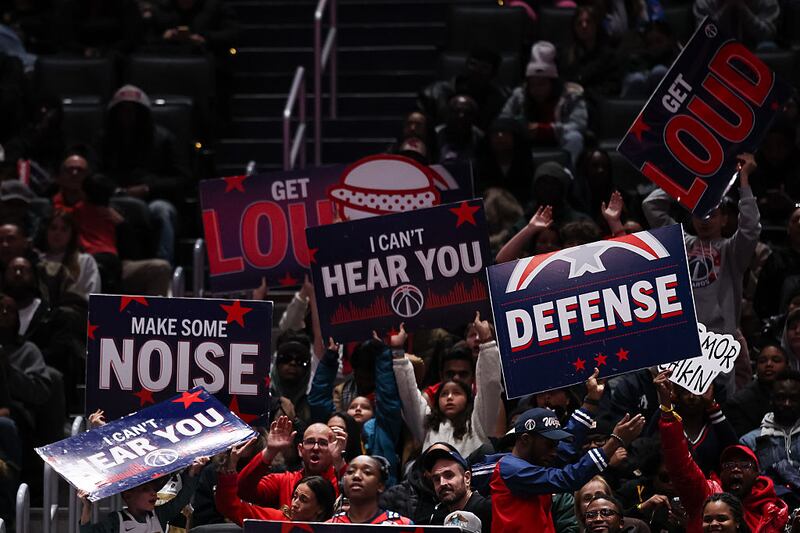
Winger made a quasi-list. He asked Leonsis to build the “biggest and best” home locker room in the league and the “biggest and best” visiting locker room, too — so all NBA players would know D.C. is first class. He asked him to pour $1 million more into the current practice facility, from locker rooms to office rugs to a biomechanics lab. He wanted to retain the respected front office voice of John Thompson III, senior vice president of Monumental Basketball and the former Georgetown head coach. “He has not said no to me one time,” Winger said of Leonsis.
At that point, the hardest conversation hadn’t happened yet; in fact, Winger almost avoided it altogether. During the May 2023 draft lottery, the Wizards — who owned only a 6.7% chance of landing the top pick — suddenly had a 54.55% chance after the first three combinations of ping pong balls fell their way, the best odds of any team. Victor Wembanyama (and an accelerated reboot) was staring Winger in the face … until the last ping pong ball rolled out in favor of the Spurs. And RC Buford.
What was done was done — the Wizards had the eighth pick — and Winger went about his business of hiring Dawkins. The two of them bonded again over old video room stories, over magnets. The word “tank” never came up.
Next was Dawkins’ own chat with Leonsis, with Presti telling him, “You need to spend some real time with the owner before you take a job like that.” It could have gone either way. But, the way Dawkins remembers it, “We didn’t say we were going to decide to blow it up. But we said if we wanted to go this route, this is kind of what it would look like. And [Leonsis] was like, ‘Whatever route you guys think is best; that’s why I’m hiring you and trusting you.’”
The word “tank” still never came up. But the word that did come up in their hardest meeting with Leonsis — once they traded their most valuable asset Bradley Beal to Phoenix — was the cryptic word: “rebuild.”
Using a deck presentation — with pros and cons up in lights — they told the owner they wanted to start from scratch. Dawkins described an average rebuild and longer rebuild. Winger painted a brutally honest picture of: perhaps five more years of losing, fans bitching and business basically going down the tubes.
“I said, ‘Ted, you’ve got to understand: the fans are not going to be happy about this, we’re going to lose a lot of money, it’s going to have an effect on ratings,’” Winger says. “He’s like, ‘Yeah, I get it, but at the end of the day, I want to build this thing the right way, and I trust you to do it.’
“And so he’s let me tear down the team.”
Do something nice for your Washington Wizards friends today. They need something nice after last night. It’s been a season.
— @therealknelson on X
Three years and 196 losses later, the word “tank” does come up — everywhere else. The night Adebayo scored 83 against the Wizards, with Davis unavailable and center Alex Sarr on a minutes restriction, was the lowest blow. Particularly for those who witnessed the first day of the basketball racks.
At the Las Vegas summer league of 2023 — in their first bird’s-eye view of the operation — Winger’s and Dawkins’ jaws dropped at the disorganization. It was 100-plus degrees outside, and there was no water, snacks or Vitamin D for the players and staff. “Things you need to survive in Vegas,” Dawkins says.
Some player hotel rooms weren’t ready, either, or their names were misspelled — so they couldn’t check in. Staffers carried gear in Home Depot bags, and before the first meeting, players were served hot dogs and hamburgers.
“Like it was ballpark day,” Dawkins says. “I was, ‘What are we doing? This is not it at all.’ To their credit, they were like, ‘Hey, this is the budget we’ve been allotted.’”
That first day, Winger called a staff meeting, emphasizing, “These things are not acceptable, we can be better at these.” Then he stared over at the ball racks and at the ballboy Ludd — and delivered a speech that basically set the tone for the next three years of their lives.
“I want to shine a light on Jamil,” Winger said, before pouring his heart out. Turns out, Ludd had researched Winger and Dawkins, had seen the Gilgeous-Alexander interview explaining how meticulous the Thunder were. So Ludd had synchronized the “Wilsons” on the ball racks in Vegas — amid the hot dogs and burgers— so the new front office would know he gave a damn.
“Now people know what excellence looks like,” Winger told the staff. The rebuild was off to the races ... at glacier speed, anyway.
The front office meetings began as they had in San Antonio, with the executives Winger, Dawkins, Thompson and Travis Schlenk, senior vice president of player personnel, at a conference table pontificating. “Something that was really key,” Thompson says, “is Michael’s phrase when he started off of: level up every other department.”
In other words, the plan before the plan was to fine-tune ancillary parts of the organization so when the on-court product was humming (in three to five years or whenever the basketball gods decided), the off-court product would match it.
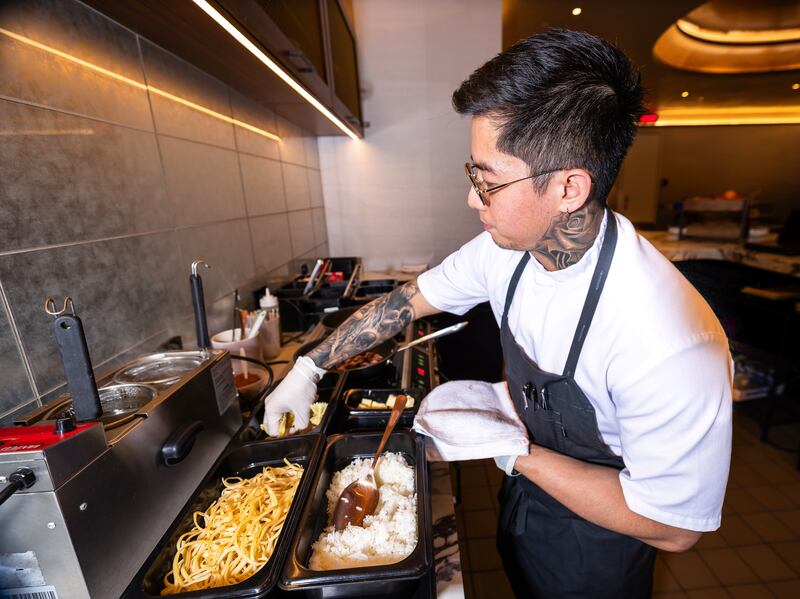
That meant bringing a chef on the road with the team, to prepare an organic breakfast and lunch in every city. That meant players and staff — and their families — getting bloodwork done so they knew which vitamins to take. That meant doubling the staff size. That meant creating 21st century job titles — hiring former D.C. talk show host Craig Hoffman as senior director of basketball identity and integration and former ESPN Executive Editor Cristina Daglas as head of research and identity. That meant borrowing best practices from other teams, leagues and corporate America. That meant reading books and magazines about staff development, about the military’s soldier development.
That meant consulting behavioral psychologists or organizational psychologists. That meant hiring author Ethan Kross, an experimental psychologist and neuroscientist from the University of Michigan who specializes in emotion regulation and wrote the book “Chatter: The Voice in Our Head (and How to Harness It).”

That meant asking Kross to build out what amounts to a mindfulness department. That meant hiring three mental health professionals and bringing one on every road trip. That meant being ready if someone from, say “Saturday Night Live,” told a lousy joke.
That meant “decimal meetings” — ideated by Dawkins — where about every 10 games a player would meet privately in a room with 10 to 12 staffers: at least one each from mental health, physical fitness, culinary, nutrition, health and wellness, coaching, skill development, management, etc. “The first time is always a shock,” Winger says. “They’re ‘Oh shit, am I in trouble?’… But after that, they realize this is not an undressing. This is a buildup meeting.”
In some ways, it was an offshoot of what the Spurs did with Parker, the Cavaliers with LeBron, the Thunder with Durant. These were peace talks. This was management “celebrating the micro wins” of a player hitting his hip mobility goal or the “invisible gains” of reaching his paint-touch goal. Winger’s philosophy was that he, Dawkins, Thompson and Co. should over-meet, and, when they became exhausted, they’d under-meet. He’d learned that from Buford and Presti.
The front office augmented it with what Thompson called a Player Pathways Enrichment program, where, during road trips, the organization would take players and staff to Google or Meta offices or to see high-end financiers. They would bring in Martin Luther King III as a speaker or attend Tyler Perry’s studios in Atlanta or the National Civil Rights Museum in Memphis. They staged a “moms trip” to San Antonio. They took at least six of their peach-fuzzed players to get driver’s licenses. They built what Winger believes is the most decked-out family room in the league.
Three years later, the front office was suddenly a front, side and back office, ready for a competitive team. Meanwhile, down on the court …
Ted should pay fans to go to their home games. Total embarrassment.
— @blackbeanslover on X
Leonsis has his own plan: hydrate, regulate his weight, exercise. “It sucks, OK?” he says. “But maybe I’m going to live another 10 years longer than the average bear, right? So no pain, no gain — and that’s how I’m looking at this [rebuild]."
One reason Leonsis approved the teardown was he’d been there, done that with his other team, the Capitals, who drafted Alex Ovechkin No. 1 overall and won a Stanley Cup. “So I wasn’t afraid of it,” he says. “And I appreciated their truthfulness.” But bottom line is the Wizards were last in attendance in 2024-25 and are second-to-last (ahead of only Memphis) in 2025-26. Although there was a 176% uptick in unique direct-to-consumer viewership this season, their linear Nielsen Station Index ratings in the D.C./Baltimore DMAs were lowest in the league, down 27% year over year.
“After three years, like, ‘What are you doing to your fan base?’” said a top executive from another team. “Because three years is a long f------ time.”
Five years is even longer, and, at that point, there was no end in sight and no turning back. Every crevice of the organization — from the sales team on down — was informed and all-in, with Zach Leonsis (the owner’s son), Monumental’s president of media and new enterprises, saying the franchise was “selling hope and selling the future ... not unlike what other teams have had to do in the past.”
But the drip-drip you heard was lost revenue, and there were single-digit layoffs this February within Monumental Sports Network. When news broke that next season’s average ticket price rose 6.31% — largely due to the arena renovation and the vault suites/premium lounges that are coming with it — the negative chatter rose, too. But Leonsis says, “The chatter that bothers me most is the long-term fan base in Washington, D.C. They don’t love the team. I mean, they don’t trust the team because we haven’t broken through.”
Winger warned him about this during their hard talk: Ted, the fans are not going to be happy about this, we’re going to lose a lot of money, it’s going to have an effect on ratings. But here we are, with all these acerbic comments on X, and the obvious question for Leonsis is: How’s business holding up?
“That’s where we’re fortunate,” he says. “We’re fortunate in that we’re one of the bigger organizations in sports. We own the building, we own the [Monumental TV] network, we own multiple teams. So we could have some patience, if you will … Michael, Will — [they] tell us what to do and we’ll do it. And by having the resources of the Monumental platform, it makes it easier to ... Renewals are 82% instead of 90%, but we also have the data to show that when we do become good and make the playoffs, what’ll happen and it’ll be worth the wait. That was our comment when the Caps won the Stanley Cup. It was worth the wait, right? That’s how we have to look at it.”
He grabs a water bottle from his mini fridge …
“I’m a venture capitalist,” Leonsis says. “I’m not afraid of taking risk. And a lot of times it’s: ‘Am I betting the jockey or the horse?’ … The NBA, as the horse, is rock solid. The NBA is a growth stock if you will. We have this great media deal. The players, the popularity globally has never been stronger. It’s why we’re expanding to Europe now. We have a big position in Africa. We’ve always had a position in China. It’s a growth stock. I looked, and I said, ‘If I can find the right jockeys to ride this horse that’s galloping …’”
So it’s on the jockeys, Winger, Dawkins and Co., who’ve brought in three top-10 picks and five overall first-rounders over the last three years. Or as Winger says, “Not unlike investing, you just keep making your inputs, making your deposits. At some point, you’re going to wake up when you’re 65 years old and you’re going to have a very nice outcome … Losing is just an output. None of our inputs are losing inputs.”
The marquee inputs have been trades for Young and Davis, both injured (though Young wowed the crowd in the three home games he did play) and both returning next season while the team hopes this year’s lottery falls their way.
They have a top 8-protected pick, but the reason for the incessant tank talk — for the “five Make-A-Wish kids” joke — is that if they hadn’t finished bottom four in the standings, they could’ve lost the pick to the Knicks at 9. The insinuation all season was: They’re dying to lose.
So the word “tank” had to come up, had to be asked straight to their faces. Their responses?
Winger --probably because of what he learned in San Antonio, Cleveland, OKC and L.A. -- chose not to dignify it with an answer.
Dawkins rolled his eyes and said, “Ignoring the noise is a skill I developed very early in Oklahoma City. Sam didn’t go full rat poison, but he definitely taught us that we have to kind of stay within our walls … Basically, we know what picks we have, we know how they’re protected, we know the odds that go into the lottery and things of that nature, and we make decisions amongst each other, knowing the value and the likely outcomes of every decision we make. Basically planning for the plan all over again.”
Leonsis, in the days following the Adebayo game, said: “The last couple of weeks have not been fun because I’m not tanking … We’re now trading some of [our] picks for players from Atlanta and from Dallas. And I go: ‘So are they tanking now?’ They’re trading us their highest-paid players for picks, right? Tanking to me is you’re telling the players, ‘Miss the three-point shot or I’m not playing you.’
“It’s a big difference between tanking and rebuilding and player development. That’s been my position. I told our fans what we were doing. I’ve told everybody. Everyone knows what we were doing.”
So, if what they’re doing is playing chess instead of checkers (and if the micro-wins turn into macro-wins next season, that’s definitely chess), the sense leaguewide is the Wizards could be a playoff threat next year, could be Thunder 2.0, could be all over social media for the right reasons.
Don’t be surprised if the new joke is: “Tank you very much.”
I have learned to embrace it. How sick is that
— @SkellyFreaks on X