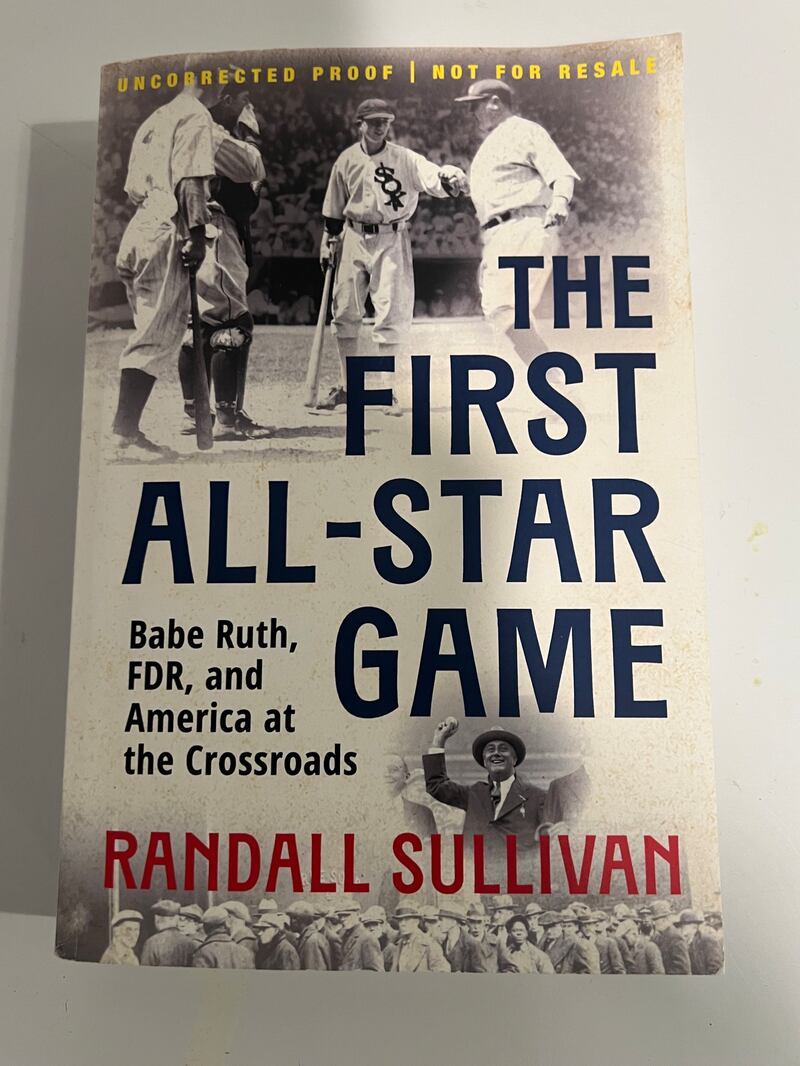
One might argue that FDR, the advent of World War II and the repeal of Prohibition were essential factors responsible for extricating America from the Great Depression. Author Randall Sullivan wants to give MLB’s first All-Star Game 93 years ago a share of the credit.
In his new book, “The First All-Star Game” (Grove Press), Sullivan maintains that the All-Star Game, conceived by former Chicago Tribune sports editor Arch Ward as “The Game of the Century” and a highlight of the 1933 Chicago World’s Fair, helped save the country. It was a time when America was still battered from the 1929 stock market crash and subsequent depression, Chicago was suffering from a national infamy as a gangster haven and Major League Baseball itself was troubled.
MLB saw attendance crash 40% between 1930 and 1933. It was a sad echo of national unemployment shooting up to 25%. Connie Mack’s 1929 and 1930 World Series champion Philadelphia Athletics sold off star players to stay afloat. As the economy came back, so did baseball. Sullivan argues that it was symbiotic.
Randall Sullivan believes the 1933 MLB All-Star Game took place "at exactly the inflection point when America started to tick up." Grove Press
“It didn’t just start a tradition, it was part of a turning point,” Sullivan said. “No one imagined at the time that the game and the fair would take place at exactly the inflection point when America started to tick up.”
Tired of today’s polarized America, Sullivan said he started researching the Depression, seeking “an uplifting story for what led the country out.”
“The policies of the Roosevelt administration helped,“ he added, ”but there were two events that stood out as significant: the Chicago World’s Fair and the other was this baseball game that was played alongside it.”
Focusing far more on politics and economics than baseball, the book nonetheless paints a vivid picture of the 1920s and 1930s along with baseball’s place in that era, helped by the presence of indelible characters such as Babe Ruth, Ty Cobb, Bonnie and Clyde, and FDR. Sullivan skillfully chronicles a failed FDR assassination attempt days before his inauguration that instead killed the mayor of Chicago and catalyzed a Rube Goldberg-esque chain of events leading to the All-Star Game’s inception.
It wasn’t the first time a game of all-stars had been proposed, or even played (see related story). Still, as Sullivan wrote, “Baseball’s perilous finances and the game’s attachment to the ‘Century of Progress’ exposition incentivized the entire idea … and Ward’s proposal of a one-off was infinitely more appealing to baseball officials than F.C. Lane’s [earlier] suggestion that an All-Star Game be substituted for the World Series.” Tickets to the game were sold to fans in 46 of what was then a 48-state nation.
Sullivan’s top lessons learned from researching “The First All-Star Game”:
“Babe Ruth was a bigger star than Michael Jordan ever was. We still don’t understand how huge Ruth was then and how large baseball was in America at the time: 10 times bigger than football and basketball combined.”
“Most every baseball player came from a hardscrabble background. The sheer toughness it took to make it to the big leagues was just incredible. They had to work blue-collar jobs and scrape to get into a position where they could even make a living playing baseball. And unless you were Ruth, Ty Cobb or Rogers Hornsby, you still had to work after baseball season, and after retirement, to support yourself.”
MLB’s first real All-Star Game?
Who was first? Who’s in first? Who finished first? And thanks to Abbott and Costello, who’s on first? These are some of the most essential questions in sports generally and baseball specifically.
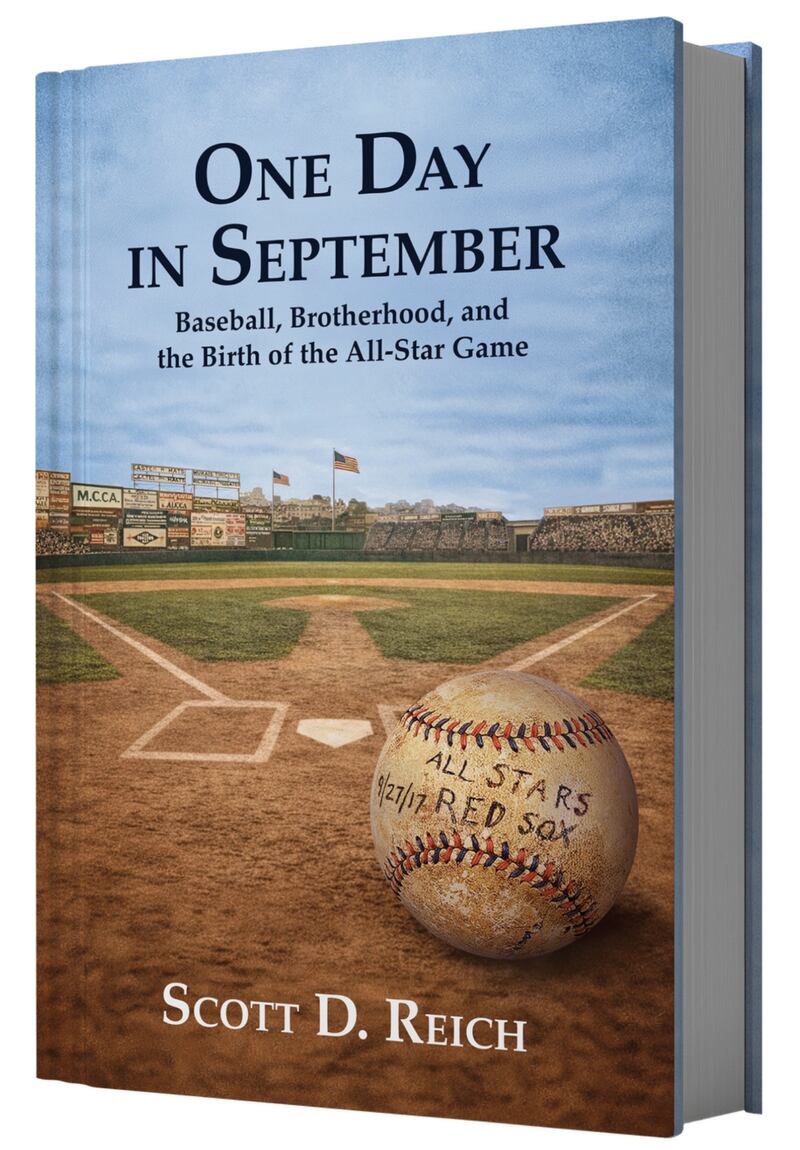
With a nod to the importance of being the earliest, which may or may not bestow greater authenticity, Scott Reich’s just-published “One Day in September: Baseball, Brotherhood, and the Birth of the All-Star Game” (Compass Rose Publishing) posits that an exhibition at Fenway Park with the two-time defending World Series champion Boston Red Sox playing MLB All-Stars on Sept. 27, 1917, was the authentic all-star patriarch.
Scott Reich writes that a 1917 exhibition at Fenway Park between the Red Sox and MLB All-Stars was the first all-star game. Compass Rose Publishing
Many of the game’s brightest stars, including Ty Cobb, Shoeless Joe Jackson, Tris Speaker and Walter Johnson, skipped their own teams’ games to participate in a benefit for Boston Globe sportswriter/editor Tim Murnane, who died from a heart attack months earlier. Murnane also served baseball for more than 50 years as a player, umpire, league executive and owner. Babe Ruth was among the players at Murnane’s funeral.
The game, won by the BoSox 2-0, was a cooperative venture among the Red Sox, the American League and the Baseball Writers’ Association of America. As was so often the case, Ruth, then with the Red Sox, starred when it mattered: The 22-year-old was the winning pitcher and won a home run contest.
Connie Mack, customarily dressed in suit and tie, was the All-Stars’ manager. Non-baseball stars were on hand to entertain, including Will Rogers and former heavyweight boxing champion John L. Sullivan. The event drew more than 17,000 and raised over $13,000 for Murnane’s widow and four children. A portion of the funds paid for a headstone at Murnane’s grave.
So, which can legitimately claim to be “first”? Baseball historians point out that benefits were common in an era before the widespread corporate philanthropy now evident across sports, and that the common practice of offseason barnstorming by MLBers meant that collections of all-star quality players on the same fields were not unusual.
An interesting note: Ruth played in both “first” All-Star games. It seems fitting.