

There’s a vividness in Vanderbilt AD Candice Storey Lee’s retelling of the night the Commodores slayed the giant.
Temperatures dipped into the mid-60s, giving Nashville a fall feel on that early October 2024 evening. A heavier skew of gold and black littered the stands at FirstBank Stadium, a change from nights of seasons past, in which attendance might well have been counted by hand, and home games were in name only.
As the clock ticked down, Lee stood on the sideline next to 1997 Vanderbilt grad and news personality Willie Geist. They peered around the stadium. It’s what they’d always hoped, a football environment worthy of the school’s conference affiliation. Reality proved almost jarring.
3, 2, 1. The clock continued to tick. Zeroes hit. The gold-and-black storm began. Students flung themselves from the nearby seats. A few climbed the goalposts. They wobbled, and wobbled, and wobbled. Finally, they fell as an army of undergrads hauled their trophy toward the honky-tonks of Broadway.
Vanderbilt 40, Alabama 35.
“A few years ago, we sat at the table almost apologetically, or maybe just happy to be there, in some ways,” Lee conceded. “No one ever said that, but I think our actions may have demonstrated that. The reality is that I have — from the very beginning, and got criticized for it, especially early on — talked about what we were focused on, what we want to be.”
The 2024 win over Alabama, the Commodores’ first over the Crimson Tide in 40 years, was a start. Consider it a proof-of-concept moment for Lee, 46, an administrator hired amid the COVID-19 pandemic by a school that was part of the SEC but never really competitive.
“You have to be willing to withstand the laughter, the ridicule, the fickleness,” Lee continued. “You have to be able to withstand that. You have to be resilient enough to get through that, to get to the other side. There’s been a lot of that. But of all the things that had to change, the internal narrative had to change first.”
In next week’s cover story, SBJ’s Ben Portnoy profiles Vanderbilt’s Candice Storey Lee, who is SBJ’s Athletic Director of the Year.
SBJ Voices: NBA Finals delivers; ESPN’s Sean McDonough talks Stanley Cup Final; World Cup gets underway

On this week’s SBJ Sports Media Podcast, SBJ’s Austin Karp looks at where things sit with the NBA Finals, Pat McAfee’s potential ESPN deal that could be worth $60 million annually and the lack of star power at Roland Garros. After an incredible start to the Stanley Cup Final, ESPN’s Sean McDonough joins to talk about the Golden Knights-Hurricanes matchup. Finally, with the FIFA World Cup set to begin, SBJ soccer writer Alex Silverman joins the pod to break down the event.
Did you miss the sports business stories that SBJ’s Austin Karp, Abe Madkour, Ben Portnoy, Jenn Azara, Bret McCormick, Ethan Joyce, Irving Mejia-Hilario and Joe Lemire are watching? Check out this week’s episodes of Morning Buzzcast, SBJ’s most popular podcast, including extensive coverage from NACDA in Las Vegas and SBJ’s Brand Innovation Summit in Chicago.
On the latest SBJ Live, SBJ’s Taylor Bloom takes an inside look at how MavsTV is redefining fan engagement, content distribution and first-party data strategy with Deltatre VP/Head of Strategy and Growth Beau Decker and Dallas Mavericks SVP/Business Development Ronnie Fauss. The trio explores why the Mavericks launched a direct-to-consumer platform, the business and fan insights behind the decision, and how MavsTV is helping the organization build deeper, more valuable relationships with fans.
In this episode of SBJ On Stage, Nick Khan, President of WWE and board member of TKO Group Holdings, joins SBJ’s Abe Madkour for a candid conversation on the evolution of sports entertainment and the business strategy driving WWE’s next chapter. Recorded April 15 at SBJ’s CAA World Congress of Sports in L.A., the discussion explores how WWE continues to grow as a global media property while adapting to changing consumer habits, platform dynamics and fan expectations.
For more news and video content, check out our video home, SBJ TV, which includes the latest sports business insights straight from the experts.
On the job

We’ve heard everyone’s concerns about jobs and internships, and we want to help. SBJ is teaming with TeamWork Online to connect students to listings for internships and entry-level positions in sports business. We’ll highlight several jobs in this newsletter and provide links to the complete lists. TeamWork Online provides the following tools for job seekers looking to find their niche in the sports business.
- Profile builder to match you to jobs
- Job applications to your favorite sports or live event organizations
- Face-to-face career fairs and networking events
- Information on educational programs and universities to strengthen your skills
Some positions that are available:
- Carolina Panthers: video production intern
- Jacksonville Jaguars: social media intern
- Minnesota Wild: customer sales and service intern
- NHL League Office: media inventory coordinator
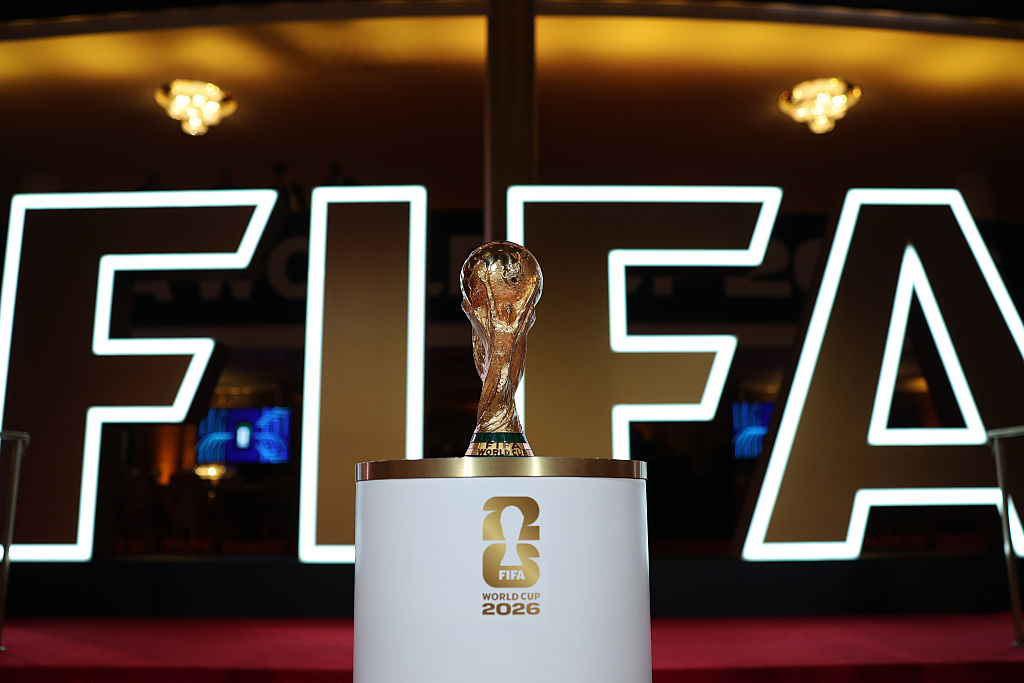
MLS teams using World Cup tickets and events to drive business

With about a year until the opening of Etihad Park, NYCFC CEO Brad Sims is hard at work selling suites, premium seating and sponsorships for the team’s new soccer-specific stadium in Queens. In many of those conversations, he asks one question that tends to grease the skids: “What are your plans for the World Cup?”
The MLS club has purchased more than $1 million worth of tickets for 2026 FIFA World Cup matches at MetLife Stadium, including ultra-premium hospitality tickets through On Location (the World Cup’s official hospitality provider) and high-end general seating purchased from the New York New Jersey 2026 World Cup Host Committee, to offer prospective Etihad Park suite, premium-seat and sponsorship clients.
“If you’re able to make a commitment — we have an executed contract and a deposit and money down — we’ll host you at a game or games of your choice,” Sims said of his pitch to potential clients.
Sims said the club has used about half of its stash of 300-plus World Cup tickets and has already generated contractually obligated income equal to 17 times its investment, a figure he ultimately expects to reach 30-to-1. The biggest success story so far came when the team secured a 15-year Etihad Park suite commitment worth nearly $5 million from a buyer looking to land four tickets to the World Cup Final on July 19.
“That was someone who wasn’t even on the radar of being a buyer,” Sims said. “He went from being not on the radar to being interested in the entry-level suite to then upgrading the suite and extending our max term length to get access to the final.”
NYCFC is a prime example of how MLS clubs are trying to turn the World Cup into a business development opportunity. Across the league, teams are using access to World Cup tickets as currency with existing and prospective clients, staging watch parties to reach new fans and building data-capture operations designed to convert tournament interest into long-term customers.
Through a joint venture between MLS and On Location, each of the league’s 30 clubs is an authorized sales agent for premium seating at World Cup matches. That access has positioned teams to provide partners and season-ticket holders with a trusted path to high-quality World Cup tickets amid uncertainty about ticket availability in the months leading up to the tournament. Teams’ sales efforts have also created a meaningful revenue opportunity at the league level (financial terms of which remain undisclosed), even as the direct club-level commissions have been relatively modest.
“It was more about getting them the access to get in early versus the commission part,” said Jake Reid, president and CEO of Sporting Kansas City. “I’m not downplaying that we’ve probably made a good amount, but that was not really the key driver. The ability to be the key stakeholder to get them in the door early was really the big benefit.”
Watch parties put on by MLS clubs are also poised to drive incremental sponsorship revenue and fuel unprecedented data capture, as more than two-thirds of teams have announced plans to stage public viewings during the World Cup.
Reid said Sporting Kansas City, which is staging watch parties and concerts at its stadium under the banner Soccer Capital Summer, has both brought on new sponsors specifically for the events and generated additional spend from existing partners. Jared Shawlee, president of the San Jose Earthquakes, similarly characterized the sponsorship revenue opportunity associated with the club’s tournament-long watch party at San Pedro Square Market as significant.
In terms of data capture, teams are expecting to add up to four times as many fan records to their databases this season compared to last year, largely through RSVPs and free tickets to World Cup watch parties. The Houston Dynamo, who are hosting watch parties and other ticketed events at Shell Energy Stadium, are among the clubs with the loftiest projections based on the proximity of their venue to the city’s FIFA Fan Festival.
“We think it’s probably about four times as many new people in our system as there normally are, which is a huge number,” said Jessica O’Neill, president of business operations for the Houston Dynamo and the NWSL’s Houston Dash.
Shawlee said the Earthquakes received more than 10,000 RSVPs for their screening of the opening match featuring Mexico against South Africa, and aim to host 500,000 fans over the course of the 39-day tournament. The team intends to use the influx of fan records to drive ticket sales for two large-venue matches — against the LA Galaxy at Stanford Stadium and against LAFC at Levi’s Stadium — after MLS’s World Cup break.
To convert those new fan records into in-person experiences, many MLS teams are adopting a First Match On Us initiative that offers fans the opportunity to attend their first match for free. The league has encouraged teams to adopt the concept this season following a particularly well-received rollout by the Seattle Sounders in 2025. The Dynamo, NYCFC, Sporting KC, Galaxy, San Diego FC, St. Louis City SC and Nashville SC are among the clubs leaning into the program.
“Not only are they coming back, but they’re buying season tickets,” O’Neill said. “Not all of them, obviously, but enough of them to tell us this is worth continuing. There’s value in every new person that comes into the stadium, but also enough of them are coming back or will come back based on what we know.”
Alex Silverman can be reached at asilverman@sportsbusinessjournal.com.
Tennis stakeholders rush to capitalize on Serena Williams’ return

Serena Williams’ announcement that she would return to pro tennis sent the tennis world into a frenzy earlier this month.
For organizers at the Lawn Tennis Association, which owns and operates the WTA 500 tournament at which she re-debuted on a doubles wild card, the HSBC Championships at London’s Queen’s Club, the remit was simple: Prepare for the arrival of a G.O.A.T.
“A player of the significance of Serena, she obviously comes with her family and quite a big team,” said Chris Pollard, the LTA’s managing director of commercial and operations. “The Queen’s Club is a very tight site, so to try and find additional space for her, and some of the requirements that she had, required us to move at pace.”
Anticipating the demand that would follow the 23-time Grand Slam singles champion after nearly four years away from the game, organizers elevated Williams and doubles partner Victoria Mboko’s first-round match to the Queen’s Club’s primary show court, the nearly 9,000-capacity Andy Murray Arena (the grounds hold a little under 10,000 total).
The HSBC Championships’ WTA component — which it reintroduced in 2025 after a five-decade run as an ATP-only event — went from 88% of an aggregate capacity sellout last year to 95% in 2026, with five of seven days sold out (including Tuesday, when Williams played).
Pollard cautioned that sales were trending toward their current status even before Williams’ announcement, but her first match filled the stadium. An LTA spokesperson said that three days in the tournament’s media center had also been at capacity, and Instagram views and impressions were up about 300% overall for the tournament.
“Serena has drawn significant extra interest, and with that has come an uptick in ticket sales,” Pollard said. “It’s not necessarily easy to isolate that to the Serena effect versus other [wild cards]. But it’s definitely been net positive.”
Covering the chaos
Tennis Channel has exclusive U.S. broadcast rights to WTA tournaments, leaving it well-positioned to capitalize on Williams’ return tour. In addition to the HSBC Championships, Williams will play on a doubles wild card at the Vanda Pharmaceuticals Berlin Tennis Open in Germany, another WTA 500, set to begin June 15.
“We’ve been covering this on ‘Tennis Channel Live’ every day since she went into the [anti-doping] protocol [last year], anticipating and hoping that this would happen,” said Tennis Channel Chairman and CEO Jeff Blackburn. “We’re super excited.”
Tennis Channel aired Williams’ first match at the HSBC Championships on its flagship linear channel and app, with its “A” commentary team of Chanda Rubin and Tracy Austin on the call remotely and analyst Chris Eubanks reporting on the ground.
Tennis Channel’s coverage also included advertisements for Ro — the telehealth-based weight loss company for which Williams is an ambassador and her husband Alexis Ohanian’s venture capital firm, Seven Seven Six, is an investor — DraftKings, Whoop and Thorne, each of which came on specifically to be featured during Williams’ match.
Blackburn said another focus will be driving new and interested viewers to the Tennis Channel app. Upgrades to the app have been a primary task for Blackburn since he started with the network last spring.
“Women’s tennis is already on a tear. Our [viewership] numbers are up 20%-30% on [WTA 1000] tournaments year to year,” Blackburn said. “Adding Serena on top, this could be an incredible moment for women’s sports. If she’s back permanently, if she also plays singles — we’re hoping for all of it.”
Making most of a ‘shooting star’
WTA Chair Valerie Camillo first had “good confidence” that the rumors of Williams’ return were real after speaking with Williams’ team at the BNP Paribas Open at Indian Wells in March. Their envisioned timing was not finalized, but it was enough for the WTA to begin planning.
“We started to work on how will the WTA optimize this moment for our brand, for our fans and, of course, for Serena as well,” Camillo said. “We went through a meaningful planning process on our marketing approach — on how we show up on social media, on broadcast — without knowing the exact tournament, the exact day, who she would partner with.”
During the week of Williams’ return, that manifested in several activations, from spraying tune-in graphics across digital channels, to releasing archival footage of Williams’ matches within the tour’s “WTA Unlocked” membership program, to promoting clips from practice sessions and press conferences on social media. A WTA spokesperson noted that Saturday, June 6 — also the day of the French Open women’s singles final — was the WTA website’s highest-trafficked day of the year so far.
Camillo said the WTA is looking at ways it can work with brands in Williams’ network — think her cosmetics line, Wyn Beauty; dress collection for S by Serena; or recovery brand Will Perform. Williams also has leaned into brand collaborations since the announcement, including a new endorsement deal and creative spot with the meal delivery service Factor.
Only Williams knows her plans from here, but the prevailing theory among industry observers is that she will eventually play singles as well, possibly at Wimbledon. A spokesperson from the All England Lawn Tennis Club responded to a question from SBJ about Williams’ status by saying wild-card deliberations will begin for the tournament the week of June 15.
“Time will tell and the situation will reveal itself — is this for this season, does it go beyond that?” Camillo said. “But for us at the WTA, when a star appears in your sky — and you could argue, in tennis, she’s one of the brightest stars that’s ever been — whether it’s something with permanence or whether it’s a shooting star, you take advantage of it all the same.”
Rob Schaefer can be reached at rschaefer@sportsbusinessjournal.com.
When Little League gets too big and tall — a true story

Everyone worries about the Little Leaguer who bats last. What about the kid who bats first?
What about the kid who’s 6-foot-2 at the age of 12, who’s an intentional walk waiting to happen? What about the kid who — whenever he steps to the plate — has infielders backing into the outfield and outfielders scooching to the fence? What about the kid who has to witness a celebration every time they accidentally get him out? What about the kid who’s destined for the big leagues if he can somehow survive Little League?
I coached one.
I use the term “coached” loosely. You don’t coach a kid who arrives with a left-handed swing as sweet as a love song or a fastball the equivalent of 105 mph or a grin like every day’s his birthday. You don’t coach a kid who needs only seven strides to sprint from home to second and who, as a first baseman, has a catch radius of infinity. You just throw him BP and duck the hell out of the way. You just write his name at the top of the lineup — like Shohei Ohtani — so he gets as many at-bats as possible. You do your best not to ask for his autograph.
Of course, I do have the kid’s signature. After the one season he batted .937 with 20 home runs for my Encinitas (Calif.) Little League Pirates in 2014, all the boys on the team signed a ball to me as a season-ending gift. And it’s right there by the seams, in faded ink: Spencer #52. That’s all he wrote. Spencer, as in Spencer Jones, current behemoth rookie outfielder for the New York Yankees.

We’ve all seen Little League kids who are “can’t-miss,” who grow sooner, shave sooner and need a big-and-tall uniform when only short and scrawny are available. There’s a million of them out there, but about 999,950 who do miss. Because it’s not easy being the next Bryce Harper or Mike Trout. Because expectations can take the fun out of the game if you let it. But Spencer — he didn’t let it.
I remember this clearly, after he had pummeled another line-drive homer into the YMCA skate park behind the center field fence, probably 100-plus mph off of his composite bat. I looked up and saw the other team’s parents in awe and in fear. And a few days later I heard of an impending league board meeting: What to do with Spencer?
Rumor was they might take the bat out of his hands, literally. That they might make him use a wood bat to slow his exit velocity. Or they’d institute a rule, whenever Spencer hit, to put an L-screen in front of the pitcher. “They’re afraid he might break someone’s leg, or worse,” I was told.
They ran it by Spencer’s dad, Chris, who said, “Wow, maybe if you use an L-screen the entire game. But pausing and bringing one out when Spencer’s at bat — you don’t want him to feel like a freak.”
ELL took the risk and let Spencer be Spencer — whose gentle nickname was actually Bambi. He wound up leading the league in hits, home runs, batting average (yep, .937), RBIs … and four-pitch walks. He carried the all-star team to the West Regional Final, just one game away from the Little League World Series. Teams didn’t pitch much to him there, either.
But time moves on, and you never know. As a high school senior, Spencer fractured his elbow pitching. He ended up at Vanderbilt, ended up a 6-foot-7 first-round pick of the Yankees in 2022, striking out a little too much in the minors as he kept swinging for the skate park. You never know. But then this season the Yanks called up our former Pirate.

I couldn’t watch every game, and one day saw the headline: “Mets’ Clay Holmes Breaks Leg on Mound.” I knew instantly what happened; knew it down to my bones. Spencer had nailed Holmes with a 111-mph comebacker. Using a wood bat.
“My Little League nightmare come true,” former ELL President Todd Sleet texted Chris. Typical of Spencer, he texted Holmes to check on him and told reporters: “I’m sorry.” Then, this past week, he crushed his first home run to dead center, 112.2 mph and 443 feet, just like the ones that used to send skateboarders scrambling.
Don’t even think about an L-screen, MLB.
Spencer Jones crushes his first Major League home run! pic.twitter.com/ae67hII8Yf
— MLB (@MLB) June 9, 2026
News and views
RISING TO THE CHALLENGE: In his Forum, SBJ Publisher and Executive Editor Abe Madkour has often asked, “Does the A’s ballpark in Las Vegas ever get built?” Following a recent tour, he now believes it could be one of the most stunning and talked-about venues in sports.
SHINNECOCK HILLS AWAITS: SBJ’s Josh Carpenter reports that a smaller footprint for the site of the U.S. Open brings right-size planning.
AT A CROSSROADS: Former UnitedHealth executive Terry Clark sees opportunity for change as the new CEO for PGA of America. SBJ’s Josh Carpenter profiles him as part of the People in Sports Business series.
THE FUTURE IS NOW: From content creators to reaching next-gen fans, SBJ’s Brand Innovation Summit boasted many highlights as nearly 1,000 attendees gathered in Chicago to discuss the world of sports sponsorship and marketing.
WINNING THEM OVER: SBJ’s Irving Mejia-Hilario talks with Dynamo and Dash owner Ted Segal, who hopes Houston’s World Cup hosting experience converts the curious into fans.
SOCCER EXPOSURE: Curaçao plans for its participation in the FIFA World Cup to translate into visitor opportunities as SBJ’s Bret McCormick reports.
BUYING THE GAMES: SBJ’s Rachel Axon explores how brands joining the rush to get close to LA28 will face competition and a complex Olympics ecosystem.
SOUND ADVICE: SBJ’s Juwan Watson and Jesse Gordon offer commencement season highlights, including thoughts from sports figures on resilience, ambition and what comes next for graduates.
‘PROVE IT’ CULTURE: In next week’s op-ed, All In Sport Consulting Founder and CEO Dawna Callahan, a 2023 SBJ Game Changer, examines what women’s sports can teach us about the disability market.