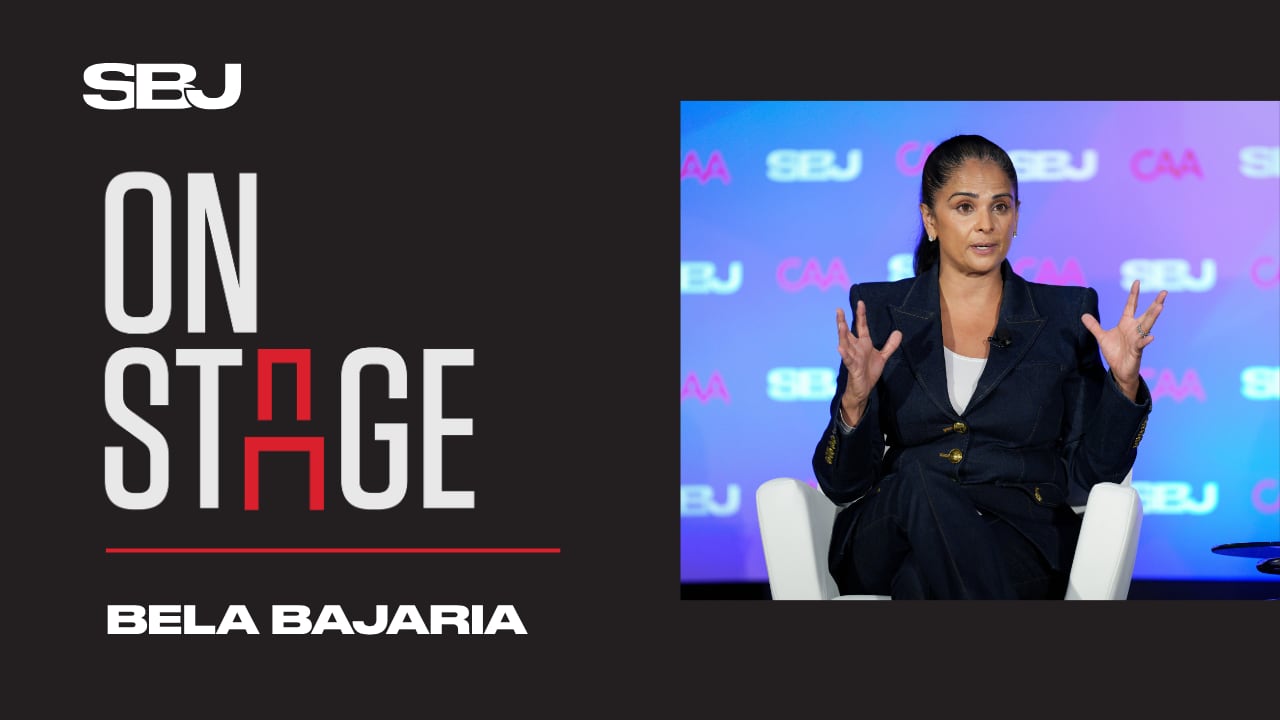



A crowd of attendees at SBJ’s CAA World Congress of Sports in April was enjoying an evening cocktail when the rumor began to spread like wildfire: Saudi Arabia’s Public Investment Fund was about to pull the plug on LIV Golf.
The truth turned out to not be quite so drastic — PIF has committed to funding the league through its current season — but nevertheless left LIV with an uncertain future.
Less than two years into the job of leading LIV as its CEO, Scott O’Neil is now tasked with finding new ownership and redesigning the league to be sustainable without the support of Saudi billions. LIV is in market seeking $300 million from potential new investors.
The sales pitch: LIV will introduce a new tour format, grant players equity in the league, sell team stakes to outside investors and, ultimately, aim to contend as one of the top golf tours in the world. O’Neil admits time is of the essence, but he remains confident in LIV’s future.
“It’s a foot race for sure,” O’Neil said. “But I love this management team. We’re up to the task, we’re energized by what we’re doing.”
LIV retained investment bank Ducera Partners, which recently raised $225 million for Tom Dundon’s Pickleball Inc. The bank has spent the last month canvassing dozens of potential investors, from individual billionaires to top private equity firms. O’Neil said he’s averaging three investor calls daily. The planned $300 million capital injection would provide a runway for LIV to reach financial viability. O’Neil said he expects the league can be profitable in three years, though he declined to comment on current financial performance or future projections.
Some sources from the sports investment world remain skeptical of LIV as an investible asset without Saudi backing, especially after the PGA Tour’s defensive maneuvering and $3 billion capital raise, though none would go on the record with their doubts.
Ducera has no hard timeline in place. A source familiar with the process suggested the bank will soon ask potential investors to provide formal notice of their interest in submitting a bid.
Players as league owners
Sources said the main focus of potential investors has been on the tour’s players, whom O’Neil said will be at the center of LIV 2.0. He stopped short of suggesting LIV will renegotiate or adjust any current player deals — “that’s all to be determined” — but described a new approach to how the league will work with its athletes. Exorbitant guaranteed payouts will essentially be replaced with league equity.
“This league was founded on bringing players in by acquiring their [commercial] rights … sometimes for an upfront payment, but oftentimes an annual salary,” O’Neil said. “The plan we’ll be transitioning to over time is one where players and teams and the league will all have varying degrees of player rights. And [players] will all have equity in the league and the team which they play on.”
That player equity pool would be formed as part of an ownership transaction. PIF is expected to exit entirely. O’Neil acknowledged that PIF remains the control shareholder — the sovereign wealth fund owned 93% of LIV as of a few years ago, according to court documents — and would need to approve any deal. Another source noted that the players, as partners in the league, would also need to agree to the new framework.
LIV 2.0’s competitive format will be a mix of 10 team events, split evenly between domestic and international, and as many as 10 individual tournaments.
One source suggested LIV’s global appeal is a key selling point. The league has found strong traction abroad; this year’s tournaments in Australia and South Africa set national golf attendance records. O’Neil believes the new league structure will also allow LIV to better contend for new talent.
“There’s certainly room for a global tour with a Track One-like opportunity in terms of prize money. I think that’s going to attract a lot of players,” O’Neil said. “From the youth end, that’s even more exciting. You have young players, really talented players particularly coming out of the college system, looking for starts and opportunities.”
LIV will seek outside investment into its teams, which are currently owned by the league and team captains. A source familiar with LIV’s inner workings said the league, on average, owns about 70% of its teams’ equity. O’Neil’s vision is for half the proceeds from team sales to be earmarked for future growth investments, while the remainder will be distributed to league shareholders, including the players.
Team sales will be managed by Ducera but remain a distant second priority to the league-level capital raise. O’Neil said he hopes to have an anchor investor commit at least $100 million, but that LIV may ultimately go with a single investor or consortium of several. The league is also open on structure and would consider investments using equity, debt or other funding mechanisms.
And O’Neil ultimately stressed that LIV can build on strong momentum, noting the league doubled its revenue from 2024 to 2025 and is on pace to add another $100 million in revenue during the current season. According to LIV investment materials reviewed by SBJ, the league secured a tenfold increase in sponsorship revenue from 2024 to 2025, and it’s contracted around $500 million in new sponsorship deals over the last year.
Plus, the $5 billion or so that PIF burned through to build LIV may also provide future financial relief via a net operating loss carryforward. The potential tax benefits of that strategy, both in the U.S. and U.K., will ultimately depend on how the funding deal is structured, but a source suggested it’s been a meaningful focus for potential investors and is likely to be reflected in the league’s valuation.
Chris Smith can be reached at crsmith@sportsbusinessjournal.com.