

Tonight in Unpacks: By this time next week, the World Cup will be over. But MLS is ready to fill the soccer gap, launching a new campaign it hopes will convince World Cup viewers to check out a league with some of the stars they’ve been seeing during the tournament, such as Lionel Messi and Son Heung-min, reports SBJ’s Alex Silverman in this week’s magazine.
Also tonight:
- FIFA House to open this week as exclusive hospitality space in N.Y.
- World Cup semifinals set as final four enter homestretch
- Op-ed: America’s soccer journey is only at halftime
Listen to SBJ’s most popular podcast, Morning Buzzcast, where Abe Madkour kicks off the week with the record $9.6 billion sale of the Seahawks to the family of Vinod Khosla, a dream World Cup semifinals for FIFA, ESPN’s impressive presentation of Wimbledon and more.
MLS aims to ‘Take It From Here’ in post-World Cup push

“No World Cup.”
That was the trending topic on X last Wednesday morning as many American sports fans woke up to the reality that, for the first time in 27 days, there would be no World Cup matches to watch. By this time next week, the tournament will be over entirely.
Some of those fans may not watch soccer again until next summer’s Women’s World Cup, or even the next men’s World Cup in 2030. Others will be looking for a place to channel their newfound interest in the sport.
MLS is hoping to capture the attention of those individuals this week as it rolls out its largest national marketing campaign, which the league has characterized as a “significant eight-figure investment.” It will also resume its regular season on Thursday and Friday — off days between the World Cup semifinals and final — with both Friday night matches airing on Fox in addition to streaming on Apple TV.
Titled “Thanks World, We’ll Take It From Here,” the creative, developed with Ogilvy, debuts digitally Monday and will air nationally during Fox’s telecasts of the World Cup semifinals and final this week.
The main 60-second spot begins and ends with MLS’s biggest star, Lionel Messi, who is back in his pink Inter Miami kit after starring for Argentina in the World Cup. The ad also features 33 other MLS players, several of whom are shown returning from the tournament by taxi or airplane. The most recognizable include LAFC’s Son Heung-min, the South Korean forward and former Tottenham Hotspur star, and Charlotte FC’s Tim Ream, who captained the U.S. men’s national team.
Set to a newly recorded version of “Can I Kick It?” by A Tribe Called Quest, the spot features the players and other personalities asking whether they can “kick it” or responding, “Yes, you can.” It also includes cameos from celebrity team owners David Beckham of Inter Miami, Matthew McConaughey of Austin FC, Magic Johnson of LAFC and Kevin Durant of the Philadelphia Union.
In addition to the national spot, 15 of the league’s 30 clubs opted to have Ogilvy create localized versions of the spot they can deploy with ad buys in their own markets.
“This campaign is really a statement of confidence in everything we’ve done up to this point, but also in what we have to offer fans coming out of the World Cup,” said Camilo Durana, chief business officer at MLS. “From the world-class broadcast product and the experience that we offer via Apple TV, to the incredible atmosphere in our soccer-specific stadiums — but we’re also making it really easy for people to join us.”
On top of the league-level effort — to which each club has committed between $500,000 and $1 million, according to sources — many MLS teams are putting their own localized plans into action.
Twenty-two clubs plan to offer a “First Match on Us” promotion that invites new fans to a match for free. In addition, many teams have been engaging in on-the-ground efforts to connect with fans during the World Cup. Twenty-eight clubs have hosted Soccer Celebrations during the competition, welcoming fans to watch World Cup matches while promoting their brand.
While some teams held smaller day- or weeklong events, others spent millions creating spaces that would remain open for most or all of the tournament. Those clubs have added tens of thousands of soccer fans to their databases over the course of the World Cup that they can try converting into fans of their teams.
In Chicago, the Fire have hosted more than 65,000 fans at Recess, a multilevel sports bar located just two miles from the site of the club’s forthcoming soccer-specific stadium, McDonald’s Park. Dan Moriarty, the Fire’s chief marketing officer, said he expects the team will have added more than 50,000 fan records to its database by the end of the tournament.
“We know this is the right sort of audience,” Moriarty said. “We picked Recess intentionally, knowing it was in the right part of the city. It’s the right sort of audience that we know we need to get involved in the club to help continue our growth trajectory.”

Austin FC has seen similarly strong results. Andy Loughnane, the team’s president, said Austin FC has had 70,000 unique registrants for its watch events across two venues, 46,000 of whom are new to the club’s database.
“Creation of new fans ultimately will hopefully lead to a new, multigenerational group of Austin FC fans,” Loughnane said. “The single most important outcome is that we have been able to introduce ourselves to a new group of people. At the same time, I think we’ve been very successful in creating a cultural and community hub that has allowed Austin FC to be front and center and very much in the discussion here within Austin throughout the tournament.”
Earlier this year, Commissioner Don Garber said that, while he expects MLS to see increases in interest and attendance following the World Cup, those won’t be his measures of success.
“To me, it’s more important than that,” Garber said. “It’s being in a position where there’s more respect, there’s more global energy and more opportunity for every member of the MLS ecosystem to become more valuable.”
After years of preparation and investment, MLS now has its opportunity to make Garber’s ambitions a reality.
Alex Silverman can be reached at asilverman@sportsbusinessjournal.com.
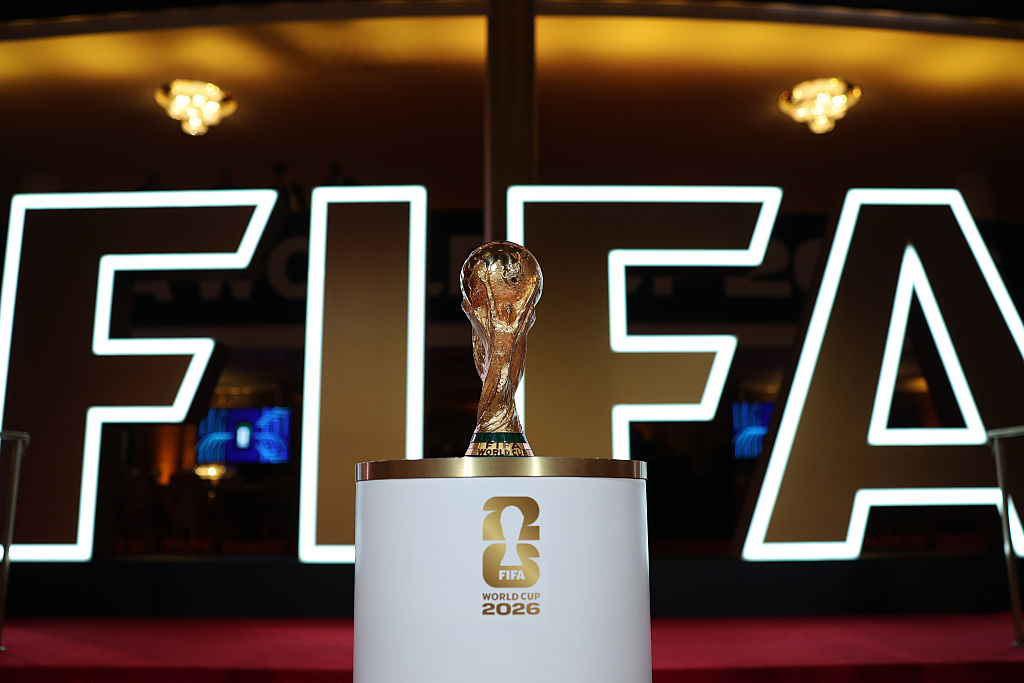
FIFA House to open this week as exclusive hospitality space in N.Y.

NEW YORK -- FIFA House, an exclusive hospitality space overlooking Bryant Park, will open Thursday as a central location for corporate sponsors, business leaders and notables from the soccer world to convene, dine and learn.
London-based sports marketing agency iLUKA Collective -- acquired by Levy in March -- managed the planning and production for FIFA House, inspired by its creation of similar hubs for the IOC and the staging of The Olympic Club at the last half-dozen Games.
“The goal of FIFA House is to create the perfect meeting place for football fans and brands over the Finals weekend,” said Andrew Bimson, President of iLUKA Americas. “Our collaboration with FIFA has created programming that is a unique blend of sports, culture and live entertainment. The World Cup trophy is on display. Grammy performers are in the house. Legends of the game are there. The whole vibe is football for everyone.”
Among the scheduled activities at FIFA House this week are watch parties for Sunday’s final and Saturday’s third-place game, daily panels on sports and entertainment, appearances by soccer legends, an opening party produced in collaboration with Rolling Stone and live music, including both late-night DJs and acoustic sets produced by the Grammys. The full schedule is available on its website.
Bimson gave SBJ a walking tour late last week just prior to his production team’s installation of the décor. FIFA House is in a storied building that previously served as home to the National Republican Club, the Overseas Press Club and even as a WeWork. The building, GH on the Park, is now operated by Glasshouse and was chosen for its prime location that is also central to concurrent events, such as Fanatics Fest at Javits Center and the N.Y. N.J. World Cup 26 & Telemundo Fan Village at Rockefeller Center. It’s also walkable to the main FIFA hotel.
Spiral stairs (and an elevator) span three main floors with huge northward facing windows peering into the park. Levy is catering a second-floor restaurant. There’ll be several lounge areas, with more private meeting spots available on upper floors.
FIFA House has invited the World Cup’s 41 sponsors and 200 broadcast partners to visit, with the goal not to use the space for showcasing product but, rather, to contribute to the experience in a way that’s commensurate with the daytime business vibe. However, the aim is to transition into a more festive atmosphere.
World Cup semifinals set as final four enter homestretch

The World Cup has actually played out as a “summer version of March Madness,” delivering “an epic Final Four of blue bloods who have all proven they can go the distance: France, Spain, England, and Argentina,” according to Robinson & Clegg of the WALL STREET JOURNAL. Never before in the modern history of the World Cup have the top-four ranked teams in the world all reached the semifinals. It is “even more remarkable considering the fact that the largest ever field means that each have played an extra round.” What makes this lineup “so compelling is that the two semifinals couldn’t feel more different, with something for every kind of sports fan.” On one side is France vs. Spain, a “highbrow matchup for the soccer purists.” On the other is England vs. Argentina, a “shot of pure adrenaline, straight to the veins.” The first semifinal, in Dallas on Tuesday, “pits two of the most technically and tactically sophisticated teams at the tournament against each other in a duel that feels more like a chess match.” The other half of the bracket “is closer to a bout of no-holds-barred mud wrestling, with a side of psychological warfare.” In 20 years at the top of the game, Argentina F Lionel Messi has “never before faced the Three Lions.” That “will finally change” on Wednesday in Atlanta (WALL STREET JOURNAL, 7/12).
STATUS QUO: USA TODAY’s Nancy Armour wrote upsets in the World Cup, much like the NCAA Tournament, “are great fun in the early rounds,” but when it gets down to the semifinals and the finals “we want order restored.” Armour: “We want to see the top teams and the star players because, odds are, that’s going to give us the best games.” FIFA, “to its credit, recognized this.” With the expanded tournament adding another knockout round, FIFA “could change the rules to delay meetings between the top teams until the end of the tournament.” Armour: “So long as they won their groups, the top four teams would avoid each other until the semifinals” (USA TODAY, 7/12).
GOLDEN RACE: The AP’s James Robson noted five of the tournament’s six top scorers “are still standing and others could yet force their way into the race for the Golden Boot.” France F Kylian Mbappé and Messi “lead the way” with eight goals each. England MF Jude Bellingham and F Harry Kane have six each, while France F Ousmane Dembélé is on five (AP, 7/12).
ON TOP OF IT: In London, Matt Lawton reported police in Atlanta “have been made aware” of the historical context of England’s World Cup semi-final on Wednesday, with the authorities “preparing for a complex operation mindful that there will be limited segregation inside the 75,000-seat stadium.” While England supporters have “been praised for their conduct at this tournament,” there is “continuing dialogue” between the U.K. Football Policing Unit team in the U.S. and the local law enforcement agencies. Officers are “expecting a 50-50 split in terms of fan numbers thanks to the expat communities from both countries.” There is a “huge Argentine diaspora” in the U.S., especially in Florida, with “many now expected to travel to Atlanta before the game.” England numbers are also “expected to swell,” with more fans traveling out from the U.K. and more expats heading to Georgia (London TIMES, 7/12).
CLOSING TIME: REUTERS’ Michael Church wrote France taking on Spain will “mark the end for one key participant in Tuesday’s match: the Dallas Stadium pitch." It “took five years of research to perfect the surfaces used across the tournament,” and for the renowned stadium in Texas, that involved cultivating a full-sized pitch on top of the field used by the Cowboys. By the time either France or Spain have jetted off to N.Y. to begin their preparations for the decider, Dallas Stadium pitch manager Ian Craig and his team “will have begun dismantling the playing surface” (REUTERS, 7/12).
TOO HOT TO HANDLE: ESPN.com’s Mark Ogden cited sources as saying that FIFA and FIFPRO are “maintaining an ongoing dialogue during the World Cup amid concerns over playing conditions during the tournament,” with the global players’ union “aiming for specific talks to secure established protocols about excessive heat for future competitions.” England‘s quarterfinal win against Norway on Saturday kicked off with temperatures inside Miami Stadium measuring 91 degrees Fahrenheit. The Wet Bulb Globe temperature (WBGT) was 88 degrees Fahrenheit at kick-off time, “several degrees higher than FIFPRO’s recommended cut-off point” of 82 degrees Fahrenheit. FIFPRO recommendations state that games “should delayed or postponed” if the WBGT exceeds the cut-off point, but as it stands, there is “no accepted or agreed cut-off point between FIFA and FIFPRO.” Both semifinals will kick-off at 3pm ET in air-conditioned stadiums in Dallas and Atlanta. Sources have said that discussions between the two organizations have “taken place during this tournament” with “the hope of establishing firm rules and regulations” (ESPN.com, 7/12).
America’s soccer journey is only at halftime
The exits of the United States, Mexico and Canada from the FIFA World Cup should come as no surprise to those of us who have dedicated our lives to the game — particularly to player development. What is surprising, however, is the manner in which the U.S. was eliminated and the familiar conversations that have followed.
Once again, the U.S. failed to advance beyond the Round of 16, with the lone exception of the remarkable run in 2002. The disappointment is real, but so too is the opportunity to confront a difficult truth: Despite the extraordinary growth of soccer in America, we still have significant work to do.
The business of soccer in the U.S. has flourished. We have built world-class stadiums, launched and sustained a successful professional league, cultivated passionate supporters and produced a growing number of players competing both domestically and abroad. By every commercial measure, the sport has never been healthier.
But the growth of soccer in America is only at halftime.
If the first half of our journey was about building the infrastructure of the game, the second half must be about something even more important: developing generations of elite American players.
That responsibility rests squarely with all of us in the American soccer ecosystem — U.S. Soccer, professional clubs, academies and youth organizations. For too long, player development has not received the singular focus and commitment it deserves. Too often, politics, profits over player well-being and short-term priorities have overshadowed the long-term mission of teaching the game properly at the youngest ages.
I have said for years that the identity of the U.S. men’s national team doesn’t rest on the shoulders of the head coach; while important, it is not the determining factor in our success or failure on the world stage. The endless debates over tactics, substitutions, individual player performance and coaching decisions following each World Cup elimination miss the bigger picture.
The issue is far deeper.
We must teach our youngest players to master the ball early in life, develop a genuine love for the game and become tactically sophisticated as they mature. The United States consistently produces athletes who are big, strong and fast. But, generally speaking, we have not produced enough players who are technically polished and tactically advanced by international standards.
Our player pool lacks the depth of the world’s elite soccer nations. We have produced exceptional individuals along the way, but not enough of them, and not consistently enough.
This is not an indictment of our national team players or our coaches. They have represented our country with pride and commitment. The responsibility lies with the broader development system that produces them.
Great coaching at the national team level cannot compensate for developmental shortcomings that begin years earlier.
Around the world, countries with populations a fraction of the size of the United States consistently compete among soccer’s elite. Why? Because they have created cultures and highly competitive systems that prioritize player development.
Look at Japan. Over the last two decades, it has methodically built one of the world’s most effective development models, emphasizing technical excellence, tactical intelligence and a clear national philosophy. Norway is another example of a smaller nation that consistently punches above its weight because of a commitment to developing players the right way.
In addition to the elite countries such as Argentina, France, Spain, England and Portugal, these are the countries we should be studying — not simply because of their results, but because of the systems and cultures they have created.
The good news is that America has every ingredient necessary to become a global soccer power. We have the athletes, the resources, the infrastructure and an increasingly passionate fan base. What we need now is an unwavering commitment to developing players differently and better.
The next chapter of American soccer will not be written in boardrooms, television studios or post-match press conferences. It will be written on training fields, in academies, and in highly competitive environments where young players are taught to love the game, think the game, and master the game.
Our mission should be to create an environment where young athletes can develop authentically, positively and holistically — where player development comes first and where the next generation of American talent can be nurtured the right way.
Because if the first half of soccer’s growth in America was about building the game, the second half must be about building players.
Nick Sakiewicz is a former professional player, founding executive of Major League Soccer and currently CEO and co-founder of Sports Performance Hub.
World Cup speed reads
- As of Sunday afternoon, a ticket from third-party vendors for the Argentina-England semifinal at Atlanta Stadium was starting at $3,000 each in the highest section of the venue (Atlanta Journal-Constitution).
- FIFA will sell the grass that will be used for Sunday’s World Cup final at N.Y. N.J. Stadium at $450 per piece (AP).
- FIFA President Gianni Infantino is facing a future where he’s a lame-duck leader in the wake of controversy over lifting the ban on USMNT F Folarin Balogun at President Trump’s urging (London Times).
- Kansas City’s Midwestern charm, food such as barbecue and other amenities have won over the world’s soccer fans during the World Cup (New York Times).
- The strong U.S. viewership for this year’s World Cup has made one thing clear: The price for media rights are going up, though hydration breaks could offset some of the escalating fees (Financial Times).
- HOF broadcaster JP Dellacamera said that he has worked his last World Cup game — and that this is his choice — after calling 11 men’s World Cups and seven women’s World Cups (Philadelphia Inquirer).
Elsewhere in the industry
- MLB attendance as of the 2026 All-Star Break is up 1.1% from last season, with the league tracking toward its fourth straight season drawing over 70 million fans, boosted by the Rays returning to Tropicana Field and a surge in attendance for the White Sox and Blue Jays, reports SBJ’s Mike Mazzeo.
- Mazzeo also notes that weekend attendance for the Capital One All-Star Village, which is open through Tuesday for the All-Star Game in Philadelphia, was up 66% versus the past three years combined (at Seattle, Texas and Atlanta).
- The NFL issued $196 million of new debt to fund stadium construction projects in late 2025, which garnered an A+ debt rating by Fitch, notes SBJ’s Ben Fischer.
- With NBA Europe looming, EuroLeague has plans to add eight permanent teams and a combination of three qualifiers and/or wild cards to its 13 current franchises — for a total of 24 participants heading into the 2027-28 season, writes SBJ’s Tom Friend.
- Paul Hastings LLP, one of the fastest-growing big law firms, added former Ravens executive and NFL in-house counsel Brandon Etheridge as a partner in its Washington, D.C., office as it formally launches a dedicated sports practice, notes Fischer.
- The R&A is officially ushering in its new hospitality era this week at the Open Championship at Royal Birkdale, expecting around 16,000 people to take part in their premium experiences, reports SBJ’s Josh Carpenter.
- Scott Fitterer left the Commanders’ front office to join Athletes First as an agent and executive in the firm’s coaches and executives division, writes SBJ’s Irving Mejia-Hilario.
- Missouri’s athletic department used WMT Digital to rebuild the front and back ends of its website and app, including the integration of WMT’s “Fan ID” product for consolidating fans’ logins, notes SBJ’s Rob Schaefer.