

Tonight in Unpacks: They are the yin and yang of the Premier Lacrosse League. This week’s cover story from SBJ’s Tom Friend examines how Mike and Paul Rabil, both volatile and innovative, were driven by a love of the sport and a humble childhood to build a growing league.
Also tonight:
- Interpreting Infantino’s $15 billion World Cup revenue projection
- How MLB worked with FIFA to capitalize on the World Cup
- Why Call of Duty cares about sports
- Op-ed: The real gap in youth sports is access
Listen to SBJ’s most popular podcast, Morning Buzzcast, where Reginald Walker opens the week with facts and figures on the business side of the World Cup, the Lakers’ latest jersey patch sponsor, wrapping up the MLB All-Star Game and more.
Brothers in Arms: Childhood journeys of Mike and Paul Rabil fuel Premier Lacrosse League success

Mike and Paul or Paul and Mike. It’s not important whose name comes first — although they did once almost come to blows over it — it’s whether, as blood brothers, they can make the Premier Lacrosse League last. One is quick-tempered (Mike), the other hot-tempered (Paul). One says he is pathologically optimistic (Paul), the other lives by the credo Only the paranoid survive (Mike). They are yin and yang, they are Mike and Paul or Paul and Mike Rabil. And, if they’re still sharing bedrooms 30 years later (for the sake of the bottom line), it’s all because of the townhome.
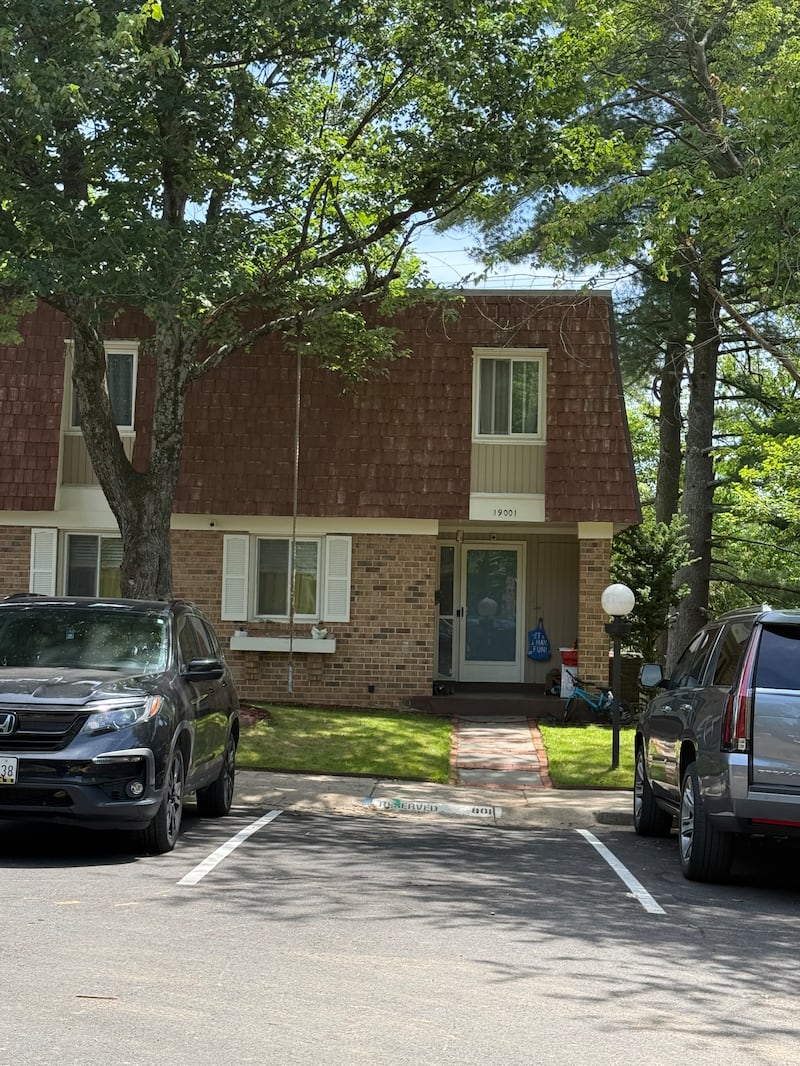
Ask them to describe the place for you, down to a T, and Mike will just whip out his mobile phone to show you a snapshot. That’s where they lived, until they were 11 and 9 years old, respectively, in a red brick, attached Montgomery Village, Md., building with no backyard, a shag rug and a bunk bed. “The townhome, I think, taught them a lot about life,” says their father, Allan, who arbitrated which son had the top bunk and which had the bottom.
It may seem like nothing, but ask them what happened on a trip last month, and you’ll know why it’s everything. They were on the road for a pitch meeting, and Paul arrived the night before from New York to check into a no-frills hotel room that wasn’t exactly the Taj Mahal. That might’ve been fine if it was just him. But to save dollars, to avoid having to squeeze blood from a stone (Mike’s line), they were going to stay in the same room together like they always do — because the PLL is a startup and they are from Montgomery Village and every penny is gold.
But oh no. The way Mike tells it, Paul walked in and saw two mattresses not too far apart, which had him wishing for a bunk bed, all right. Mike, older by two years, arrived later from Southern California, and when he entered the room after midnight, Mike remembers the Mike and Paul or Paul and Mike chat going down like this:
Paul: “Welcome to a shit hole.”
Mike: “Why didn’t you tell me this hotel was shitty?
Paul: “What, and put you in a bad head space for the pitch?”
Facetious or not -- and they bust each other’s chops a lot -- they woke up the next morning on five hours rest, modern day Wright Brothers, and brought a wooden lacrosse stick to the pitch meeting for effect. They told the other company’s chief marketing officer, “The stick is yours,” and then Mike did it again: He whipped out his cellphone to show the CMO a photo of the townhome.
“Our slogan is: ‘Lacrosse starts in the neighborhood,’” Mike told him. “And this is the house we grew up in. We played lacrosse in the street over here; we played wall ball and broke windows over there. This is who we are.
“Join us.”
Mike and Paul or Paul and Mike. Maybe it’s best to start with Allan. He is of Lebanese descent, whose grandfather arrived in the country at Ellis Island and headed south to Winston Salem, N.C., to open a café. Young Allan fell in love with college basketball down there, specifically with UNC’s Dean Smith and the Four Corners offense. But the neighborhood school happened to be Wake Forest, and, when he attended the Demon Deacons’ basketball camp, he learned how to compete — play hard or don’t friggin’ play at all — from Wake head coach Jack McCloskey and assistant coach Billy Packer. When Allan had his two sons, he passed it on.
Mike was thicker, Paul was quicker, and Allan, along with his wife, Jean Anne, had to referee them. On the 6-by-9 shag rug in that cramped townhome, the boys would play “knee football,” meaning one-on-one tackle football from both knees. “Made no sense,” Paul says. As soon as Paul would snap the ball to himself, Mike would hog-tie him. Paul would then either “try to push through him” or “give him a hard hip and then get out.” But it typically ended with what Paul describes as “these big brawls that would end up sometimes with fist fights to the body. We’d never punch each other’s face.”
But the face punch was coming, intentionally or not. After losing a neighborhood game of basketball (Montgomery Village was notorious for being diverse, rough and no-holds-barred), Paul clenched a fist at an opponent. “I’m a terrible loser, very sore loser,” Paul says. Push comes to shove, though, Mike was going to have his brother’s back. So just as Paul was rearing back to clock the other guy, Mike pulled Paul away — and accidentally got clubbed in the nose by Paul’s punch. Mike chased Paul for about a quarter-mile, although no one on the street was as fast as Paul or had Paul’s “wiggle,” which is why Mike never ever caught him.
“Gawd,” says Mike, remembering that day. “Paul’s boiling point is slower than mine, but then it erupts like an effin’ volcano. Like, he sees red. It’s always been like that.”
Turned out, the best way to channel all of Paul’s piss and vinegar (and speed) was the sport of lacrosse, which was virtually indigenous to the state of Maryland. “In Maryland, people drop lacrosse sticks on your front yard,” Mike says. So that’s how Paul eventually caught the lacrosse bug — with a hand-me-down stick.
Actually, lacrosse wasn’t a bug at first; it was a pain in the ass. It was the last sport he’d been introduced to — after football, basketball, baseball, soccer and swimming — and he’d struggle to scoop the ball off the ground or throw and catch with that odd webbing. In one of his early games, he scored … in the wrong net. He also remembers driving to practice with Jean Anne one day, in tears, wanting out.

“I want to stop playing lacrosse,” he told her. “Why did you guys force me to do this?”
“You have to finish this season,” she said. “Then we’ll decide.”
While Paul was at practice — with Mike playing with an older group on an adjacent field — Jean Anne called Allan, who, as usual, was in downtown Washington, D.C., pounding the pavement as a print salesman. “I oftentimes tell younger people, ‘We were the emails of the day,” Allan says of his job in the late ’80s and early ’90s.
It was a tireless occupation: coffee at 5 a.m, out of the house by 6 a.m., not guaranteed to be home for dinner. The whole family sensed his work ethic, Mike remembering Allan’s papers strewn all over the townhome and later — after they moved to a slightly larger Montgomery Village house — all over that one, too. But make no mistake, Allan was going to weigh in — whenever he got home — on Paul quitting lacrosse. Wasn’t happening. Not on his watch. Dean Smith wouldn’t have allowed it, either.
Of course, the rest is history, as they say. Paul’s crossover dribble in basketball, his spatial awareness in soccer, his endurance in swimming and his jukes in football all contributed to him eventually becoming the preeminent lacrosse player of his generation, or close to it.
By his freshman year at Watkins Mill High School in Gaithersburg, Md., he was the leading scorer in Montgomery County, and one particular teammate — big brother Mike — was sick of playing second fiddle. “I just remember really effin’ going after him,” Mike says. “I was like, ‘I don’t want to let my little brother show me up in front of all these guys.’ I was a junior, right? I think there was a couple practices where I was wailing on him and we squared off.”
The two ruffians eventually went their separate ways: Mike to play nose guard on the Dartmouth football team and Paul to Johns Hopkins to set school records for total points and goals. They had to be miles apart to get close, if that makes sense, because in that townhome and in those teenage years, Mike says, “We were friends and enemies at any given point.”
What would they do with their lives? Who knew? Mike was a government major who started out in commercial real estate, stayed afloat by turning his Tribeca loft into an Airbnb on weekends, lived off tuna fish and green beans from Gristedes and bartended on the side. Meanwhile, Paul majored in poli sci, minored in entrepreneurship and management, took acting lessons and dreamed his lonely lacrosse dream.
They were two ships who’d already passed. And to hear Allan tell it, Paul would regulate his mind and contemplate the future by pounding a lacrosse ball off a wall, snaring it and pounding, snaring it and pounding.
Thwat.
Thwat.
Thwat.

The brothers came together again at the corner of chaos and opportunity. The chaos was the business worlds they’d each encountered, first as partners in a gym startup known as Snap Fitness in Joppatowne, Md. The opportunity was ... well, let’s not get ahead of ourselves.
The bottom line was they were wannabe entrepreneurs, and Mike is quick to say, “I got my MBA on the street.” He’s not lying. He pounded the pavement like Allan had done and was a relentless idea man. Snap Fitness, for instance, was an access-card-based, 24/7 gym that needed employees only eight hours of the day. A moneymaker. But as he began to expand to other cities, he realized how difficult it was for franchisees to obtain lending capital. “So I was like, ‘Let’s start our own bank,’” Mike says.
He moved to Silicon Valley, circa 2010, “in search of gold,” having launched Funding Circle — a peer-to-peer lending platform that allowed first-time franchisees a more seamless route to opening the Papa Johns, Pinkberrys and Johnny Rockets of the world. Paul was an investor. Mike eventually took Funding Circle public on the London Stock Exchange, educated himself on Silicon Valley startups and was fueled by the mantra of Intel CEO Andy Grove: “Only the paranoid survive.” In other words, he wasn’t satisfied.
Paul was a whole other story — a storyteller, in fact. As he became the face of the only outdoor professional lacrosse league with a pulse, Major League Lacrosse, he also started a YouTube channel. If Mike was just like Allan, Paul, turns out, was his mother’s son. Jean Anne was a 40-year art teacher, and Paul was drawing on his own blank canvas.
Everyone was taking on risk, considering roughly 200 sports leagues had started since 1990 with a success rate of 1%. But there was no other single-entity team sport at the time that toured on a weekly basis. That was their separator.
His YouTube channel featured “Ask Paul,” giving fans a behind-the-scenes glimpse of his life and sport. He produced daily blogs and also a Facebook fan page because, he says, “MLL didn’t have much distribution and the stories of pro lacrosse weren’t available.” He was all over Instagram and Twitter, posting highlights of his six- or seven-goal games. Some called him the “LeBron of Lacrosse” — had a nice ring to it — and Under Armor swooped in to sponsor him from 2008 to 2010. Until Jim Davis, who owned New Balance and half the MLL teams, wanted Paul’s image and likeness for himself.
Davis and New Balance paid Paul $400,000 annually in sponsorship money, astounding by lacrosse standards, considering that his MLL salary — like everyone else’s in the league — was a meager $10,000. “I very much thought of my career as what Shaun White and Tony Hawk were doing,” Paul says. “In that they weren’t making as much on competition, but making a ton in sponsorship and media.”
But that couldn’t save the league, or himself. In 2014, at the World Championships in Denver, the U.S. lacrosse team flopped in the title match against Canada, with Paul having what he called “probably the worst game of my career.” If he’d been a “very sore loser” at the townhome, you should’ve seen him now. He returned for the MLL season despondent, zombie-like. And, as if it was karma, he broke his foot.
His only peace was pounding a lacrosse ball off the wall: thwat, thwat, thwat. But that wasn’t curing his malaise. He sought out sports psychologist John Eliot, who’d worked with the NBA’s Spurs and MLB’s Giants — “I lacked the vulnerability to get into real therapy,” Paul admits — and eventually connected with Maryland psychologist Lindsey Hoskins. He says it “led a deeper capacity to understand people and myself.” He says it also led him to the Chinese parable of “We’ll see.”
It’s an ancient Taoist story that’s evolved over centuries. But, in a nutshell, it’s about a farmer and his reactionary son, who becomes convinced they’ll be poor after their one horse has run away. “We’ll see,” the farmer tells the boy. A few days later, the horse returns, followed by 50 wild stallions, and the boy now thinks they’ll be rich. “We’ll see,” the farmer says. A few days later, while harnessing one of the stallions, the boy is kicked, shattering his leg. He thinks his life is cursed. “We’ll see,” the farmer says. The next day, hundreds of soldiers show up at the farm saying war is imminent, that the boy must join the battle. The father points to his son’s broken leg and the soldiers leave, which has the boy saying he is lucky. “We’ll see,” the farmer says.
The point is, Paul became a “pathological optimist” right then and there, and also a realist. He saw how stagnant MLL was; how erratic the TV ratings were on CBS Sports Network, Stadium and ESPN+; how players needed second or third jobs to make ends meet. The $10,000 salaries weren’t going to cut it, and — thwat, thwat, thwat — he brainstormed an idea to be player-commissioner. The way Jim Thorpe had once been player-commissioner of the American Professional Football Association in 1920, two years before it became the NFL. Because just being the LeBron of Lacrosse wasn’t enough to fix MLL.

“I wasn’t the crossover star that Conor McGregor or Lewis Hamilton, Caitlin Clark or Tiger Woods was,” Paul says. “If I was that, the MLL would’ve worked. If I was our sport’s Tony Hawk, I would’ve had a video game of 2K Sports and been in an episode of ‘The Simpsons.’ So I was close, but no cigar.”
Mike, from his Funding Circle perch in Silicon Valley, saw what happened next. Paul’s request to be player-commissioner? Denied. An ensuing offer from Paul and Mike to invest in the league? Denied. An offer to purchase the league? Also denied.
Push came to shove, Mike still had his brother’s back. He had loved watching Paul play — “When he gets the ball, everyone stops and watches,” he says — so Mike said, screw it, we’ll start a league of our own. They’d do it the way Mike saw it done in Silicon Valley. Small Tech couldn’t compete with Big Tech salaries there, so Small Tech would dangle equity to prospective hires. This was 2018. Nobody in pro sports did that. But Mike drew up the blueprint: Every game a player played in, that player would get five stock options in the league. Salaries would start around $35,000, but add in sponsorships, bonuses and equity, and it could creep to six figures. They wouldn’t need second jobs. They’d give them healthcare. They’d get them on TV. At least, that was the idea.
So they recruited MLL’s players — while Paul was still on a roster! — which was potentially financial suicide for Paul. That $400,000 New Balance deal? Gone. Jim Davis ripped it off like a Band-Aid. Suddenly, Mike and Paul were back at the townhome, playing knee football, neck-tying each other.
“Dude, I’m taking all the risk,” Paul yelled one day. “You’re not the one having to effin’ do this. This is all I do full time.”
“Dude,” Mike yelled back. “I already quit Funding Circle. This is all I’m doing full time. I don’t have a salary. I’m sitting in my one-bedroom apartment living off my girlfriend. This is all I’m doing, too.”
They hashed it out, like businessmen instead of brothers. If the league failed, the company would insure Paul’s $400,000. In the end, Mike was taking care of Paul, and Paul — by being the face of the league, by cold-calling every elite lacrosse player under the sun — was taking care of Mike.
“We had the unfair advantage of Paul — he had credibility as a player, players looked up to him," Mike says.
“Well, we had the unfair advantage of Mike — his entrepreneurial resilience and know-how," says Paul.
So the plan was to launch the Premier Lacrosse League in the spring of 2019, an opportunity born out of chaos, born out of what Mike calls “finger pointing, motherf***g each other and saying, ‘What the f***.’
“But at the end of the day, we always come back to: We’re brothers.”
Little did they know, more brothers would come out of the woodwork — their lacrosse brothers.
That was the other unfair advantage: The sport’s top college programs were Princeton, Johns Hopkins, Notre Dame, Virginia, Syracuse, Duke, all the brainiac schools. Most of the players didn’t go pro; they went corporate. They went to Wall Street. They went to private equity. They went to the Hamptons.
They weren’t a hard sell, either. They all knew the sacred history of the sport. That it had originated with Native Americans in the 1100s when the rule was: There were no rules. No helmets, no equipment. Sometimes the goals could be a mile apart, in forests, with no boundaries. Lacrosse was almost “The Hunger Games,” played to settle disputes or even war. In the 1800s, it got a rulebook. In the late 1900s, it moved indoors. But, in the 2000s, it still didn’t move the needle.
But the Rabil brothers were two horses who escaped and brought back 50 wild stallions. Those rich ex-lacrosse players may not have invested much in MLL — they were savvy enough to stay away — but the Rabils reeled them in with their “Lacrosse begins in the neighborhood” pitch. With photos of the townhome.
Former Virginia lacrosse star Drew McKnight, a bigwig at Fortress Investment Group, was introduced to Mike by one of Mike’s football teammates at Dartmouth. The PLL had no players, no TV contract — “Are you really going to be able to do this?” McKnight asked — but their Montgomery Village us-against-the-world mentality had McKnight writing a check.
In no particular order, McKnight was eventually joined in the seed round by onetime Dartmouth lacrosse player David “Doc” O’Connor, formerly of CAA and also the ex-president and CEO of Madison Square Garden who went on to start Arctos Partners. Former Cornell player Mike Levine, Paul’s longtime agent at CAA, was in, too. So was former Yale player Colin Neville, the global head of sports at The Raine Group. Talk about a domino effect of investors. Mike set up shop in Raine’s administrative offices to continue fundraising, where his proposed league caught the fancy of Paul’s Team USA general manager, Billy Rebman. The same Rebman who happened to be NBC’s vice president of sports research.
No TV deal, no league. So the Rabils pitched Rebman a made-for-broadcast lacrosse with a shorter field (by 10 yards), an optic yellow ball and a two-point shot. Rebman got in the ear of NBC’s president of sports programming, Jon Miller, who struck a revenue-sharing deal with Mike and Paul to air games on NBC Sports Network, stream them on NBC Sports Gold and — the part that had the brothers doing cartwheels — broadcast three on the NBC mothership.
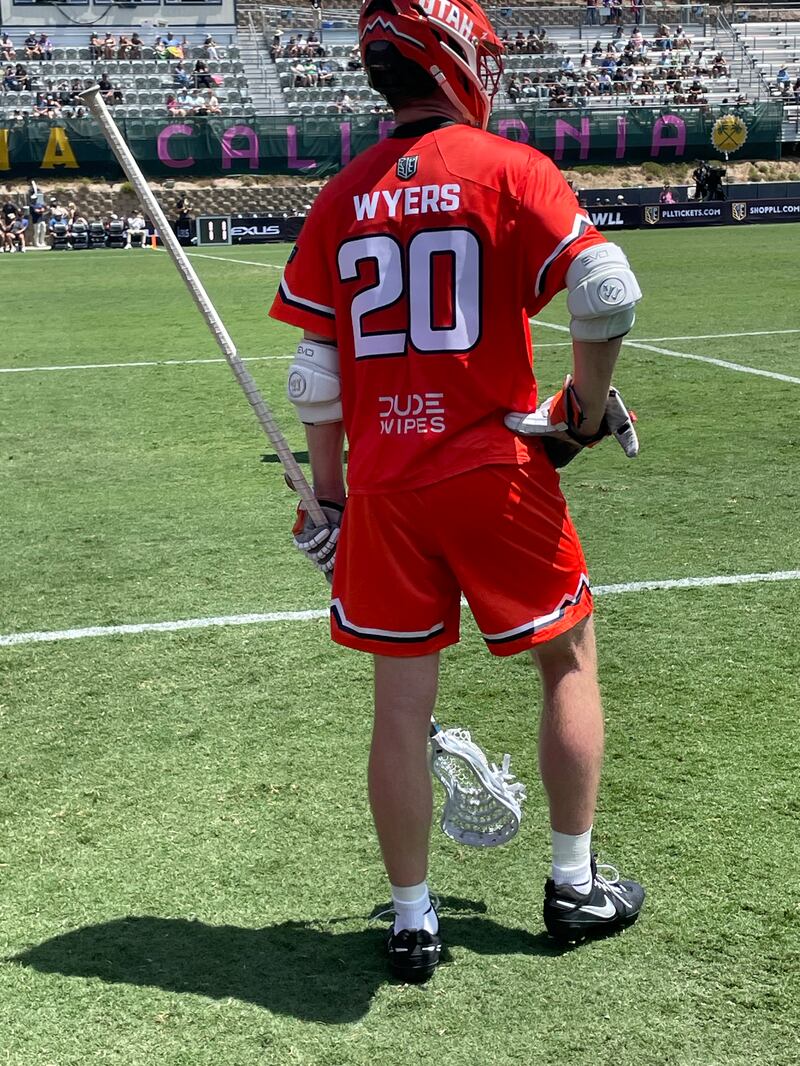
Everyone was taking on risk, considering roughly 200 sports leagues had started since 1990 with a success rate of 1%. When Mike was showing them his deck, his comps were Drone Racing League, World Surf League and, to a lesser extent, UFC. But there was no other single-entity team sport at the time that toured on a weekly basis. That was their separator. There would be six teams to start. And by touring to 12 cities, they’d double their market reach and never have two games played simultaneously. They’d sell tickets to each match individually, with the hope of a cumulative attendance of about 10,000 on game day. But tickets wouldn’t be the benchmark — sponsorships would. They’d eventually put Progressive Insurance branding on the goals, Dude Wipes branding on jerseys, Nike and Lexus on sideline billboards. Like a carnival.
The initial Series A financing from their lacrosse brothers was $3 million — partly to sign stars such as MLL MVP Tom Schreiber and 2018 MLL No. 1 overall pick Trevor Baptiste, and partly to cover the costs of possible litigation from MLL. But then the wild stallion of all wild stallions showed up.
“Thank God for Joe Tsai,” Allan says.
Tsai, the Nets and Liberty owner and co-founder of Alibaba Group, had played lacrosse himself at Yale and arrived as a serial PLL investor in February 2019. For starters, he led the league’s Series A, became the league’s largest financier and served on the PLL board when it launched in June 2019. He’d fallen for Mike and Paul’s townhome pitch like everybody else. “It’s the authenticity that gets you,” Levine says. But when the pandemic happened in 2020 and the league was one of the first to try a bubble (in Utah), Mike remembers one of the investors saying, “You sure you want to do this?”
Hell yeah, they did. Paul stayed on the field — as a founder-player who would’ve made Jim Thorpe proud — and was almost MVP of the 2021 season. But when Paul retired in September 2021, Mike and Paul began haggling over whose name came first. Whether, going forward, it should be Mike and Paul … or Paul and Mike.
Mike, whose title was CEO at the time, admits he wasn’t as empathetic as he could have been to Paul, who was dealing with the end of his lacrosse life. So when Paul — whose title had been chief marketing officer — broached being named president post-retirement, Mike remembers pushing back like this:
“Well, I’m the CEO — how’s that going to look?" Mike said. “They’re kind of the same.”
“Well, maybe we’ll be co-CEOs,” Paul said.
“Nah,” Mike said, essentially starting a new game of knee football.
The result was what Mike calls “a blowout, big, like over a year. Then I think we just decided that it’s not worth the fight. And he became president [and chief creative officer] and I’m the CEO, and there’s certain things that he makes decisions on and there’s certain things I make decisions on. But on the big decisions, we’ve got to get alignment together.”
Says Mike, “We’re both alphas. Who’s the more alpha? It still comes up.”
One of those decisions was a move from NBC to Disney’s ESPN, ESPN2, ESPN+ and ABC in 2022, with O’Connor and Levine assuring them: “You just did the most difficult thing in pro sports — turn a rev share with NBC into a rights deal with ESPN.” The next joint decision, in November 2025, was launching a corresponding women’s league under the PLL umbrella, the WLL, and pursuing the must-get female star Charlotte North.
North, known for her behind-the-back trick shots, ultimately signed up. ESPN agreed to televise the women — investing in both leagues, as well — and brands such as L’Oreal and Maybelline became WLL sponsors.
In the end, Mike and Paul — CEO and president, big bro and little bro — had swallowed their quick and hot tempers to make it work, selling...selling...selling the PLL/WLL every day, leading Levine to say they have a “healthy, really strong partnership.”
But the 6-by- 9 carpet is always in the back of their brains -- their lacrosse to bear -- with Mike admitting, “At times, too much childhood stuff that comes up, which is subconscious for me. But the conscious stuff is: Are we arguing off of ego or are we arguing to try to win? So, it’s gotten to the place now we’re able to strip the ego out and focus on the right decision for the long term of the league.
“We’re both alphas. Who’s the more alpha? It still comes up.”
Did it almost destroy their relationship?
“Still could,” Mike says.

Here we are in Year 8, Mike 42 and Paul 40, and nothing’s a given. The upside is they have the best lacrosse players in the world and a capped number of teams (eight for the men, four for women) -- scarcity that creates demand.
“Every single roster spot is coveted,” Levine says. “You don’t know how important that is.”
But it’s a grind. Pathologically optimistic Paul says operating the league — which includes 130 employees, the youth program PLL Play and the nonprofit PLL Assists — is “exhausting,” that “every day you’re literally just under water.”
Meanwhile, the only-the-paranoid-survive Mike personally calls fans to ask about their venue experience, takes apart the A-frame late at night with the ops team and is what Paul calls “a thoroughbred sort of hands-on entrepreneur.” For road trips, their overall expense policy is essentially, “Operate like an owner.” Which explains the shit-hole hotel in Detroit and the next shit-hole hotel they’ll check into next week.
At least they’ve settled into their roles. Mike is the manager and Paul is the creative, although each can cross over into the other’s lane. Each has also started a family, with Mike’s sons calling Paul “Uncle Pauly” and Paul’s 9-month-old daughter with Oscar-nominated actress Vanessa Kirby certainly soon to be calling Mike “Uncle Mikey.” Neither lives in a townhome.
But, according to PLL Chief Operating Officer Andrew Sinnenberg, townhomes are still “imbued in our culture,” which is why the whole staff figuratively pounds a lacrosse ball against a wall. Selling, brainstorming, perhaps all about to break a window.
Thwat.
Thwat.
Thwat.
Has it all paid off yet? The ratings are solid, with 488,000 viewers watching their first ABC broadcast last month compared to the MLS’s 500,000 linear average on Fox. “So we’re starting to swing in that weight class,” Paul says.
A recent $100 million Series E led by Tsai and Ares Management is another promising sign. The Rabils won’t disclose their financials, but Mike admits they are “choosing not to be profitable in an effort to grow our business and to grow attention and invest in fans and players.” That’s why they increased their salary cap by 11.3% last year; that’s why their best player, Baptiste, makes over six figures now; that’s why their P&L is under lock and key for now.
But they’ve imagined what the breakthrough will look like. Paul has scripted and unscripted films in development, with the clear understanding they need to make their equivalent of the 1992 “Mighty Ducks” movie to win over the public. Think about it: Mighty Ducks wasn’t just a box office hit; it led to Disney owning an actual NHL team. So Paul needs a Mighty Ducks on grass, not ice -- something that glorifies lacrosse the way Mighty Ducks deified hockey. He needs to be a lacrosse Scorsese. Thwat, thwat, thwat.
The other key is finding the next LeBron of Lacrosse — “you mean, the next Paul,” Mike says — or, for the WLL, the next Caitlin Clark. “With guy and girl leagues, we’ve doubled our chances,” Paul says. But, for now (especially with North injured), they will story-tell with their current player ensemble and hope someone starts scoring 2-point goals from the logo.
They also tentatively plan, post-2028 Olympics, to sell their league-owned franchises to individual owners — probably to lacrosse brothers — which is their exit strategy. Then they can expand and expand. Then they can make the PLL/ WLL forever leagues 30 years down the road. Then they can become co-commissioners (if they can agree on that without a game of knee football) and even stay at the Ritz.
“I don’t know if we’ll be alive by then, but hopefully we are,” Mike says.
We’ll see.
Interpreting Infantino’s $15B World Cup revenue projection

FIFA President Gianni Infantino told representatives of the governing body’s member associations over the weekend that he believes FIFA “can top the $15 billion mark” in revenue during the four-year cycle that includes the just-completed 2026 World Cup in North America. The remark, which FIFA included in a public communication Saturday, has been misinterpreted by several media outlets over the past two days as a revenue figure for the World Cup itself.
A FIFA spokesperson confirmed that the figure represents Infantino’s expectation for FIFA’s total revenue across the entire 2023-2026 cycle. While the World Cup accounts for most of FIFA’s revenue in a given four-year cycle, the revenue projection also includes $2B generated by last summer’s Club World Cup in North America and $570M generated by the 2023 Women’s World Cup in Australia and New Zealand, along with revenue from other FIFA events and commercial activity during the four-year period. FIFA’s most recent revenue projection for the cycle, issued prior to the World Cup, was $13B. If Infantino’s $15B estimate proves accurate when FIFA releases its detailed 2023-2026 financial results early next year, the governing body will have exceeded its cycle-wide revenue projection by about $2B, an overperformance attributable to the World Cup.
Sources cited by The Guardian said the overperformance stems largely from higher-than-expected World Cup ticketing and hospitality revenue. That makes sense given that most media-rights and sponsorship revenue is contracted well in advance, while the tournament’s ticketing and hospitality results are more susceptible to fluctuations in demand and pricing during the run-up to the competition.
In its revised budget for the 2023-2026 cycle, FIFA projected $4.26B in broadcast-rights revenue, $3.1B from ticketing and hospitality, $2.85B from marketing rights, $2B from the 2025 Club World Cup, $400M from licensing rights and $393M in other revenue and income.
How MLB worked with FIFA to capitalize on World Cup

MLB CMO Uzma Rawn Dowler said the league viewed the FIFA World Cup coming to the U.S. as an opportunity, not a threat.
“Why would we not want to capitalize on the audience that is here in our clubs’ backyards to really leverage that and target those fans to experience what it means to be at a baseball game?” Dowler told SBJ.
That strategy was especially on full display June 14, as the Red Sox capitalized by having Scottish Heritage Day the day after Scotland defeated Haiti for its first World Cup win in 28 years. The Tartan Army of about 5,000 fans took over Fenway Park, turning it into a party-like atmosphere with singing and chanting. “Our clubs have been really nimble,” Dowler said.
Sunday’s final, which ended with Spain defeating defending champion Argentina, was shown on the jumbotron at Yankee Stadium as Dodgers DH/P Shohei Ohtani was tossing in the outfield between Game 1 and 2 of a doubleheader.
Two years ago the league began talking with FIFA as it worked through scheduling the 2026 MLB season, MLB SVP/Global Operations & Events Jeremiah Yolkut said, knowing that there would be some conflicts. For example, the Royals had a rare Saturday off due to an Ecuador-Curacao match taking place at neighboring Arrowhead Stadium. MLB and its teams could then leverage opportunities around baseball with those fans already in town.
The league also let FIFA know for Fox broadcast reasons and Philadelphia logistical reasons that it needed to load in the July 10-14 All-Star festivities at Citizens Park the week prior. The final match at Lincoln Financial Field was on July 4.
As far as ticket sales, MLB worked with FIFA on cross promotion where MLB games were listed in the FIFA Tournament app along with links to single-game ticket packages; a dozen clubs participated. Likewise, a FIFA banner ad was placed in the ballpark for those 12 teams.
On the TV front, MLB benefited from viewership boosts via World Cup lead-ins in the June 20 regional window in primetime; the All-Star Game selection show on Fox; and the Midsummer Classic, also on Fox.
With the tournament ending, Yolkut said there is long-term global upside regarding corporate partnerships, overseas viewership and possibly returning to the U.S. to see baseball again. Even fans wearing team hats in their respective countries has a residual impact. And, of course, perhaps countries wanting baseball to come to them, even for exhibition-type events.
“Whether it’s MLBx: 3-on-3 or something else, for us to take some of the findings and insights that we are hopefully going to gather coming out of the World Cup of where we’ve seen fanbases leaning in in specific markets to see where that could help drive or inform some of (our) thinking,” Dowler said.
Activision views sports and athletes as a increasingly important Call of Duty asset

I was a bit surprised when I got the call from Activision last week wanting to discuss Call of Duty’s first appearance at Fanatics Fest. The event is already hotbed of sports culture, and I knew organizers have ambitions for it to break out of its sports confines and become a bigger cultural event celebrating fandom of all stripes.
But I didn’t expect Activision to use Fanatics Fest as a pseudo-replacement for events such as the Electronic Entertainment Expo (E3) in the U.S. Activision CMO Tyler Bahl told me that the hands-on fan experience of playing the game is something that’s been missing in its U.S. events following the COVID pandemic and the 2021 demise of the Electronic Entertainment Expo and surrounding publisher events.
“Even in the events we’ve done [since 2020], we haven’t actually done hands-on, and that’s something we’ve been missing,” Bahl said, noting that while using streamers to show new games is something Activision will continue to do, “putting the game and showing the proof in the hands of regular people” was an important missing component to Call of Duty rollouts.
Call of Duty has long been a fixture during sports programming — the ads run during games from the various leagues in the U.S. and elsewhere. For years, athletes have noted how much they play in their off-hours, in locker rooms and while traveling (Kyler Murray jokes aside, though he later turned this into a sponsorship deal), and even stream it.
“This event has more than 150,000 people in New York City on such an amazing weekend, where you have the World Cup championship. You got Yankees-Dodgers. You got Jay-Z at Yankee Stadium. There’s a lot going on, and we just wanted to be part of that moment,” Bahl said.
A variety of New York sports stars are showing up at Call of Duty’s booth to play Modern Warfare 4, but I also asked Bahl if any MLS players from the World Cup would be there. Because most of them aren’t in Sunday’s final, Activision wasn’t able to get any there, but one of the company’s “big pushes” is to link up with athletes where it makes sense for appearances and events.
Considering that Modern Warfare 4’s story involves a conflict between the U.S. and North Korea, with one part of the game starting on domestic shores and another in South Korea, I asked Bahl if any of MLB’s Korean players, such as RF Jung Hoo Lee of the Giants, or Kpop stars like BTS would take part in future Call of Duty promotions.
“We have a number of activations that are coming later this year where we are going to include a number of Korean celebrities in different ways,” Bahl said, noting there’s “definitely potential” for players such as Lee to show up down the line.
===
More from Sports Business Journal
- How NBA’s apron turned into a hard salary cap
- Michigan AD Warde Manuel to step down at end of year
- Ravens add official chicken
===
Two other nuggets from my chat with Bahl
On real-world sports inspirations
Kill Block is the first Call of Duty multiplayer map with dynamic features, including elements that move and transform. Bahl said part of the inspiration for this came from Real Madrid’s home stadium, Bernabéu, which uses a hydraulic system to raise and lower the pitch, with a surface suitable for concerts, conventions and the like taking its place.
“It also has a greenhouse under the stadium to protect the grass and stuff,” Bahl said, noting the fascination this system held for the developers and designers at Infinity Ward, the Activision studio making this year’s Call of Duty: Modern Warfare 4. “One of the new innovations from Infinity Ward is this new map that dynamically changes. It’s literally on risers, and every time you go into a match or a round, it’ll dynamically change. There can be hundreds of different combinations. So we’re going to celebrate it.”
On working with Aston Martin
Here’s another sports-culture crossover for Call of Duty. Aston Martin is an F1 fixture, and athletes (and James Bond) have long driven the luxury sports cars. The Dreadnought is a full-sized SUV, a model Aston Martin doesn’t produce. But the car manufacturer made this concept for Call of Duty, which Aston Martin’s designers worked on with Infinity Ward, into a full-sized piece on display at Fanatics Fest.
“We’ve done a lot with F1 over the years. We did activations with Alpine. We worked with Lando Norris. And so, while this is separate from the F1 team, just working with that team at Aston Martin and really thinking about how we can bring this car to the game … we’re really excited to debut that there,” Bahl said.
It incorporates design tweaks from a standard SUV that make it more suitable for Call of Duty combat, such as grenade holders, not cup holders, in the doors and passenger compartment.
“You can actually put assault rifles inside of the door,” Bahl said.
The Dreadnought will debut in Modern Warfare’s Season 1 in November-December. It’ll also appear in the free-to-play Call of Duty: Warzone.
Why sports?
Call of Duty is facing a different environment than it was even just five years ago. Since Microsoft’s 2023 acquisition of Activision Blizzard, Call of Duty is now appearing on Xbox Game Pass. Last year, that meant players could play Black Ops 7 without buying it. A reinvigorated Battlefield 6 in 2025 also carved into the series’ long dominance of the shooter market. It also met with mixed reviews and review bombs from disgruntled players.
Microsoft is reversing some of those miscues for 2026, with Modern Warfare 4 not appearing on Game Pass at launch, opting for the standard purchase model as it rolls out on Xbox, PlayStation and the Switch 2 on Oct. 23 (and PC, of course). It’ll appear next fall on Game Pass.
So it makes sense for Call of Duty to look to athletes and sports to boost the series, especially in a social media environment in which so many streamers competing for eyeballs can make it hard for even Call of Duty to break through these days.
Let’s see how this plans works out ... the same year Grand Theft Auto 6 is coming out.
===
Start your day with SBJ Morning Buzzcast, bringing you the hottest stories in sports business every morning in under 15 minutes. Sign up for SBJ’s free newsletters, and dive deeper inside the industry with all the latest sports business news here.
The real gap in youth sports isn’t interest — it’s access
The World Cup has come to an end, and hosting it on our own turf has shone a brighter spotlight on the sport, inspiring millions of kids across the U.S. to step onto a field for the first time or to keep playing and chasing their dreams. But inspiration doesn’t guarantee participation. About 20 million Americans of all ages play soccer in a typical year, and kids make up a huge share of that, with U.S. Soccer projecting the number could climb toward 29 million by the end of 2026. The real question is not how many kids this summer inspires, but how many actually get into the game and stay here.
Youth sports were once framed as an extracurricular activity that families took advantage of to keep their kids busy and make new friends. However, they’re increasingly being recognized as a public health solution. Regular activity helps children maintain healthy bones, muscles, and joints and a healthy weight and prevent the development of high blood pressure. Beyond the physical health benefits, youth sports and exercise are positively correlated to mental health, decreasing symptoms of anxiety and depression. Organized sports are also an outlet for kids to learn teamwork, strengthen resilience and nurture a sense of belonging. However, despite these benefits, access to youth sports isn’t always guaranteed.
The most recent Aspen Institute State of Play report shows that just 55% of children are currently playing organized sports, below the federal government’s public health goal of 63% by 2030. But this year, we have a huge opportunity to take the increased interest generated by the World Cup and work together to create pathways for anyone to engage with youth soccer. The real test of this World Cup summer is not how many kids we inspire, but how many we keep. That is a job for the whole ecosystem, and every part of it has a role to play.
Getting kids in the game is only the first step. The real impact comes from keeping them engaged, which requires programs that are inclusive by design, starting with the front door. Entry-level and recreational programs are where most kids actually meet the game, and where the price of admission can be as low as a few dollars a session rather than a few thousand a season compared to traditional travel soccer. Providing these programs for kids of all ages is also a key to access often overlooked. It provides the chance for older children to enter the game or an experienced player to lower their time commitment as they grow but remain interested in keeping a foot in this world.
The clubs that keep players engaged long term don’t just provide recreational programs, but also offer stair-step programs to meet players and families where they are at every age and stage of the soccer journey, including maintaining access to recreational programs for all ages, intermediate levels as well as the more traditional “travel” teams. And, to offer multiple levels of competitive and commitment level programs, clubs cannot rely on player registration fees alone; a healthy mix of sponsorships, fundraising events, donors and annual tournaments support programs for all and fund financial aid for the players who need it across all levels of play. Access at the entry level deserves the same investment as the highest levels of play, because a child who never gets a first season never gets a 10th.
Clubs can also widen the door. Reduced-fee programs that meet underrepresented groups where they are and adapted programming for athletes who need support for a disability, turn soccer for some into soccer for all. These take real investment in trained, qualified coaches and in the patience to build trust, but the return, measured in kids who feel they belong, is well worth it.
Communities and local governments have a role, too, because youth sports run on fields, and the expense of building and maintaining them is something most families never think about. A single large club can use well over 100 fields in a single season across owned and rented sites, and the economics are daunting. A competition-grade turf field can cost anywhere from roughly $750,000 to nearly $2 million to build, and has to be resurfaced about every decade (or less) for player safety. Recognizing that fields and green space are a commodity for everyone, the smartest development happens in partnership, when a town, a county, sometimes also a private partner and a club all come to the table with land, capital or grant funding and share the result. Those facilities pay a community back many times over, hosting not just soccer but lacrosse, football and other sports, and drawing events and economic activity to the region.
National organizations can continue to focus their goals around participation and retention, not just elite performance, and supporting access to and resources for coaching. Trained, consistent coaches are some of the strongest predictors of whether a kid stays in the game, yet most are volunteers coming to the fields after working their 9-to-5. Giving them ready-made, age-appropriate practice plans, accessible coaching education and real support is one of the highest-leverage investments in the entire system.
None of this is a secret, and we shouldn’t treat it like one. The clubs, leagues and communities doing this well should share openly what has worked and what hasn’t, because that is how a system gets stronger. The World Cup has handed us the interest. Whether we turn this summer’s wave of new players into kids who are still playing in five years depends on the systems we build to receive them. Because interest alone doesn’t grow the game. Access does. And if we use this moment to build pathways that genuinely welcome more kids in and keep them there, the impact will go well beyond the field, shaping healthier, more connected communities for years to come.
Gary Buete is CEO of North Carolina FC Youth (NCFC Youth), serving nearly 18,000 players annually. He was appointed to the U.S. Soccer board of directors in 2026 as the Youth Council representative and serves as chairperson and executive committee member of US Club Soccer’s board of directors.
Speed reads
- The Ravens signed Perdue Farms, the nation’s fourth-largest chicken producer, to a multiyear deal, making it the team’s official chicken sponsor and the practice jersey patch sponsor, reports SBJ’s Terry Lefton.
- OnDeck Partners, the Marc Lasry-backed minor-league baseball ownership platform, acquired the third team in its portfolio, the Wilmington Blue Rocks (High-A Nationals), writes SBJ’s Mike Mazzeo.
- Lids extended its relationship with basketball skills trainer and influencer Chris Brickley through a new multiyear agreement, notes SBJ’s Jesse Gordon.