

Tonight in Unpacks: The NFL distributed $14.5 billion to its teams in 2025, or $453.2 million per club. While that’s a 4.8% increase over 2024, Packers President and CEO Ed Policy sees speed bumps ahead for Green Bay, which must be more creative about revenue generation than privately owned clubs.
Also tonight:
- How Kalshi won the World Cup
- Gary Stevenson lauded for influence throughout sports industry
- Charlotte not quite Super Bowl ready, but Goodell opens door to draft
- Op-ed: Why sports is unprepared for the AI revolution
Listen to SBJ’s most popular podcast, Morning Buzzcast, where Abe Madkour closes out the week with the Panthers’ big night starring NFL Commissioner Roger Goodell and renderings of an expanded $1.3 billion renovation, the growth of the WNBA’s All-Star festivities, Mark Cuban’s Harbinger acquiring a stake in the A’s and more.
NFL distributes record $14.5B to teams, but Packers see challenges ahead

It is, as always, good to be an NFL team owner.
Last season, league-level media rights and sponsorship deals enabled the NFL to distribute a total $14.5B to its teams, or $453.2M per club. That’s an increase of 4.8% over the prior season.
The league distribution was disclosed in the Packers’ annual financial results Friday. But though Packers President and CEO Ed Policy projected strength, highlighting that his team’s net income was up 55% to $132.5M on total revenue of $753M last season, he also stressed that the Packers are at risk of falling behind their competition.
Rising player costs caused the team to take a small $1.1M operating loss last year, its first in a season not affected by COVID since 1989. And as Policy told SBJ earlier this year, the Packers’ nonprofit structure prevents it from cashing in on the NFL’s influx of private equity and other deep-pocketed investors.
Policy pointed to the Dolphins selling a 1% stake to billionaire Lin Bin at a record $12.5B valuation earlier this year.
“They were able to raise $125M by selling just 1% of the team,” Policy told a group of reporters Friday. “It’s like other teams have access to this ATM machine that we just don’t have.”
In response, he expects the Packers will be “aggressive” with new revenue generation efforts. Those will include:
- Hosting more non-Packers events like concerts and college football games, including next month’s season opener between Notre Dame and Wisconsin.
- A more aggressive sponsorship strategy; Policy said the team won’t sell naming rights for Lambeau Field, but it’s eyeing other potential assets, like the recent Titletown field entitlement from Emplify Health.
- Higher ticket prices, though Policy said the Packers will strive to keep the average ticket price around the middle of the league.
The Packers’ local revenue, which includes ticket sales, sponsorships and retail sales, climbed 4.7% to $299.8M last season despite Green Bay hosting one fewer home game than the prior year.
The team’s operating loss was driven by a $130M increase in player spending. Total expenses were up $119M, or 19%, to $754M. Policy said decreased spending in other areas offset the rise in payroll. Total player costs will be just over $447M this year. Packers CFO Maureen Smith shared that depreciation from stadium capital improvements is also contributing to rising costs.
On a net basis, the Packers had a strong year thanks to non-operating income of $133.6M, up from just $2M last year. Policy said the increase could be attributed to investment gains from the team’s corporate reserve fund and its stake in ESPN through the NFL’s 32 Equity.
NFL’s deal with Disney, which won this year’s Sports Business Award for Deal of the Year, granted the league a 10% stake in ESPN. Proceeds from that position are recorded within the Packers’ $133.6M non-operating segment, but Policy would not provide further detail.
Policy noted the team’s corporate reserve fund is now at $701M, up from $579M last year, and he stressed the fund’s importance to the Packers’ future.
“It’s really important to keep in mind that it took us over 30 years to raise that amount of money,” Policy said. “Other teams can sell 5% or 10% of their equity, not give up any control, and they can raise more than that in just a matter of months. So growth in the corporate reserve is going to continue to be really important for our long-term health.”
How Kalshi won the World Cup: $27 billion in trade volume

When the World Cup opened, marketers at predictions operator Kalshi were confident they could gain sufficient exposure for their product by cobbling together endorsement deals with a handful of retired stars from the U.S., Mexico, Brazil, Colombia, England, Spain and France, and sponsorship of the Argentine national team, home to icon Lionel Messi.
The lineup — Clint Dempsey, Memo Ochoa, Marcelo, Falcao, Rio Ferdinand, David Villa, Raphaël Varane, Ángel Di María and Messi — was sure to capture the attention of the avid soccer fans most likely to place bets on the 104 World Cup matches that were about to unfold across six weeks.
On the product side, Kalshi offered thousands of event contracts designed to mirror the betting menus of legal U.S. sportsbooks, with odds on not only tournament and match winners, but also on the count of shots and corner kicks in each game and player props that could be configured into a dizzying array of parlays.
In a nod to Fox’s broad audience, Kalshi opted for an earworm-inducing, brand-focused spot featuring actor Timothée Chalamet.
It all went so well that by the time the knockout stage began, Kalshi was doubling down on a tournament that had crossed over into a bona fide cultural event, securing passalong rights to pair its logo with FIFA category sponsor ADI Predictstreet in a highly visible pitch-side rotation.
The result: Kalshi recorded $12.4 billion in World Cup volume, including props but excluding parlays, according to data from prediction market analysis tool TickerTracker; Kalshi said it took in $27 billion in World Cup volume when parlays are included. TickerTracker data showed Kalshi recorded $1.75 billion from March Madness games earlier this year.
Exchanges from competitors Robinhood and Polymarket U.S. took $3.38 billion and $3.29 billion in straight wagers, respectively, according to data from TicketTracker.
“The World Cup is the World Cup. It’s one of a kind,” said Adam Barrick, Kalshi head of sports partnerships. “You can’t even call it a sporting event. It’s a cultural event. It really has led to this pinnacle moment for our business that we hope keeps going up.
“We hold ourselves from a performance perspective to a very, very high bar. But what we saw with World Cup exceeded those in a significant way.”
Business also was brisk for legal sportsbooks, based on June data released by state regulators. Sportsbooks are on pace to reverse six consecutive months of year-on-year decline, with June handle tracking 26% higher than last June in the 21 states that had reported results for that month.
With 79 of the tournament’s 104 games played, sportsbooks in those states had taken about $1.5 billion more in bets than they did for the month last year, a rate that would yield a $2.5 billion increase if it holds up across all 33 states that report handle. Some of that gain could be connected to the New York Knicks’ five NBA Finals games, but most likely came from the World Cup.
If sportsbook bettor patterns mirrored those of Kalshi bettors, who placed about half of their wagers in July, handle gains for the two months are likely to approach $5 billion, which would exceed the top end of the $2.3 billion to $4.3 billion range that gambling industry research firm Eilers & Krejcik projected before the tournament. That total wouldn’t include the not publicly reported legal take in Florida, which the firm included in its estimates.
Because they are calculated differently, sportsbook handle and prediction exchange volume are difficult to accurately compare.
Barrick pointed to Kalshi’s ability to attract those interested in betting on pop culture, current events and the weather as a differentiator that contributed to its success. About one-third of the 3 million users it added during the World Cup have since placed bets outside of sports, he said.
“When we started putting together our strategy around World Cup in Q3-Q4, yes, it’s a sporting event,” Barrick said, “but we very much saw it as a cultural, mainstream event, which lends itself very nicely to our product. Because our product isn’t just sports.”
Gary Stevenson lauded for influence throughout sports industry

It was 2000 and Rick Welts and Casey Wasserman were having one of their usual breakfasts at Wasserman’s choice: Nate ’n Al’s Beverly Hills deli. Each man was trying to find his place within the sports industry. Wasserman had owned the AFL L.A. Avengers since 1998. After 17 years at the NBA and rising to executive vice president/CMO, Welts had recently been pushed out at Fox Sports Enterprises, which then owned the Dodgers.
Casey posited that they start their own company, a firm that could help teams run smarter businesses. Welts’ response: “Only if we can get Gary Stevenson to be our third partner — now THAT would be an amazing combination.”
A quarter-century or so later, Stevenson is days from retiring as the No. 2 at Major League Soccer after 13 years as president of MLS Business Ventures and deputy commissioner since 2019. OnSport, the agency Stevenson founded in 1997, and which later included Wasserman and Welts, was sold to Wasserman in 2007 and eventually took his name after Welts left to be president of the Phoenix Suns in 2002.
Stevenson had earlier helped build the sports marketing business at Octagon antecedents Advantage International and ProServ, with athletes such as Dan Marino, Moses Malone and Mary Lou Retton; and big-brand marketers such as Ford, Procter & Gamble and Arrow Shirts. “There was so much opportunity, it was the Wild West — without much competition,” Stevenson recalled.
Stevenson became disillusioned with athlete marketing after the death of client Len Bias from a cocaine overdose (he had seen Bias the day before he died), and took an offer from the PGA Tour in 1987 to join as executive vice president of business affairs. “I was emboldened by the tour’s aggregation of rights and that was probably my most successful stop,” he said.
Seven years later, Stevenson was named president/COO of the Golf Channel, launched on the back of six cable operators and charter advertisers that included Anheuser-Busch.
Through an introduction by NBC’s Dick Ebersol, then-NBA Commissioner David Stern called Stevenson in 1996 to join heavyweights such as Adam Silver, Val Ackerman, Steve Mills and Welts in formulating the business plans for the WNBA and the NBA Developmental League (D-League, now the G League). Stevenson was the only one working on the league launches full time.
“Sitting around the table with that group of people on a daily basis was really unparalleled,” Stevenson said.
Still, his contributions weren’t unnoticed by the others.
“Gary brought an MBA’s skill set to an NBA office which had a lot of attorneys, including most of us,” said NBA Commissioner Adam Silver. “He was also unintimidated by David (Stern), unlike many of us. And as an outsider, Gary was very direct as far as what investment would be required.”
Stern, Welts and Ackerman have received kudos for launching the WNBA, even though by Silver’s own admission, “We missed our numbers by 25 years on the WNBA, but lately we have exceeded what we thought was the original opportunity.”
“Gary should get more credit for the WNBA than he does. We launched with $30 million in sponsorship and a model that was un-assaultable. That was because of Gary’s creative thinking about building the business of teams and leagues differently.”
— Rick Welts, longtime sports executive and current CEO of the Dallas Mavericks
According to Welts, “Gary should get more credit for the WNBA than he does. We launched with $30 million in sponsorship and a model that was un-assaultable. That was because of Gary’s creative thinking about building the business of teams and leagues differently.”
Stern eventually brought Stevenson in full time to head NBA Properties. A mysterious sickness, later diagnosed as an allergy to sulfites, sent Stevenson to Raleigh, N.C., for treatment. Impressed with Stevenson’s work, Stern said he could work for the NBA remotely, as long as wished.
Stevenson used contacts at American Express and his old bosses at the PGA Tour to coalesce OnSport in 1997. AmEx, the NBA and the PGA Tour were the initial clients. That took him up to his work with Welts and Wasserman, and the eventual sale of the agency.
Impressed with the Golf Channel’s success, Pac-12 Commissioner Larry Scott brought in Stevenson in August 2011 to run Pac-12 Enterprises and launch the Pac-12 Network.
With six subregional channels, along with a national version, carriage deals were difficult to come by and the strategy was to build independently, as opposed to joining Fox and ESPN. High overhead with the network’s headquarters and production studios in downtown San Francisco were also drains. Stevenson today terms it a “tech and production success. But we just couldn’t get a deal done with DirecTV that was acceptable to everyone.”
Stevenson accepted the MLS job less than two years after joining the Pac-12. Discord among schools grew, eventually resulting in mass defections nearly a decade later, starting with USC and UCLA in 2024.
In 2013, MLS Commissioner Don Garber brought in Stevenson as president of MLS Business Ventures.
“Gary brought us a high level of media knowledge and expertise,” said Garber. “We were filling stadiums and the league was expanding, but we had a fledgling media business. Gary came in and negotiated our deals with Fox and Apple.”

During Stevenson’s MLS tenure, the league has added 11 teams, and franchise values and expansion fees have exploded, with clubs now valued in the high-nine or even low-10 figures. Sponsorships have been secured with big brands including Audi, Walmart and Coca-Cola.
“I would call Gary one of the best sports production execs that was never behind a camera,” lauded Garber. “He really understood how to organize all of the disparate elements that make a sports show great.”
Teaching the business
The term you hear most often associated with Stevenson is teacher. Current U.S. Olympic & Paralympic Committee CEO Sarah Hirshland was OnSport’s second hire. “Not only does Gary want to know why, he wants you to know it,” Hirshland said. “He wants to make sure that he has a deep understanding of any issue and he translates that to wanting everyone else to understand at that level. That made him an incredible teacher.”
Elizabeth Lindsey, president of brands and properties at The Team (the rebranded Wasserman) was OnSport employee No. 4. She still recalls what AmEx’s NBA media commitment was 25 years ago because Stevenson made it a pop quiz one day — and she flunked.
“Gary runs his business like a dad,” Lindsey said, pensively. “The moment he was teaching you the tough lesson, you didn’t appreciate it. Later, you find yourself quoting it. The vast majority of professional values I hold deeply, I learned from him.”
Appropriately enough, Stevenson taught a Business of Sport course at Duke, his alma mater, for a decade. World Team Tennis CEO Stephen Amritraj was a very willing student. “I viewed him more as a coach than a professor, and I didn’t realize how much I’d learned until it all became applicable,” said Amritraj, who was the director of college tennis at the USTA before joining the relaunched WTT this year. “He was a teacher in the way a boss would be a teacher.”
“Gary was always interested in building people and culture,” said Malcolm Turner, head of strategy and corporate development at DraftKings, and the first OnSport employee after working for Stevenson at the PGA Tour. “His fingerprints are all over today’s industry; because of his teaching and mentorship, we’re a better industry.”
Depending on whom you believe, Stevenson can best be described as tenacious, dogmatic or “confident to the point of stubbornness,” as one former co-worker put it. Observed Welts: “Being really stubborn is one of his defining characteristics; you could also say he’s a very strong advocate for his own point of view. But at the same time, I don’t think I’ve ever met anybody with such an understanding of how all the pieces fit together, especially when it comes to sponsorships and media. He’s always looking around the corner and saying, ‘What if we approached it in a different way?’”
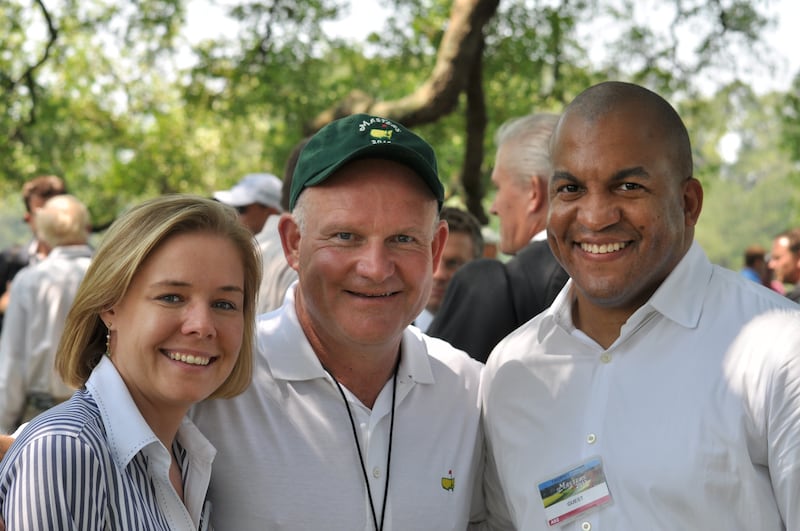
Joe Leccese, chairman of the sports law practice at Proskauer, has worked with Stevenson at nearly every stop in his career.
“Gary will always listen to another point of view, so I would call that committed, not stubborn,” Leccese said. “I’ve found him to be remarkably resilient, and someone who can go quickly from whiteboard to an operating business like very few people I’ve worked with.”
As Dizzy Dean is credited with saying: “It ain’t bragging if you can do it.”
“He can be hard-headed, but he’ll listen to reason,” said Ackerman. “Thing is, Gary doesn’t get much wrong, especially when it comes to sales strategy and asset packaging. There’s just a breadth of knowledge there that keeps getting wider.”
As Hirshland noted, “He’s a lecturer, but he cares that you know the why in any situation.”
Lessons learned? “Gary taught us to always follow the money flow, or the potential for that, in everything we did. That sounds like a simple premise, but it’s often ignored or not addressed as a priority,” Hirshland added.
“He’s got conviction — that’s what I’d call it,” Turner said. “He’s a bad MFer, and I say that in the most respectful way.”
AmEx is the most-tenured client in the OnSport/Wasserman/The Team continuum. Rich Lehrfeld, now Walmart’s senior vice president of international and Sam’s Club advertising, was a top AmEx marketing executive from 2002 to 2009.
“Gary can be a tough guy, but he’s so smart, people want to work for him,” Lehrfeld said. “They know they’ll learn. As for the value of the agency’s advice? Worth 10 times what we paid for it. He was always thinking about the long-term gain and got us smoothly into golf and the USGA at a time they’d never had a commercial partner.”
Sponsorship sales acumen surfaced, but Stevenson filled in with a knack for corporate consulting. As the price and event sponsorship commitments increased, his corporate consulting expertise grew symbiotically in tune with the growing need for help in that area, as the sponsorship and experiential budgets for America’s biggest brands started to swell and claim an increasing amount of traditional marketing dollars.
Stevenson’s first industry job was selling for Octagon, back when it was Advantage.
“Even in his earliest days, Gary was focused, confident and determined,” said Phil de Picciotto, company founder and president.
Having accumulated enough marketing and sales expertise to guide some of America’s biggest brands though the Amazon rainforest of top-level sports marketing and sponsorship, Stevenson also garnered enough media knowledge that many say it’s his most underrated skill.
“As the industry changed, he evolved from a sales guy to a more consultative advisory approach with brands, then focused on media, which in many ways provides the broadest industry view,” added de Picciotto.
As a negotiator, Stevenson gets accolades for creativity and continually finding value for both sides.
“He’s transparent, puts any challenges on the table immediately and works collaboratively to solve them creatively,” said Jacques Hagopian, Procter & Gamble senior vice president, North America brand operations, who worked with Stevenson on P&G’s original MLS sponsorship in 2021, which has since been extended. P&G’s domestic marketing budget is more than $6 billion.
“As an advertiser, Gary is the type of partner we want to work with,” said Hagopian. “He sees the big picture: the needs of the advertisers, the sport and the fans. Having that full view allows him to come out with solutions that might not be obvious.”
Fanatics Chairman Michael Rubin has worked with Stevenson since he joined MLS.
“He’s allowed MLS to punch far above its weight and allowed them to get outsized positive outcomes,” Rubin said. “He’s unrelenting, but someone who still works hard for his partners. He’s a tough negotiator but got great value out of us. In the end, they were always good to work with because of that.”
With a career built around sponsorship, media sales and corporate consulting, Stevenson has always felt the need to reinvent every decade or so.
“Change is good for people and for organizations,” he said. “I’ve always viewed my life as a series of chapters, and I usually had a pretty good idea when each chapter was done.”
The conclusion can only be that he’d rather build and innovate than administer a fully mature organization. Surely, others could have parked themselves into any of the positions Stevenson had for decades.
“Others may see a lull in their careers and not act on it,” said Silver. “Gary keeps going to where the opportunities were, and unlike most people, he’s not afraid of change. … He’s a risk taker, and rather than be complacent and comfortable, he thrives with discomfort, doesn’t even mind ambiguity and welcomes change and creating something new.”
Or as Tod Leiweke, who worked for Stevenson at the PGA Tour, observed: “Gary’s always been addicted to innovation.” Leiweke is now CEO and part-owner of One Roof Sports and Entertainment, the parent company of the Seattle Kraken.
Added Welts: “Gary has a real need to be an entrepreneur more than just to be running something. He loves opportunity, so he keeps reinventing himself to face different challenges.”
Referring to OnSport, Stevenson said: “I loved building that business; I didn’t love running it.” Still, he might have been referring to any of his career stops. “I always wanted to be in the middle of the media business, because it’s the fuel that powers the whole enterprise,” he said.
Another character trait cited by many: Stevenson’s unrelenting inquisitive streak. “He has enormous curiosity,” said Garber. “He’s not an impatient man, but he’s also not somebody who bides his time. It’s been a defining aspect of his career that he’s done so many diverse things across the industry.”
Considering Stevenson’s experience guiding businesses at various stages of growth, TKO President Mark Shapiro described him as “someone who can be a real asset and impact player to both the establishment and the startup. ... It’s universally known that Gary is a pit bull in business, but what is underappreciated is his EQ and strategic sensibility.”
More people across the business believe in the Easter Bunny than that MLS is the end of Stevenson’s professional life.
Stevenson, who turns 70 later this year, says he has no definitive post-MLS plans “and I’m not terribly worried about it.” He wants to learn as much as possible about AI, continue to work on the board of publicly traded real estate investment trust Kilroy Realty and spend time at his retreats in Jackson Hole, Wyo., and Palmetto Bluff, S.C. “I’ll stay in touch with my network, and I’m sure interesting things will come up,” he said.
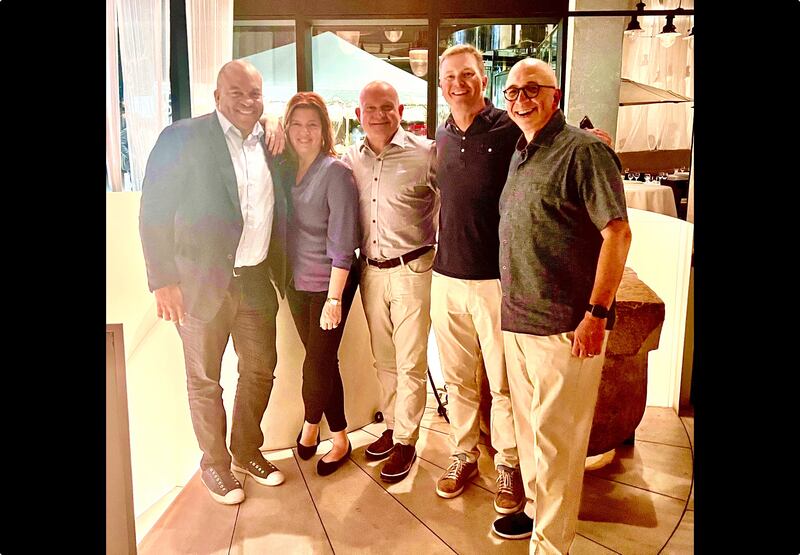
Gary Stevenson’s Coaching Tree
Ben Berchuck: Senior vice president, media consulting, Range Sports
Katie Bynum Aznavorian: Chief strategy and growth officer, U.S. Olympic & Paralympic Committee
Sarah Hirshland: CEO, U.S. Olympic & Paralympic Committee
Dean Jordan: Managing executive, global sports media rights, The Team
Tod Leiweke: CEO and part owner, One Roof Sports and Entertainment, parent company of the Seattle Kraken
Elizabeth Lindsey: Global president, brands and properties, The Team
Donna Orender: Former WNBA president, now commissioner of Upshot League
Heidi Pellerano: Chief commercial officer, Concacaf
Clayton Somers: Special Superior Court judge, state of North Carolina
John Tatum: Founder and CEO, Genesco Sports Enterprises
Malcolm Turner: Head of strategy and corporate development, DraftKings
Tom Wade: Chief commercial officer (retired), PGA Tour
Charlotte not quite Super Bowl ready, but Goodell opens door to NFL Draft

In Charlotte Thursday night for the public unveiling of upgrades to a $1.3B stadium renovation planned by the Carolina Panthers, NFL Commissioner Roger Goodell deftly dodged owner David Tepper’s suggestion that the city be considered for a Super Bowl, but offered an appealing alternative: The NFL Draft.
“You see the way the downtown is evolving, the first thing that came into my mind, I said to David, ‘This is built for a draft,’” Goodell said after touring an immersive sales center the Panthers will open across the street from the downtown stadium. “The draft now has close to 1 million people attending. And they’re coming from all over, including internationally. It’s become a global event that I think would be a terrific thing here in this town with all that’s being built.”
The next two drafts are scheduled for the National Mall in D.C. and then Minneapolis.
“Our fan-facing renovations start in 2027 and we should be done by 2030,” said Panthers President Kristi Coleman. “After that, we’ll definitely have conversations about a draft. Of course we would. We would open the door for them.”
As for the Super Bowl that Charlotte has pined for since welcoming the expansion Panthers in 1996 (the team played the 1995 inaugural season at Memorial Stadium in Clemson, S.C.), Goodell raised the hurdles still likely to stand in the city’s way: A shortage of hotel rooms and nearby facilities suitable to host large events.
Tepper quipped that the Charlotte metro could handle the crush of high-end visitors similarly to nearby Augusta, Ga., where some residents who rent their homes out during the Masters earn enough to cover their mortgage for the year.
“In fact,” Tepper said, “I got [Panthers GM] Dan Morgan’s house for you already.”
The 75% problem: Sports is unprepared for the AI revolution because it never built the identity layer
At the Milken Institute Global Conference in May, Larry Fink and Bruce Flatt described a $10 trillion rebuild of the global economy around AI infrastructure: cloud computing, chips, power generation, fiber and data centers the size of cities.
The sports industry was conspicuously absent.
The reason is simple: Most sports organizations still do not know who their customers are.
You cannot run AI on a fan you cannot identify.
The average professional sports team can rarely identify even 25% of the people inside its own building by name. Tickets are transferred. Seats are resold. Merchandise is purchased through third parties. Media consumption occurs anonymously across disconnected platforms. Sports may be the most emotionally valuable consumer category in American life, yet it remains one of the least structurally informed about its own customers.
Other industries solved this problem decades ago.
Harrah’s Entertainment launched Total Rewards and rapidly became better at understanding gambler behavior than many banks were at understanding depositors. Tesco transformed itself through Clubcard. American Airlines did it with AAdvantage. American Express built an empire around a simple proposition: Membership has its privileges, and those privileges depend on the company knowing exactly who you are.
The real innovation was not software. It was incentives.
Customers will gladly identify themselves when identification produces value in return. Loyalty systems transform anonymous transactions into enduring relationships.
Sports has historically operated differently. Teams sell inventory rather than relationships: tickets, suites, sponsorships, local media rights. The model works because scarcity conceals inefficiency. Stadiums fill. Television money rises. Sponsors accept broad demographic assumptions because there are no alternatives.
But AI changes the economics of ambiguity.
Modern AI systems improve through memory and repetition. Netflix is not fundamentally a streaming company. It is an identity company that streams movies. Every interaction strengthens the model. Every recommendation improves future engagement. The system compounds because the customer is known.
Sports, meanwhile, still behaves as though the game itself is the product.
The game is not the product. The relationship is the product.
A fan may maintain a 40- or 50-year attachment to a team. Few industries possess customer duration remotely comparable to sports. Yet most clubs focus on attendance over identity and transactions over attachment.
Outside companies increasingly understand the fan better than the teams themselves do. Fanatics and DraftKings have built sophisticated loyalty and identity layers that now sit between teams and their most engaged fans. If leagues fail to build comparable systems themselves, they risk becoming suppliers to platforms that own the customer relationship instead.
Other fragmented industries solved this problem years ago by centralizing loyalty at the franchiser level. Hospitality, airlines and fast food all learned the same lesson: Customer memory becomes more valuable at network scale.
The danger is subtle but profound. Teams will still own stadiums and play games. But the year-round relationship — wagering, merchandise, collectibles, personalization, and younger, digital-native audiences — may increasingly reside inside someone else’s loyalty ecosystem.
An NFL team physically interacts with even its best customers for only about 40 hours per year: 10 home games, four hours at a time. The rest of the relationship increasingly lives elsewhere. The team risks becoming content inside another company’s customer graph.
For decades, loyalty was treated as a marketing function. Increasingly, it is becoming a financial one.
That distinction matters. Marketing campaigns expire. Assets compound.
A season-ticket holder who attends games for 40 years, brings children and grandchildren into the same allegiance, watches through losing seasons, buys merchandise across decades, and reorganizes family life around a schedule is not merely a recurring customer. He is a long-duration economic asset hiding in plain sight.
Other industries already learned how to value relationships like these. In 2020, American Airlines borrowed $7.5 billion against its AAdvantage loyalty program. Casinos, retailers and airlines now treat customer relationships as durable economic infrastructure.
Sports still largely carries these relationships on the balance sheet at zero.
Call it ghost equity: the vast unrecognized asset value embedded in generational fan relationships. The average franchise may possess hundreds of millions of dollars of it. Large-market teams likely possess far more.
Bruce Flatt made an observation at Milken that applies as cleanly to fandom as it does to capital: “If one can compound those things over long periods of time, it’s a miracle.”
Sports possesses perhaps the greatest compounding asset in consumer business: generational emotional loyalty.
The next era of sports economics will belong to the organizations that treat fans as appreciating long-duration assets rather than seasonal ticket buyers.
Leagues still think they sell tickets.
The companies circling them understand they are stewarding memory — and the data, relationships and recurring revenue that memory produces. Sports has the best raw material in consumer business. It no longer has the excuse of not knowing who holds it.
Eric Spitz co-founded Trakus at MIT Sloan in 1997 and is a co-founder and CEO of FanUp.ai. Len Lodish is the Samuel R Harrell Professor Emeritus in the marketing department of the Wharton School at the University of Pennsylvania.
Speed reads
- NCAA President Charlie Baker shared a memo Friday that outlined efforts the organization has made to cut costs, such as reducing national office spending by 10%, reports SBJ’s Ben Portnoy.
- Disney more than doubled its advertising revenue around the WNBA All-Star Game for a second consecutive year while selling out its available inventory earlier than it did in 2025, writes SBJ’s Mary Gaughan.
- The Bank of America Stadium Experience Center, unveiled by Tepper Sports & Entertainment on Thursday, is “the most technologically advanced preview center in sports,” TSE Chief Revenue Officer Eric Sudol tells SBJ’s Bret McCormick.
- NBC drew the best Sunday round of the Open Championship since 2022, averaging 4.3 million viewers for Ryan Fox’s win. That’s up 6% from last year, notes SBJ’s Austin Karp in this week’s Audience Analysis.
- The Orioles are opening the Corona Flag Court in right field for fans at Oriole Park at Camden Yards this weekend, reports SBJ’s Mike Mazzeo. It features a wraparound bar with service on both the flag court and Eutaw Street sides of the ballpark.
- F1 broadcasts will now have access to a new AI-powered tool, Strategy Insight, developed in collaboration with AWS, writes SBJ’s Joe Lemire.
- This week’s Talent Pool agency roundup from SBJ’s Irving Mejia-Hilario features Lynx G Olivia Miles and Mystics C Lauren Betts following their agent, Kailey Edwards, to Lift Management.
- SBJ’s Na’Andre Emerson talks with Sportique founder Jason Franklin about the company’s strategy to raise brand awareness from more sports-music collabs.